What matters when choosing a hob?
Start with the heat control you need for sauce, then check whether the zones accommodate your batch-cooking pans. Finally, rule out any hob that cannot work with your cookware or kitchen installation.
| Concern |
What to check |
Who this matters to |
| Gentle sauce heating |
Look for independent low-temperature simmering results for the exact model and assess whether its controls are straightforward to adjust. Which? tests simmering separately from heating speed. |
When I make a large pan of cheese sauce, I need to lower the heat as it thickens rather than judge the hob by how fast it boils water; around 40% of consumers put gentle sauce control first. |
| Usable pan capacity |
Compare your pan bases with the zone sizes and layout. Consider a bridge zone only if your cookware can use a combined cooking area. |
Cooking sauce beside other batch components means I need enough usable space for each pan, not just a high zone count; multi-pan capacity comes first for around 30% of consumers. |
| Cookware and installation fit |
Check existing pans for induction compatibility, then compare the exact installation instructions with your cut-out and electrical connection. |
If I am keeping my pans or fitting a hob into an existing opening, those constraints determine what I can choose; around 30% of consumers prioritise compatibility and installation fit. |
Brands to consider
These brands provide useful examples of different hob layouts and features; compare individual models rather than assuming a brand’s range will suit your saucepans or kitchen.
Bosch
A reference point for comparing compact induction hobs with ceramic electric models.
- Bosch lists the PUE611BB5B as a 60 cm induction hob with four cooking zones.
- Check the chosen model’s connection requirements and low-heat performance separately; neither follows from its width or zone count.
AEG
Worth considering when a wider built-in layout could accommodate the cookware used for batch cooking.
- AEG says the bridge function on its 80 cm TO84IB00FB combines two zones into a larger cooking area.
- That model specifies a 750 × 490 mm cut-out and hardwired installation; check whether your pans would make use of its bridge.
Siemens
Useful for comparing induction widths and zone layouts when several pans share the hob.
- Siemens lists induction models in 60 cm, 80 cm and 90 cm widths, with four, five or six zones across the range.
- Range-wide choices do not establish the simmering performance or installation fit of an individual model.
Russell Hobbs
Another four-zone induction format to consider when comparing controls and kitchen fit.
- Which? identifies the RH60IH414B as a four-zone induction hob with LED touch controls.
- Check exact-model simmering results before choosing it specifically for cheese sauce.
Joybuy product choices
These built-in electric hobs include four-zone induction layouts, a wider induction model with a bridge, and a ceramic option for keeping a broader range of pans. Choose by pan fit, usable zones and installation requirements; check exact-model gentle simmering performance before deciding which will suit cheese sauce.
 No image available
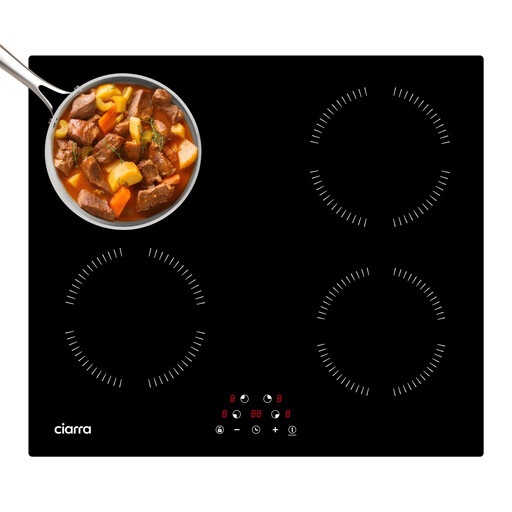
Ciarra Built-In 60 cm Four-Zone Induction Hob
The four-zone layout is relevant if your sauce cooks alongside other batch components.
Use induction-compatible pans. Check the exact model’s low-heat simmering results and installation instructions before choosing it.
View on Joybuy
 No image available
Belling IHL773 BLK 77 cm Induction Hob with Flexible Bridge
Consider its bridge only if your larger cookware can use the joined area; four zones offer positions for cooking other batch components.
The name specifies touch controls and boost mode. Check pan compatibility, the worktop opening, electrical requirements and exact-model simmering results.
View on Joybuy
 No image available
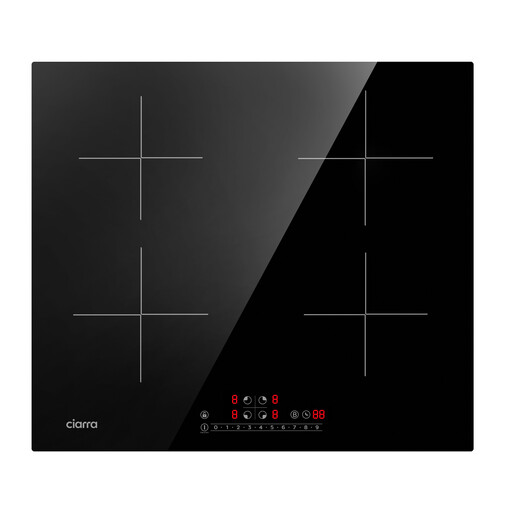
Ciarra Four-Zone Induction Hob with 9 Power Levels
The four-zone layout could accommodate sauce alongside other pans during batch cooking.
Its name specifies touch controls and a booster function, neither of which establishes gentle simmering performance. Check that your pans are induction-compatible and confirm the model’s installation requirements.
View on Joybuy
 No image available
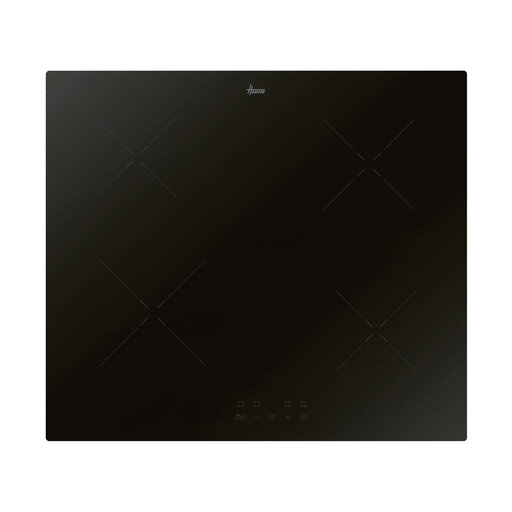
Hoover HI642BCB 60 cm Four-Zone Induction Hob
Its four-zone layout is relevant when you prepare cheese sauce and other components at the same time.
Check that your pans suit induction and the individual zones. Confirm the cut-out and hardwired installation requirements, and look for exact-model low-heat simmering results.
View on Joybuy
 No image available
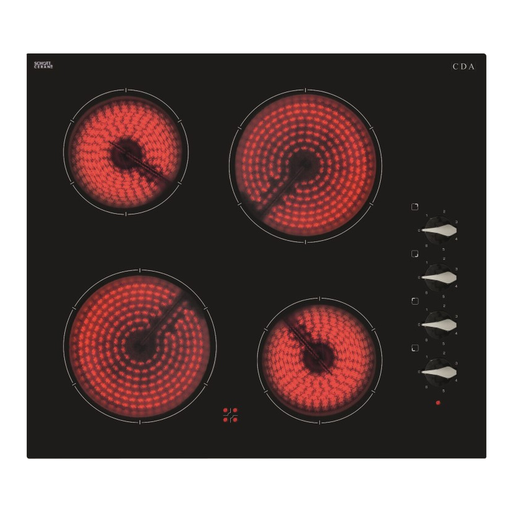
CDA HC6212FR 60 cm Four-Zone Ceramic Hob
This ceramic option is relevant if you want to keep non-magnetic saucepans while using separate zones for batch cooking.
Allow the surface to cool as instructed after use. Check exact-model simmering results, the worktop cut-out and hardwired installation requirements.
View on Joybuy
Common questions
Is induction or ceramic better for batch-cooked cheese sauce?
Induction is a sensible choice if you want prompt heat adjustment and have compatible pans; ceramic makes it easier to keep non-magnetic cookware. Neither heating method guarantees gentle sauce cooking on every model. Compare exact-model low-temperature simmering results, and remember that a ceramic surface retains heat after switch-off.
Will my existing saucepans work on an induction hob?
They will work only if their bases are suitable for induction. Bosch says induction requires ferromagnetic cookware and advises matching the compatible base to the zone size, so check each pan you regularly use for sauce before choosing a hob.
Do I need a bridge zone for a large batch saucepan?
Not necessarily: a round saucepan may fit a correctly sized single zone. Consider a bridge when your cookware can use the combined area, then check the exact hob’s zone layout and whether the wider appliance fits your worktop.
What should I check before arranging electric-hob installation?
Check the exact model’s cut-out, clearances and electrical connection instructions against your kitchen, then seek installation advice appropriate to the property and the work involved. GOV.UK’s Approved Document P covers electrical safety in dwellings in England; it should not be treated as a single installation rule for every part of the UK.
When can I clean up cheese-sauce splashes?
Wait until the hob is safe to clean under its manufacturer’s instructions, then follow the model’s cleaning guidance. In particular, do not assume a ceramic surface has cooled just because its cooking zone has been switched off.


