Regular polenta cooks
If you often stir thick foods over a gentle heat, easy adjustment at lower settings matters more than a boost feature alone.


For family polenta, induction is worth considering if your main saucepan is compatible and you want heat generated in the pan; a ceramic hob avoids that magnetic-pan requirement. With either type, prioritise controllable low settings, a zone that fits the saucepan and room for side dishes, then confirm the worktop cut-out and electrical installation.
If you often stir thick foods over a gentle heat, easy adjustment at lower settings matters more than a boost feature alone.
If the polenta saucepan stays on the hob while you cook vegetables, sauce or another side, check how much usable space remains for the other pans.
If you want to keep using your current pans and worktop opening, cookware compatibility, cut-out dimensions and the electrical connection can determine which model fits.
Consider it when: Your polenta saucepan is induction-compatible and you value heat generated directly in the cookware while adjusting it during stirring.
Trade-off: Pan compatibility is essential, and bridge or flexible-zone features depend on the model.
Consider it when: Keeping a suitable non-magnetic saucepan matters more than choosing induction.
Trade-off: Elements heat beneath the glass, so pay attention to residual heat as well as the model’s controls and zone sizes.
| Concern | What to check | Who this matters to |
|---|---|---|
| Gentle heat control | Look for independent simmering assessments where available, and examine how the controls adjust lower settings. A boost function alone does not answer this question. | If I regularly stir polenta, I need to make small heat changes without letting it catch at the base. Around 42% of consumers would make gentle heat control their primary concern. |
| Space for several pans | Compare the saucepan base with the zone layout, then check whether separate zones remain usable for sides. Assess any bridge or flexible zone against your actual pan. | When the main saucepan occupies one zone throughout cooking, I still need room to prepare the rest of the meal; roughly 33% of consumers would put multi-pan space first. |
| Cookware and installation fit | For induction, test the saucepan base with a magnet and check the cookware guidance. For either hob, compare the cut-out and connection instructions with your kitchen. | If I am replacing a hob, I need my saucepan and planned installation to work with the new model. About 25% of consumers would treat compatibility and installation as the main concern. |
Rapid initial heating does not show how easily you can maintain and adjust a gentle cooking level while stirring polenta.
Give low-setting control priority; use boost as a separate consideration.
A conventional induction hob needs compatible cookware, so the pan you rely on for family portions may affect the choice.
Try a magnet on the pan base and check both the pan and hob instructions before ordering.
If the saucepan is unsuitable, using induction may mean changing that pan.
A wide glass surface does not establish whether its cooking zones fit your saucepan or leave space for other dishes.
Compare zone positions and dimensions with your pans; check the exact model before relying on a bridge, CombiZone or flexible-zone feature.
A built-in hob must fit the worktop opening and have an electrical connection suitable for that model.
Get the installation instructions and ask a qualified installer to assess the cut-out and circuit before purchase.
A different cut-out or electrical requirement may involve worktop alterations or additional electrical work.
Bosch offers induction and ceramic-electric hobs, making it relevant when comparing the two technologies.
AEG is relevant if a larger induction cooking area could help accommodate your family saucepan.
NEFF is relevant when flexible pan positioning is a priority for an induction hob.
Hotpoint is relevant to the ceramic-electric route as well as to shoppers comparing hob types.
These induction and ceramic-electric hobs offer different ways to accommodate a polenta saucepan alongside other dishes. Compare each model’s zones with your pans, and check low-setting control and installation fit before choosing.
 No image available
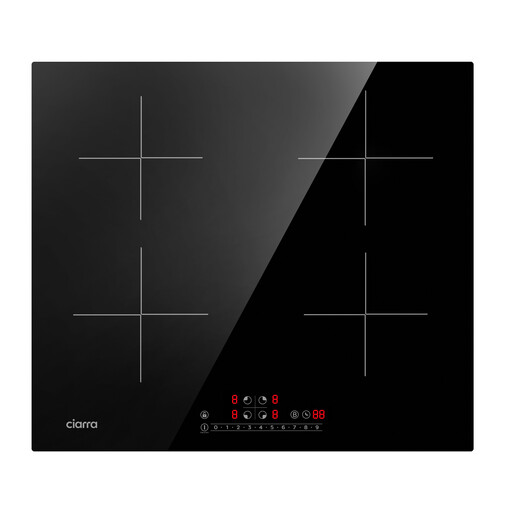
Consider this for a compatible saucepan and a meal involving several pans. It has four cooking zones, a flexible bridge, touch controls and boost mode; check whether the bridge fits your pan base, how the lower settings adjust and what installation the model requires.
 No image available
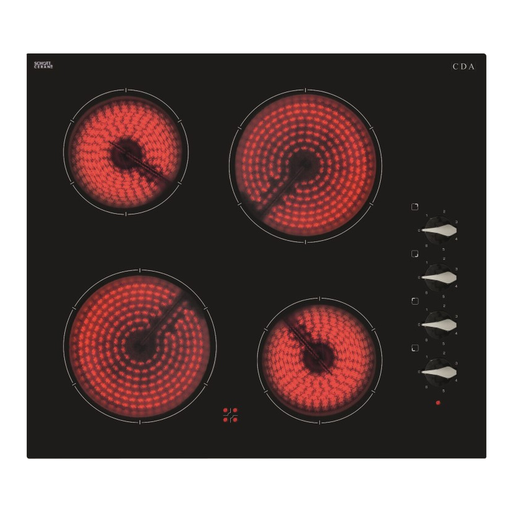
Consider this if you want separate zones for polenta and accompanying dishes and your saucepan suits induction. The product name specifies touch controls and nine power levels; check the zone sizes, gentle-setting usability and connection instructions for your kitchen.
 No image available
Consider this ceramic-electric route if keeping a suitable non-magnetic saucepan is important. Its four zones provide places for the main pan and sides; check the saucepan-to-zone fit, lower-setting controls and installation instructions.
Choose between them by saucepan compatibility and the controls of the exact hob, rather than by technology alone. Induction generates heat in compatible cookware, while ceramic avoids the magnetic-pan requirement; for either, check how easily you can maintain and adjust a gentle cooking level.
A magnet sticking to the pan base is a useful indication that it may work on induction. Check the cookware and hob instructions as well, including their guidance on pan-base and cooking-zone size.
Not necessarily: separate zones can accommodate the polenta pan and side dishes if their sizes suit your cookware. A bridge or flexible zone is worth examining if you regularly use a wide, oval or awkwardly positioned pan; compare its usable area with that pan.
Check the model’s installation instructions against the worktop cut-out, available space and intended pan sizes, then have a qualified installer assess the electrical connection. AEG specifies a hardwired-only connection for its NIK85M00AZ, illustrating why the requirement must be checked for the particular model rather than assumed from its hob type.