Sauce-focused dinner-party cooks
If gravy, jus or pan sauce needs reducing while other dishes are nearly ready, you need controls you can adjust promptly and a low setting that works for your saucepan.


Choose induction if your gravy saucepan is compatible and you want heat generated directly in the pan when adjusting a reduction. A ceramic electric hob is worth considering if keeping your existing cookware matters more; compare individual models for low-heat control rather than assuming either type will simmer equally well. For a dinner party, also check how many pans need separate zones and whether the hob fits your worktop and electrical connection.
If gravy, jus or pan sauce needs reducing while other dishes are nearly ready, you need controls you can adjust promptly and a low setting that works for your saucepan.
If the gravy must stay on the hob alongside vegetables and other dishes, consider how many pans need their own zones at the same time. Large or long cookware may also make a bridge or flexible area useful.
If the new hob must fit an existing kitchen, check the worktop aperture, the model’s electrical connection and your saucepan before treating induction as a straightforward replacement.
Which? explains that induction generates heat in the pan, whereas a ceramic electric hob heats elements beneath the glass. Choose between those heating methods and your cookware first; then assess low-setting control, the pans needed at serving time and installation fit.
Consider it when: You want to adjust heat as gravy moves from a boil to a gentler reduction while other pans remain in use.
Check first: Your gravy saucepan must be induction-compatible, and the hob’s actual low-setting behaviour still matters.
Consider it when: Keeping suitable existing pans is a priority and you want an electric glass hob.
Check first: The elements heat beneath the glass; compare model-level simmering and control evidence rather than assuming induction-style response.
| Concern | What to check | Who this matters to |
|---|---|---|
| Controlling the reduction | Look for clear controls for the gravy zone and compare low-heat or simmering assessments for the exact model where available. | If gravy starts boiling too hard just as serving begins, I want to turn it down promptly without losing track of the other dishes. Around 42% of consumers would put control of the reduction first. |
| Room for other pans | Count simultaneous pans and compare their sizes with the zones; consider a bridge or flex area for large or long cookware. | When the gravy occupies one zone, I still need room to finish the rest of dinner. For around 33% of consumers, keeping several pans in use would be the primary concern. |
| Kitchen and cookware fit | Check the worktop aperture, the exact model’s connection instructions and induction compatibility if choosing induction. | I cannot usefully choose a hob that will not fit the worktop, connect appropriately or work with my gravy pan. Suitability of the installation and cookware would come first for around 25% of consumers. |
Induction and ceramic hobs can look similar, but Which? describes different heating methods: induction heats the pan, while ceramic heats elements beneath the glass. Appearance alone will not tell you how a shortlisted model handles a gentle reduction.
Decide whether you can use induction-compatible cookware, then compare controls and independent simmering assessments for the models you are considering.
A small saucepan does not, by itself, call for a bridge area. AEG describes the bridge on its TO64IB00FB as joining two zones into a larger cooking area.
List the pans you expect to use shortly before serving. Consider bridge or flex zones if a large or long pan regularly needs that space.
Connection and aperture requirements vary by model. AEG specifies a 560 × 490 mm built-in cut-out and hardwired connection for the TO64IB00FB; Bosch describes the PUG61RAA5B as Plug & Play.
Measure the existing aperture and consult the exact installation instructions before ordering. Check what electrical work is appropriate for your property.
A timer can prompt you to return to the pan, but it does not replace watching a sauce as it thickens. Electrical Safety First advises against leaving electrical appliances on and unattended.
Keep the pan in sight during the reduction and adjust the heat when the simmer becomes too vigorous.
These named ranges illustrate different zone layouts and connection requirements; check the specifications of the particular model you intend to buy.
Consider the TO64IB00FB if larger cookware is part of your dinner-party plan and a hardwired induction hob suits your kitchen.
Bosch offers different layouts among the named induction models: a four-zone plug-in option and a five-zone flex-induction option.
The T66FHX4L0 is relevant if flexible cooking areas and its control layout suit the pans used alongside your gravy.
These built-in induction hobs are relevant if you use compatible cookware and want a zone for gravy alongside other dinner-party pans. The Belling model also has a bridge area to consider if larger cookware is part of the meal; compare installation requirements and low-setting control before choosing.
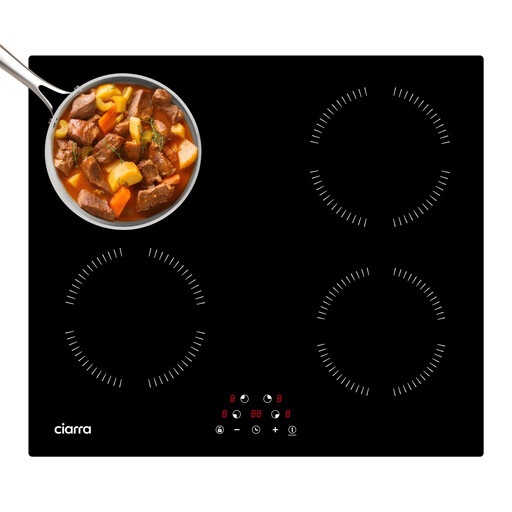 No image available
The four-zone layout is worth considering when gravy needs its own cooking area alongside other dishes. Check how your saucepan fits the zones, assess low-setting control for this model and confirm that the worktop and electrical supply suit the installation.
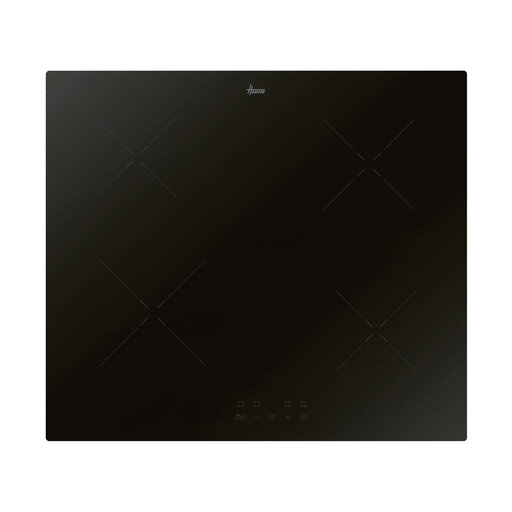 No image available
This four-zone model is a candidate if several pans need space while gravy reduces. Check its low-setting behaviour for your saucepan and confirm the worktop fit and electrical connection before ordering.
 No image available
Consider the bridge area if a large or long pan shares the hob with your gravy saucepan; it is not needed just to reduce gravy in a small pan. Check the space required for this 77 cm model, its installation instructions and its low-setting control.
 No image available
Consider this model if a built-in induction hob suits your multi-pan cooking plan and a hardwired connection suits the kitchen. Check the required worktop cut-out, electrical provision and low-setting control for your gravy pan.
Induction is worth considering if you have a compatible saucepan and want to adjust heat generated directly in the pan; ceramic is worth considering if keeping suitable existing cookware is more important. Which? describes their different heating methods, but low-heat performance should be assessed for the individual hob.
Not for a small gravy saucepan on its own. A bridge or flexible area becomes relevant if your other dishes regularly call for a large, long or unusually shaped pan that needs more cooking space.
No; the connection depends on the model. Bosch describes its PUG61RAA5B as Plug & Play, whereas AEG specifies the TO64IB00FB as hardwired only. Read the installation instructions for the exact hob and check the kitchen’s electrical provision.
Check the exact hob’s cut-out and electrical requirements, then seek guidance appropriate to the property and the work involved. For dwellings in England, GOV.UK’s Approved Document P covers electrical-safety guidance, including when work requires notification; requirements should not be assumed to be identical across all UK nations.
Keep the pan within sight rather than relying on a timer or other automatic feature to watch the sauce. Electrical Safety First advises against leaving electrical appliances on and unattended; use a timer as a prompt to check and adjust the reduction.