Frequent risotto cooks
If you regularly sauté mushrooms before adding liquid in stages, you may value controls that let you move promptly from higher heat to a gentle simmer.


Choose induction for mushroom risotto if your pan has a magnetic base and you want responsive heat changes between sautéing and simmering. Choose radiant ceramic if keeping non-magnetic cookware matters more; with either type, check the worktop opening, electrical requirements and space for the pans you use together.
If you regularly sauté mushrooms before adding liquid in stages, you may value controls that let you move promptly from higher heat to a gentle simmer.
Your risotto pan can determine the hob type: induction requires a magnetic base, whereas radiant ceramic does not impose that magnetic requirement.
If you are replacing a built-in hob, the worktop opening and electrical connection matter alongside the number of zones you need for risotto, stock and other dishes.
Decide whether your pans suit induction before comparing cooking controls; then check that the particular hob fits the kitchen and its electrical installation. Bosch UK describes induction as responsive but requiring magnetic cookware, while its ceramic range accepts different pan materials and retains heat after switch-off.
| Concern | What to check | Who this matters to |
|---|---|---|
| Heat control | Compare zone controls and whether the particular hob offers a boost setting. | If I sauté mushrooms before settling the rice into a simmer, I want to adjust the heat without disrupting that change of pace. Around 40% of consumers put heat control first. |
| Existing pans | Test the risotto pan’s base with a magnet before choosing induction; consider radiant ceramic if retaining non-magnetic pans is essential. | I would rather keep the pan I use regularly than choose a hob that requires a different one. For around 30% of consumers, keeping existing cookware is the primary concern. |
| Kitchen fit | Match the model’s cut-out, clearances and electrical connection requirements to the kitchen and installer’s assessment. | When replacing a built-in hob, I need to know it can fit the opening and connect safely before choosing its cooking features. Kitchen fit comes first for around 20% of consumers. |
| Ventilation and interruptions | Check hood compatibility for connected controls, or space below the worktop for integrated venting; compare pause and timer functions by model. | If steam or an interruption regularly complicates cooking, I value equipment that suits my hood and routine. Around 10% of consumers prioritise these conveniences. |
An induction hob needs cookware with a magnetic base; other cooking features cannot make a non-magnetic pan work on it.
Test the bases of the pans you intend to use with a magnet before ordering. If keeping a non-magnetic favourite is essential, consider radiant ceramic instead.
Built-in openings and electrical requirements vary by model. For example, AEG lists the TK85IM00FB as hardwired and 780 mm wide, while Electrolux lists the LRR6436 as a 590 mm ceramic model.
Give the installer the exact model’s installation instructions and check the opening, clearances and electrical supply before buying.
A bridge zone is relevant when your pan arrangement uses it; hob-to-hood control depends on compatible equipment. Bosch UK also notes that integrated venting hobs need more space below the worktop than non-venting models.
Compare these features with your cookware, simultaneous-pan routine, hood and cabinetry rather than treating them as essential for one pan of risotto.
Radiant ceramic surfaces retain heat. Electrolux lists residual-heat indicators on its LRR6436 ceramic hob.
Follow the hob’s residual-heat indication and keep hands, utensils and heat-sensitive items clear until the surface has cooled.
These ranges illustrate features worth comparing, not a judgement that every model from a brand has the same controls or installation requirements.
Bosch UK offers both induction and radiant ceramic hobs, making its range useful when comparing those two cooking methods.
NEFF’s induction range includes flexible-zone and hob-to-hood features for kitchens that use several pans or compatible extraction equipment.
AEG has induction models aimed at wider, multi-pan cooking arrangements.
Electrolux offers a radiant ceramic route for consumers who want to retain cookware without an induction hob’s magnetic-base requirement.
These built-in induction hobs suit consumers considering responsive heat changes while making risotto, provided their pans have magnetic bases. The wider Belling model also offers a bridge area for a suitable pan arrangement; check each model’s worktop fit and electrical requirements separately.
 No image available
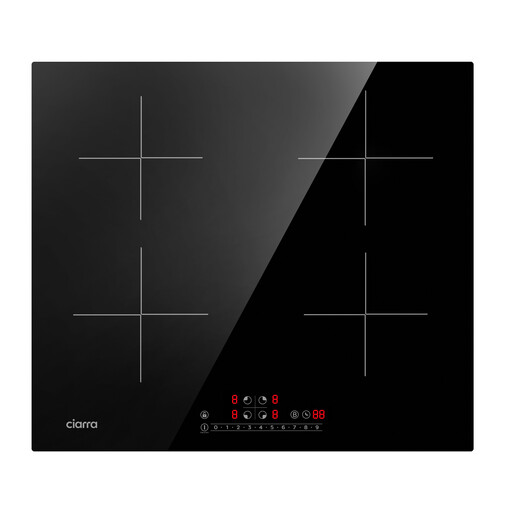
Consider this model if you want separate cooking zones while making risotto and another dish. Its stated features include nine power levels, touch controls and a booster; check pan compatibility, the required worktop opening and the electrical connection before ordering.
 No image available
This 60 cm model is relevant if you want induction zones for risotto alongside other pans. It has four zones; confirm that your cookware is magnetic and ask an installer to assess the worktop fit and hardwired connection.
 No image available
Consider this hardwired induction model if you want to cook risotto while using other zones. Check that your pan has a magnetic base, and confirm the exact cut-out and electrical requirements with the installation instructions before buying.
 No image available
Its four zones suit a routine that uses a separate pan alongside risotto. Check your pan’s magnetic base, the worktop opening and the model’s electrical installation requirements before choosing it.
 No image available
The flexible bridge is worth considering if your regular pan arrangement can use it while you cook risotto. This model also lists four zones and boost mode; check magnetic cookware compatibility, the opening needed for its 77 cm width and the electrical connection.
Induction suits risotto cooks who have a magnetic pan and value responsive adjustments between sautéing and simmering. Radiant ceramic is a practical alternative when retaining non-magnetic cookware takes priority, though its surface remains hot after switch-off.
Only if the pans you intend to use lack magnetic bases. Bosch UK says induction requires magnetic cookware, so test the base of your risotto pan with a magnet before choosing a hob.
A bridge zone is worth considering if you regularly use cookware or a multi-pan arrangement that needs the combined cooking area. For a single risotto pan, prioritise pan compatibility, usable controls and installation fit rather than assuming a flexible zone will improve the dish.
Check the rules for your location and the electrical work involved before arranging installation. GOV.UK’s Approved Document P covers electrical safety in dwellings in England; Electrical Safety First notes that Scotland has a different Building Standards system and Northern Ireland has no equivalent statutory requirement. Have a suitably competent installer assess the model’s wiring requirements and the existing supply.
Only if the hob and hood support a compatible connection. NEFF says its automatic hob-to-hood arrangement requires a compatible hood equipped with NEFF Home Connect, so check both model specifications before choosing that feature.