For poaching pears, choose a hob you can turn down to a gentle simmer and that fits both your pan and your kitchen. Induction is worth considering if your pan has a magnetic base and you want heat changes to take effect promptly; ceramic is an alternative if you want to keep non-magnetic cookware. Neither hob type alone establishes how well a particular model will simmer, so check its controls and installation requirements.
Who is this for?
Gentle-simmer dessert cooks
If you poach pears or prepare fruit syrups and sauces, you need to turn down the heat when liquid starts boiling too vigorously. CDA Appliances describes prompt heat adjustment as a feature of induction cooking; check the low settings on the particular hob you are considering.
Cookware-first kitchen upgraders
If keeping your existing poaching pan matters, test its base before choosing induction. Bosch UK recommends checking whether a magnet attaches to the pan base; ceramic is another route to assess if it does not.
Built-in hob replacement buyers
If you are replacing a hob, compare the new model’s cut-out, depth, underside space and electrical connection requirements with your kitchen. The visible hob width alone does not tell you whether it will fit the opening.
What matters when choosing?
Induction
Consider it when: Your poaching pan has a magnetic base and you want heat changes to take effect promptly.
Trade-off: A non-magnetic pan will need replacing for induction cooking, and the exact hob still has to fit your installation.
Ceramic electric
Consider it when: Keeping a non-magnetic poaching pan is a priority.
Trade-off: Check low-heat performance by model rather than assuming every ceramic hob will hold the same gentle simmer; Which? assesses simmering in its ceramic-hob testing.
For consumers choosing a built-in electric hob for pear poaching and related desserts, these concerns help separate the cooking decision from the cookware and fitting checks.
| Concern |
What to check |
Who this matters to |
| Gentle simmer |
Compare low-heat controls and timer behaviour; look for model-specific simmering assessments where available. |
If my poaching liquid starts boiling too hard, I want to turn it down without losing track of the cooking time. Around 33% of consumers would put gentle-simmer control first. |
| Existing pans |
Test the intended pan base with a magnet before choosing induction, and check that it suits the cooking zone. |
I want to keep using my usual pear-poaching pan rather than change cookware to suit a new hob. For around 27% of consumers, existing-pan compatibility would come first. |
| Kitchen fit |
Match the cut-out and underside space to the exact installation diagram; confirm the electrical connection required. |
A replacement must fit my worktop and the space beneath it before its cooking features matter. Installation fit would be the primary concern for around 27% of consumers. |
| Pan capacity |
Compare usable zone sizes and layout; consider a bridge or flexible zone if your pans need one. |
When I poach a larger batch or make sauce alongside it, I need room for the pans I actually use. Around 13% of consumers would make multi-pan capacity their first priority. |
Buying pitfalls
-
Choosing induction before checking the poaching pan
An induction hob requires a compatible pan, so your existing one may not work for the intended recipe.
Test the pan base with a magnet before ordering. If it does not attach, compare compatible cookware with the option of a ceramic hob.
-
Treating boost power as a simmering test
Boost helps with initial heating, but it does not establish how controllable a low setting will be. Which? assesses gentle simmering separately in its ceramic-hob testing.
Compare low-heat controls and look for model-specific simmering evidence where available, rather than choosing on boost alone.
-
Ordering by visible width alone
The worktop opening and space beneath the hob also determine whether a built-in model will fit.
Check the exact installation diagram against your cut-out, worktop depth, underside clearance and electrical arrangement.
A mismatch may mean altering the worktop or installation arrangement.
-
Assuming a flexible zone suits every large pan
Bridge and flexible-zone layouts vary by model; the feature may add little for one ordinary pan.
Compare your pan’s size and shape with the usable zone layout, especially if you poach pears while preparing another dessert component.
Brands to consider
Bosch
Bosch UK offers induction and ceramic electric-hob ranges to compare when choosing how to heat a poaching pan.
- Bosch UK advises a magnet test for induction cookware; its PWP611BB5B induction model is described with a CombiZone for combining zones.
- CombiZone, PowerBoost and other controls are model-specific, not features to assume across the range.
AEG
AEG is relevant if you also use large pans or prepare several dessert components at once.
- AEG describes bridge and FlexiBridge layouts that combine cooking areas on particular induction models.
- The cited 80 cm SK85IM0XFB model is specified by AEG as hardwired; check the dimensions and connection requirements of the exact model.
NEFF
NEFF’s flexible induction layouts are relevant when pan placement matters beyond cooking with a single poaching pan.
- NEFF describes flexible zones that accommodate different pan positions on applicable models.
- Zone capabilities vary by model, and induction still requires compatible cookware.
CDA
CDA is another brand to compare when considering induction controls for gentle cooking.
- CDA Appliances describes prompt heat reduction after adjusting an induction setting, which is relevant when poaching liquid begins to boil too hard.
- Check the shortlisted model’s manual for its timer, lock and spill-related features rather than assuming they apply across the range.
Induction hobs for pear poaching
These built-in induction hobs are options to assess if your poaching pan is compatible. Compare their stated zone layouts with your cookware, then check low-heat behaviour and the exact installation instructions before choosing.
 No image available
Belling IHL773 BLK 77 cm induction hob with flexible bridge
Consider the flexible bridge if the shape of your poaching pan calls for a combined cooking area.
Four cooking zones and touch controls are stated in the product name. Check low-heat control, pan compatibility and the installation diagram for your kitchen.
View on Joybuy
 No image available
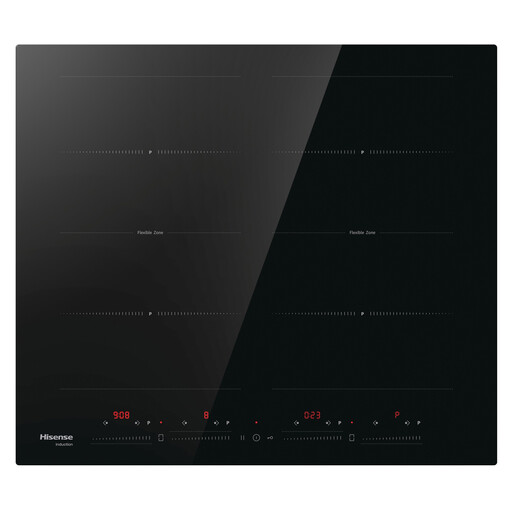
Hisense HI6442BSCE 60 cm induction hob with Area Flex
Consider Area Flex if you need to assess a larger cooking area for your poaching pan.
Check the usable zone layout, low settings and exact cut-out and connection requirements before choosing it.
View on Joybuy
 No image available
Ciarra built-in 60 cm four-zone induction hob
This built-in option is worth assessing if you want separate zones for a poaching pan and another dessert component.
Check how its controls behave at low heat, whether your pans work with induction and the model’s fitting instructions.
View on Joybuy
 No image available
Hoover HI642BCB 60 cm four-zone induction hob
Its four-zone layout is relevant if you plan to poach pears while using another pan.
Compare the zones with your cookware and check low-heat control, the worktop cut-out and installation requirements.
View on Joybuy
 No image available
Bosch PIE631BB5E Series 4 60 cm induction hob, hardwired
Consider this model if a hardwired installation suits your kitchen and you want to assess a conventional induction layout for your poaching pan.
Bosch GB lists PowerBoost for the PIE631BB5E; that does not establish its gentle-simmer performance. Check the low settings, cut-out and installation instructions.
View on Joybuy
Common questions
Is induction or ceramic better for poaching pears?
Choose between them according to your pan and the controls of the particular hob: induction requires compatible cookware and can respond promptly when you turn down the heat, while ceramic lets you consider keeping a non-magnetic pan. Neither type guarantees a steady gentle simmer on every model; look for model-specific control details or simmering assessments.
Will my existing poaching pan work on induction?
It may work if a magnet attaches to its base. Bosch UK recommends this as a practical compatibility check; also compare the pan’s base with the hob’s usable cooking zones.
What should I measure before replacing a built-in hob?
Measure the worktop cut-out, available depth and space beneath the hob, then compare them with the exact model’s installation diagram. The product information notes the visible hob top is wider than its cut-out and identifies an air gap above an under-counter oven as a fitting consideration; follow the requirements for the model you choose.
Do all electric hobs use the same electrical connection?
No; connection requirements depend on the model. Bosch GB lists a Plug & Play induction model, whereas AEG specifies its 80 cm SK85IM0XFB as hardwired only. Check the installation instructions and arrange an appropriately qualified installer where the work requires one.


