Family meal multitaskers
If the risotto pan stays on the hob while you prepare vegetables or side dishes, the number and spacing of usable zones matter as much as any single high-power setting.


Choose induction for a family risotto meal if your pans are induction-compatible and you value direct pan heating. Four usable zones give you room to cook alongside the risotto, while a bridge or flex area is worth considering for a large or long pan. Ceramic is an alternative if you want to keep non-induction cookware; whichever type you choose, check the pan layout, worktop cut-out and electrical connection for the exact model.
If the risotto pan stays on the hob while you prepare vegetables or side dishes, the number and spacing of usable zones matter as much as any single high-power setting.
Sautéing mushrooms, toasting rice and then cooking more gently call for changes in heat. Induction heats compatible cookware directly, as general guidance explains, but you still need to adjust the setting as the recipe requires.
If a new hob must fit an existing worktop and electrical installation, check its appliance dimensions, cut-out and connection instructions before settling on a zone layout.
For a family mushroom-risotto meal, start with the pans you will use at the same time. Then decide whether direct pan heating or keeping your existing cookware matters more, before checking the installation details.
Consider it when: The risotto and accompanying dishes use ordinary pans that fit separate zones.
Trade-off: The pans need induction-compatible bases, and four zones alone do not tell you how much room there is between them.
Consider it when: A large or long pan regularly shares the hob with the risotto pan.
Trade-off: Check the exact zone arrangement and worktop fit; flexible areas do not make every pan position usable at once.
Consider it when: Keeping pans without induction-compatible bases is a priority.
Trade-off: Ceramic zones heat the cooking area rather than heating a compatible pan directly as induction does.
| Concern | What to check | Who this matters to |
|---|---|---|
| Space for several pans | Compare zone positions and diameters with your pans; check whether a bridge area would suit a large or long pan. | If my risotto pan occupies one zone throughout cooking, I need space for the other dishes without crowding the hob. Around 42% of consumers put simultaneous pan space first. |
| Heat control | Check pan compatibility if choosing induction, and compare the exact model's controls and stated heating functions. | Moving from sautéing mushrooms to gentler cooking makes it important to change the heat as needed. For around 33% of consumers, responsive pan heating is the primary concern. |
| Cookware and fitting | Check existing pans, the worktop cut-out and the model's electrical connection instructions. | If I am replacing a hob, I want to keep usable pans and avoid choosing an appliance that does not fit the kitchen. Those compatibility and installation questions come first for around 25% of consumers. |
Zone arrangements differ even between hobs of similar widths: the cited Bosch PWP611BB5B has a CombiZone, while AEG lists a bridge function on its SO64IB0BFZ. A wider appliance also needs a suitable worktop opening.
Compare the exact model's zone diagram, appliance dimensions and cut-out with the pans and space you have.
Induction requires a suitable ferromagnetic pan base. A pan's appearance alone will not establish whether it works on the hob.
Check the main risotto pan and other frequently used cookware for induction compatibility before choosing an induction model.
Connection methods vary by model. Bosch describes its PUE611BB5B as Plug & Play, whereas AEG specifies a hardwired connection for the SO64IB0BFZ.
Read the installation instructions for the hob you intend to buy and ask a qualified installer to assess the existing connection and any work required.
A boost function supplies extra heating power on models that offer it; it does not take the place of adjusting the heat during cooking.
Use the setting appropriate to each cooking stage, and follow the hob and cookware manufacturers' instructions.
These cited models illustrate different induction layouts and installation requirements; the brand name alone does not establish which arrangement will fit your kitchen.
Bosch's cited 60 cm models show the distinction between four standard induction zones on the PUE611BB5B and a combined cooking area on the PWP611BB5B.
The cited 6000 Bridge SaphirMatt SO64IB0BFZ is a four-zone induction model for buyers considering a shared area for larger cookware.
The cited T69YYX4C0 offers a wider induction layout for a kitchen with space for a 90 cm appliance.
These induction hobs offer four-zone layouts for cooking the risotto alongside other dishes. The Belling model also lists a flexible bridge; check your pans, available worktop space and the installation instructions for whichever model you consider.
 No image available
Consider this if a larger or longer pan may share the hob with your risotto pan.
Four cooking zones and a flexible bridge; touch controls and boost mode are stated in the product name.
Check that the worktop can accommodate the 77 cm hob and confirm its cut-out and electrical connection requirements before ordering.
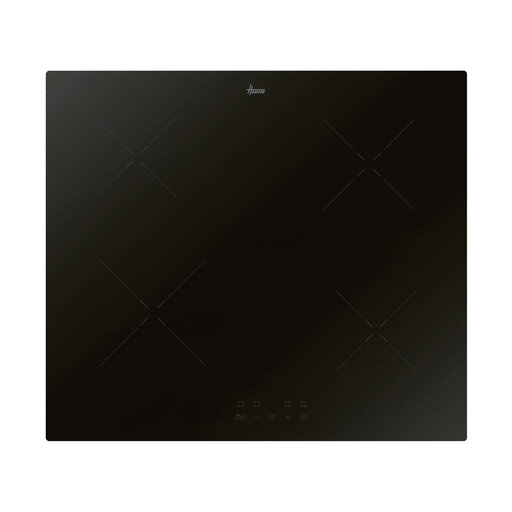 No image available
Consider this layout if the risotto and accompanying dishes normally use separate, ordinary pans.
The product name specifies four induction zones in a 60 cm hob.
Check pan compatibility, the worktop cut-out and the connection instructions for this model.
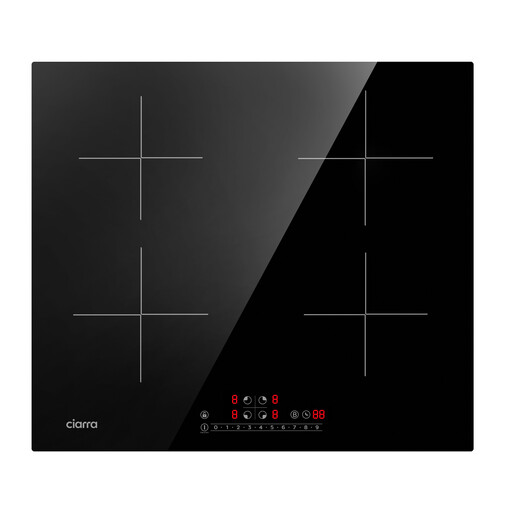 No image available
Consider this four-zone layout when several pans need space alongside the risotto.
The product name specifies nine power levels and a booster function.
Check that your pans are induction-compatible, and confirm the cut-out and electrical connection before fitting.
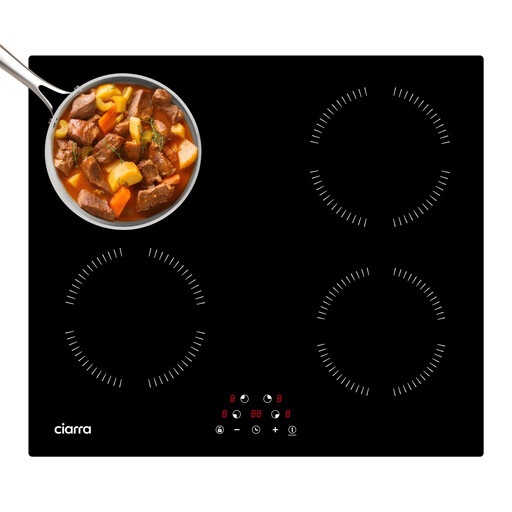 No image available
This is another four-zone option to consider if you cook the risotto while using other pans.
The product name identifies a built-in 60 cm induction hob with four zones.
Compare the zone diagram with your pan sizes, and check cookware compatibility and installation requirements.
 No image available
Consider this four-zone model if several ordinary pans need space during the family meal.
The product name specifies a hardwired 60 cm induction hob.
Arrange an assessment of the electrical connection and check the model's installation drawing for the required cut-out.
They will work only if their bases are suitable for induction. Bosch identifies ferromagnetic cookware as suitable and advises checking the pan base against the cooking-zone size; check each pan you expect to use, especially the risotto pan.
No: the connection method depends on the exact model. Bosch describes its PUE611BB5B as Plug & Play, while AEG specifies a hardwired connection for the SO64IB0BFZ. Follow the chosen model's installation instructions and have the existing supply assessed where needed.
A 60 cm hob may suit a risotto pan and other ordinary pans if its zone positions leave enough usable space. Check your pan sizes against the zone diagram and the required cut-out; a bridge area or wider hob is worth considering when you regularly use larger cookware.
Check the requirements for the property's location and the electrical work actually planned. In England, GOV.UK's Approved Document P provides guidance on electrical safety in dwellings; ask a qualified installer or local Building Control whether the proposed work needs notification. Elsewhere in the UK, check the applicable local requirements rather than assuming England's route applies.
Follow the chosen hob's cleaning instructions and allow it to cool as directed. NEFF advises avoiding rough pans and abrasive cleaners on its glass-ceramic finish.