Everyday soup cooks
If you usually make one saucepan of tomato soup, focus on a compatible cooking zone, accessible heat controls and a timer rather than extra cooking area.


For one saucepan of tomato soup, start with an induction hob whose zone suits your pan, whose controls let you reduce the heat after the initial boil, and which has a timer. A bridge or flex-zone hob makes more sense when a wide stockpot or several pans need the extra space; a portable single zone suits an extra or temporary cooking position. Check the pan base, worktop dimensions and electrical requirements for the exact model before choosing.
If you usually make one saucepan of tomato soup, focus on a compatible cooking zone, accessible heat controls and a timer rather than extra cooking area.
If you use a wide stockpot or cook soup alongside other dishes, compare the usable zone layout with your cookware. A bridge or flex zone is relevant when its shape and dimensions meet that need.
If you need a movable extra zone instead of a built-in hob, check where the cooker can stand, which pans it accepts and how the exact model connects to the electrical supply.
Choose when: One saucepan is your usual load and a standard-width built-in hob suits the kitchen.
Trade-off: Separate zones offer less flexibility for an unusually wide pot.
Choose when: Your stockpot shape or routine of using several pans calls for a more flexible cooking area.
Trade-off: A larger built-in model can require a wider opening and a different electrical installation.
Choose when: You need an additional or temporary place to cook one pot without changing the worktop.
Trade-off: You can cook on only one zone and need a suitable place to stand the appliance.
| Concern | What to check | Who this matters to |
|---|---|---|
| Gentle simmer | Check the low-power controls and timer on the exact model. Compare your saucepan’s flat, magnetic base with its zone guidance. | I want to bring one pot to the boil, then turn it down without struggling to control the simmer; roughly 42% of consumers would put simmer control first. |
| Kitchen fit | Compare the installation drawing with the worktop opening, then check the connection method and electrical load. | If I am replacing a built-in hob, an opening or circuit mismatch could prevent installation; about 33% of consumers would prioritise kitchen fit. |
| Pot and pan space | Measure the base of your largest pot and compare it with the zone layout; consider a bridge or flex zone if the cookware calls for one. | When I make a large batch or use other pans beside the soup, I need enough usable cooking area; around 25% of consumers would make capacity their primary concern. |
Induction needs a ferromagnetic pan base. Bosch UK and NEFF UK advise that the base and its fit with the zone affect heating and pan detection.
Test the base with a magnet, check that it is flat, and measure the base rather than the wider rim against the hob’s cookware guidance.
You may need an induction-compatible saucepan if your current one does not meet those conditions.
Worktop cut-outs and connections vary by model. AEG UK specifies a 750 × 490 mm cut-out and hardwired installation for its cited 78–80 cm bridge hobs.
Check the installation drawing, clearances, ventilation and electrical requirements against your kitchen. Consult a qualified electrician if circuit capacity or hardwiring is uncertain.
A worktop alteration or electrical installation may be needed.
In a 2025 product-safety report, the Office for Product Safety and Standards identified a particular induction cooker with a non-compliant plug fuse link and a serious fire risk. That finding concerns the reported product, not every portable cooker.
For the model you plan to buy, check its safety information, instructions and supply and plug arrangement rather than relying on its appearance or stated wattage.
Boost addresses the initial heating stage. The heat needed afterwards depends on the actual pan, soup quantity and controls; a boost feature alone does not establish low-setting performance.
Check how the exact hob adjusts to lower settings and whether its timer meets your needs. Try your usual saucepan where permitted.
Bosch UK lists both a conventional four-zone PIE631BB5E and the wider, five-zone PXV831HC1E with FlexInduction. Compare them by pan layout and available worktop space.
AEG UK offers induction layouts from compact two-zone models to larger bridge and flex-zone designs that may suit wider cookware.
NEFF UK describes flex-zone hobs and selected temperature-assisted functions. Their availability depends on the model, not the brand name alone.
These products cover built-in hobs for everyday or wider-pan cooking and a portable single zone for temporary or additional use. Compare each model’s pan guidance and installation requirements with your own setup.
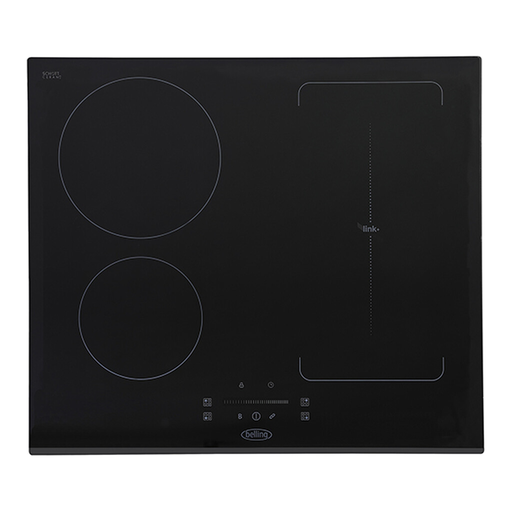 No image available
A built-in option for a soup-making kitchen where a 60 cm hob suits the available space. Check the actual cut-out, electrical connection and the fit of your saucepan before ordering.
 No image available
Consider its flexible bridge if your wide soup pot needs a joined cooking area. The product name also specifies touch controls and Boost; confirm the worktop opening and electrical requirements for this 77 cm model.
 No image available
A conventional four-zone built-in layout to consider if you usually cook one saucepan of soup. Bosch UK specifies PowerBoost and TouchSelect controls for this model; the product name states that it is hardwired. Confirm the cut-out and electrical installation before buying.
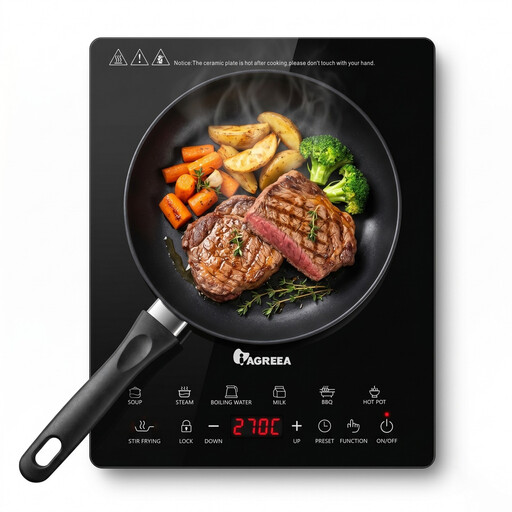 No image available
A single-zone option for a temporary kitchen or an extra soup pot. Its product name specifies eight power levels, a timer of up to three hours and suitable cookware from 12–26 cm. Check that your flat magnetic pan fits and confirm the UK supply and plug arrangement before use.
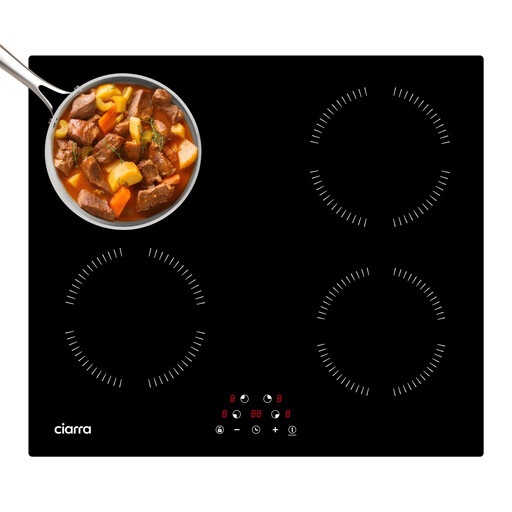 No image available
A four-zone built-in option to compare when replacing a hob for everyday cooking. The product name specifies modular power control; check the exact cut-out, pan-zone dimensions and electrical connection before deciding whether it suits your kitchen.
It can work if it has a flat ferromagnetic base of a suitable size for the chosen zone. Bosch UK and NEFF UK advise checking the pan base and its match with the hob; test the base with a magnet and consult the exact model’s cookware guidance.
PowerBoost can be used for the initial heat-up where the hob’s instructions permit it, but reduce the setting for a gentle simmer and keep an eye on the pot. Bosch UK says PowerBoost provides up to 50% more power on the PIE631BB5E; that claim does not establish how your saucepan will behave at low settings.
No; the connection depends on the exact hob. AEG UK lists its cited bridge models as hardwired only, with total electrical loading of 7,200–7,350 W. Check the installation instructions and ask a qualified electrician if the kitchen circuit or connection method is uncertain.
Check the exact model’s documentation and the product requirements that apply to it; a marking alone should not replace those checks. The Department for Business and Trade says Great Britain continues to recognise CE marking alongside UKCA marking, while the Office for Product Safety and Standards sets out requirements for electrical equipment under the Electrical Equipment (Safety) Regulations 2016. This guidance concerns England, Scotland and Wales, not Northern Ireland.
Let the surface cool as directed by the hob’s manual, then follow the manufacturer’s approved cleaning method for that glass surface.