Dinner-party hosts using several pans
If a stockpot must stay on the hob while noodles, toppings or sauces cook, compare usable zone positions and pan footprints—not just the number of zones.


A 60 cm hob with flexible zones is worth considering when worktop space is limited and a large broth pot is only an occasional requirement. If you regularly cook broth alongside several pans of noodles and toppings, a wider five-zone layout offers more room, provided it fits the kitchen. Check the actual pan layout, magnetic pot base, worktop cut-out and electrical connection before choosing either.
If a stockpot must stay on the hob while noodles, toppings or sauces cook, compare usable zone positions and pan footprints—not just the number of zones.
If you want to bring broth to the boil and then lower the heat while preparing other dishes, check which controls work on the zone intended for your stockpot. Boost and temperature-assistance functions vary by model.
If the existing cut-out and electrical arrangement cannot easily change, establish which hobs can be installed before comparing cooking features. The required dimensions and connection method belong to the exact model.
For a noodle-broth dinner party, start with the space available for the hob and all the pans you intend to use; then check cookware and installation fit.
Consider it when: the kitchen suits a compact built-in hob and you occasionally need more freedom to position a large pot.
Trade-off: A flexible zone cannot create more physical worktop space; check whether the stockpot and side pans fit together.
Consider it when: broth regularly cooks alongside several other pans and the kitchen can accommodate a wider appliance.
Trade-off: Installation requires a suitable opening and electrical arrangement; five zones alone do not establish that your particular pans fit side by side.
| Concern | What to check | Who this matters to |
|---|---|---|
| Room for several pans | Compare zone positions with the footprint of the stockpot and the pans needed alongside it. | I need broth to simmer while I prepare noodles and toppings, without moving pans out of the way. Around 33% of consumers put simultaneous cooking space first. |
| Worktop and electrical fit | Check the model’s cut-out dimensions, connection method and electrical requirements against the kitchen. | If my existing kitchen cannot accommodate the hob, its cooking features will not help at dinner. For around 27% of consumers, installation fit is the primary concern. |
| Existing cookware | Check that the stockpot has a flat, magnetic base of a suitable size for the intended zone. | I want to keep using my broth pot rather than discover it is incompatible when I switch hobs. Keeping existing cookware is the main concern for around 20% of consumers. |
| Boil-to-simmer control | Check which controls are available on the stockpot’s zone and how that model adjusts heat. | Once the broth boils, I need to lower the heat while working on the rest of the meal. Around 20% of consumers prioritise that control above the other factors. |
A wider five-zone hob may leave more room for pans but need a different worktop opening. AEG specifies a 750 × 490 mm built-in cut-out for its 80 cm NIK85M00AZ; that dimension cannot be assumed for another model.
Measure the existing opening, available worktop and largest pot, then use the installation sheet for the exact hob you intend to buy.
Changing the worktop can add installation work before the hob is usable.
Induction requires a ferromagnetic base. Bosch advises matching the magnetic base to the cooking zone, so the material and base size both matter for a large broth pot.
Check that the base is flat and magnetic, compare its size with the intended zone, and do not test heating with an empty pot.
An incompatible stockpot would need to be replaced to use it for induction cooking.
Manufacturers describe different functions on different models. A boost setting intended for initial heating does not establish how a particular hob will hold a pot of broth at low heat.
Check the exact model’s instructions for the supported zone, cookware requirements and available heat-control settings.
A portable induction cooker can provide an additional cooking surface, but Electrical Safety First warns that overloaded or daisy-chained extension leads can overheat.
Check the portable appliance’s rating against the extension lead’s marked rating, avoid daisy-chaining, and fully unwind a cable reel when its full rating is needed. Follow the built-in hob’s specified installation method rather than treating an extension lead as a substitute.
Bosch lists induction hobs across several widths, making its range relevant when comparing compact and wider layouts.
AEG is relevant when comparing compact flexible-zone layouts with wider models that offer several cooking areas.
NEFF describes its Flex Induction range as an option for cooks positioning and managing multiple pans.
Siemens lists induction hobs in multiple widths and describes powerBoost for selected cooking zones.
Hotpoint offers a wide-hob example for cooks comparing room for a broth pot and other pans.
This 60 cm induction hob is a choice to examine if a compact built-in layout suits your kitchen. Compare its zones with your broth pot and accompanying pans before deciding whether it meets your dinner-party needs.
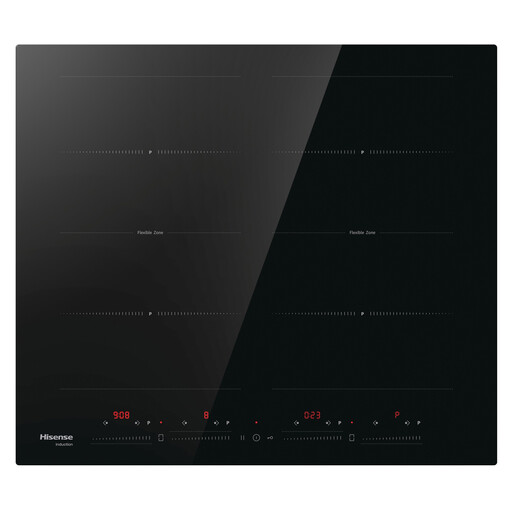 No image available
Consider this 60 cm model if you want a built-in hob for a broth pot and accompanying pans but have limited worktop width.
The product name identifies Area Flex; check the exact zone layout against the bases of all the pans you plan to use together.
Before ordering, confirm the required cut-out, electrical connection and load in the model’s installation instructions.
It will work only if it has an induction-compatible magnetic base. Bosch lists cast iron, enamelled steel and suitable stainless steel as examples; check that the flat magnetic base is appropriately sized for the cooking zone.
It is worth considering when the pot or another large pan needs more placement flexibility than the hob’s fixed zones provide. Check the exact model’s zone arrangement and whether its flexible area leaves room for the other pans you need during the meal.
Check the hob’s specified connection and arrange installation that meets the requirements where you live. Electrical Safety First says home electrical installation work must comply with applicable Building Regulations and that requirements differ between England and Wales, Scotland and Northern Ireland; a hardwired model is not a plug-in replacement.
A portable cooker can provide a separate surface for one additional vessel if its instructions, cookware and electrical arrangement are suitable. Electrical Safety First advises checking an extension lead’s rating, avoiding daisy-chaining and fully unwinding cable reels when their full current rating is needed. It does not replace the specified installation for a built-in hob.