Regular cooks using preserving pans
If you reduce larger batches in a wide pan, check its base against the hob’s zone layout. A bridge or flex zone may give you a more suitable place for that pan, depending on the model and cookware.


For regular batches, start with a four-zone induction hob whose controls let you turn down the heat as fruit coulis thickens. Consider a bridge or flex zone if your preserving pan does not sit suitably on one circular zone; a plug-and-play built-in hob or portable single-zone cooker may suit a different kitchen arrangement, but neither should be treated as interchangeable with a hardwired four-zone model.
If you reduce larger batches in a wide pan, check its base against the hob’s zone layout. A bridge or flex zone may give you a more suitable place for that pan, depending on the model and cookware.
If coulis is one of several things you cook, a four-zone layout may suit your usual saucepan use. Check the worktop opening and electrical connection as carefully as the hob’s surface width.
If you make smaller batches or need a movable cooking surface alongside your main hob, a portable single-zone cooker is an alternative to replacing the fitted hob.
Match the hob to your preserving pan and kitchen connection first, then consider how easily you can lower the heat and clean up sticky splashes during a long reduction.
| Concern | What to check | Who this matters to |
|---|---|---|
| Heating and reduction control | Look for controls you can adjust while stirring; treat boost as an initial-heating feature, not a setting for the whole reduction. | If I bring a large fruit mixture up to heat and then reduce it, I need to turn the setting down promptly as it thickens. Around 40% of consumers put that heat control first. |
| Pan and zone space | Measure the pan base against the zone layout, especially before choosing a bridge or flex-zone model. | A wide preserving pan can make one circular zone an awkward fit, while another pan may need space alongside it. For roughly 30% of consumers, usable pan space is the primary concern. |
| Kitchen fit and connection | Compare the required cut-out and clearances with your worktop, and check the exact model’s connection type and electrical load. | When replacing a built-in hob, I need the new appliance to fit the opening and suit the kitchen’s electrical arrangement. That is the first concern for around 20% of consumers. |
| Extra cooking capacity | Check whether one portable zone, suitable cookware and a stable countertop position will cover your batch size. | For an occasional small batch, I may need one movable cooking surface rather than a new fitted hob. Around 10% of consumers primarily need that extra or temporary zone. |
The visible surface and the worktop cut-out are different measurements. A nominal 60 cm hob may still be unsuitable for an existing opening or the space beneath it.
Compare the manufacturer’s installation drawing with the measured cut-out, worktop depth, underside clearance and nearby cabinetry before ordering.
An incompatible opening or clearance may require worktop alterations before installation.
Connection arrangements differ between models. Bosch describes the PUG61RAA5B as plug-and-play, while AEG specifies a hardwired connection for the SO64IB00FB.
Check the exact model’s installation instructions and load. For a hardwired hob, arrange an assessment of the existing electrical installation.
A wide or long preserving pan may not sit suitably on one circular zone. A bridge or flex feature is relevant only if its particular layout accommodates the pan you use.
Measure the pan base and compare it with the model’s cookware-placement guidance rather than relying on the number of zones alone.
Boost can help with initial heating, but it does not prevent a thickening fruit-and-sugar mixture from catching.
Lower the setting when the coulis reaches the reduction stage, and keep stirring and monitoring it.
Its referenced 60 cm induction models offer two different installation routes for a built-in hob.
The SO64IB00FB is relevant when a preserving pan calls for a bridged cooking area.
The T56TT60N0 offers a flexible-zone layout and a removable TwistPad control dial.
Its referenced portable cooker is an option for an occasional small batch or an additional cooking position.
These choices cover a bridge-zone built-in hob for a wider pan, a hardwired four-zone hob for a pan that fits a standard zone, and a portable cooker for occasional or supplementary batches. Check each appliance against your cookware and installation before choosing.
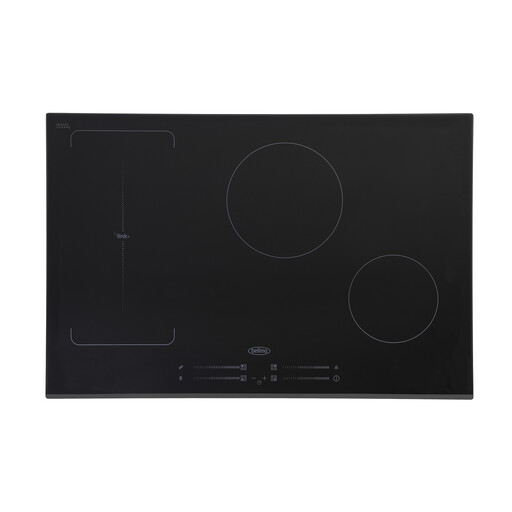 Image unavailable
Consider this built-in model if your batch-cooking pan calls for a flexible bridge area, provided the pan base suits its zone layout.
Four cooking zones, touch controls and a boost mode are specified for this variant. Check the required worktop opening and electrical connection before ordering.
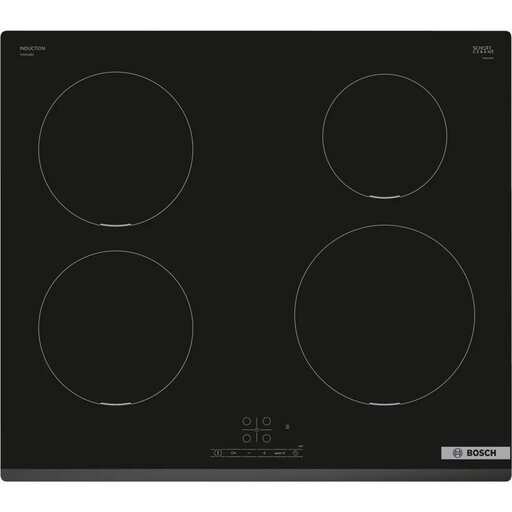 Image unavailable
This hardwired built-in option is relevant if your usual preserving pan fits a standard zone and you want other zones available for cooking alongside it.
Bosch specifies four zones, PowerBoost and QuickStart for this model. Check the pan base, worktop cut-out and electrical installation requirements.
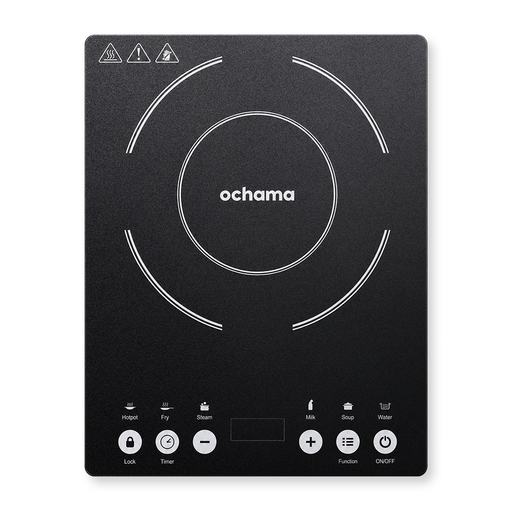 Image unavailable
Use this as a single extra cooking position or for an occasional batch when one pan at a time is enough; it is not a fitted four-zone replacement.
The listing specifies 10 power settings, touch controls and a glass panel. Check that your pan is induction-compatible and suits the cooking area, and confirm the plug and countertop requirements.
Not if your saucepan or preserving pan sits suitably on a standard induction zone. Consider a bridge or flex zone when the pan base is too wide or long for one circular zone, and check the proposed model’s zone layout and cookware guidance.
No; the connection depends on the exact model. Bosch describes the PUG61RAA5B as plug-and-play, whereas AEG specifies that the SO64IB00FB is hardwired only. Follow the installation instructions for the hob you choose.
Measure the existing worktop cut-out, then compare it with the new hob’s installation drawing rather than its visible width alone. Check the required depth, underside clearance and ventilation space around any oven or cabinetry too.
Have a suitably qualified installer assess whether the proposed hob’s load and connection requirements suit the existing installation. Electrical Safety First strongly recommends using a registered electrician for installation work; check the requirements that apply to the work at your property.