Multi-pan family cooks
If gravy reduces while vegetables, potatoes or a main dish cook, count the pans that need heat at the same time. Zone layout and controls matter more here than whether an appliance can be stored away.


For gravy alongside several other pans, a four-zone built-in induction hob is a practical choice if your cookware, worktop and electrical arrangement suit the model. A portable single-zone induction hob can provide occasional extra space, while a radiant ceramic hob avoids the induction-ready pan requirement but heats the glass surface beneath the pan.
If gravy reduces while vegetables, potatoes or a main dish cook, count the pans that need heat at the same time. Zone layout and controls matter more here than whether an appliance can be stored away.
If the main cooker handles the meal and you need a separate surface only now and then, a portable single-zone induction hob may suffice. You still need a compatible saucepan and a suitable place to use it.
If replacing cookware would change your decision, check your gravy saucepan before choosing induction. Radiant ceramic offers an electric-hob route without the induction-ready pan requirement, but its glass surface heats during use.
For a family meal, decide whether the gravy pan needs an extra zone or a place among several pans. Then check the saucepan, the available space and the exact model's electrical requirements.
Choose it when: You occasionally need one extra zone while another cooker handles the rest of the meal.
Trade-off: One zone cannot take the place of a multi-pan hob, and the saucepan must be induction-ready.
Choose it when: Gravy regularly cooks alongside several dishes and each pan needs usable hob space.
Trade-off: The pans, worktop opening and electrical arrangement must suit the particular model; built-in induction hobs do not all connect in the same way.
Choose it when: Keeping pans that are not induction-ready takes priority.
Trade-off: Elements heat the glass beneath the pan, so allow for a hot surface during and after cooking.
| Concern | What to check | Who this matters to |
|---|---|---|
| Heat control | Look at how you select a zone and lower its setting; check whether a timer or pause control would help. | When gravy thickens, I want to lower the heat without changing the settings for other pans. Around 36% of consumers put responsive reduction control first. |
| Pan space | Count the pans used together and check the zone layout; consider a bridge or flexible zone only if your cookware calls for one. | I need the gravy saucepan to cook alongside the rest of dinner, not displace another pan. For around 29% of consumers, simultaneous pan space is the main concern. |
| Compatibility and fit | Check induction suitability for your pans and compare the exact model's cut-out and connection instructions with your kitchen. | I would rather settle the pan and installation questions before choosing a hob I cannot use as planned. Around 21% of consumers make compatibility their primary concern. |
| Occasional use | Decide whether one zone is enough; for a portable unit, check its placement, ventilation and electrical instructions. | If gravy only occasionally needs its own surface, I want an option I can put away afterwards. Simplicity comes first for around 14% of consumers. |
Induction generates heat in compatible cookware, while radiant ceramic heats elements beneath the glass. That distinction affects both the pan you can use and how the surface behaves after a setting change.
Check your saucepan and try to assess how clearly the model lets you select and lower the relevant zone. Do not treat a boost function as evidence of gentle reduction control.
AEG lists its TO64IB00FB as 590 × 520 mm overall, with a 560 × 490 mm built-in cut-out and a hardwired-only connection. Those dimensions and connection details belong to that model, not every hob described as 60 cm.
Measure the opening and check the exact installation instructions, cabinet space and electrical connection before ordering.
An unsuitable opening or electrical arrangement may mean arranging worktop alterations or installation work.
A portable unit still needs induction-ready cookware and an appropriate place to operate. The Joybuy portable-hob listing calls for a flat, stable, heat-resistant surface and unobstructed ventilation.
Check the saucepan, keep the ventilation clear and supervise the gravy as it reduces. Electrical Safety First advises against leaving electrical appliances on and unattended.
If your existing saucepan is not induction-ready, you may need a different pan to use this route.
GOV.UK's Approved Document P addresses electrical safety in dwellings in England. Installation requirements should not be assumed to be identical in every UK nation or for every connection arrangement.
Use the chosen hob's instructions and ask a qualified installer or local building-control service about the requirements where it will be fitted.
Its TO64IB00FB illustrates a built-in induction option for a meal using several pans.
The PUE611BB5B induction hob and PKH811BB1D radiant hob illustrate different cookware and installation choices within the Bosch range.
The built-in T66FHE4L0 is relevant when pan placement and model-specific zone controls matter.
These built-in induction models are relevant if gravy needs a place alongside other pans during a family meal. Compare the zone layout, your saucepan and the installation instructions for each model; the portable and radiant ceramic routes discussed above call for different checks.
 No image available
Consider this model when the gravy pan needs a separate zone and a bridge option could be useful for larger cookware.
The product name specifies four zones, a flexible bridge and touch controls. Check your saucepan's induction compatibility and the exact worktop and electrical requirements.
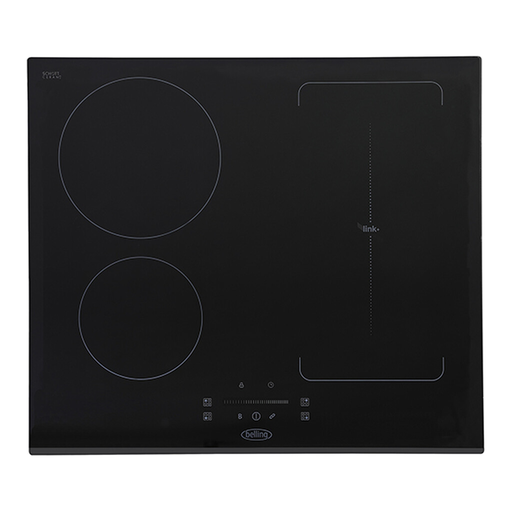 No image available
Consider this built-in route if you want the gravy saucepan on the hob while other dishes cook.
Check the usable zone layout, induction compatibility of your pans and the model's worktop and electrical installation instructions.
 No image available
Consider this model for built-in cooking when you can plan for a hardwired connection as well as space for the gravy pan.
Check your pan's induction compatibility and confirm the exact cut-out and household electrical requirements with the installer.
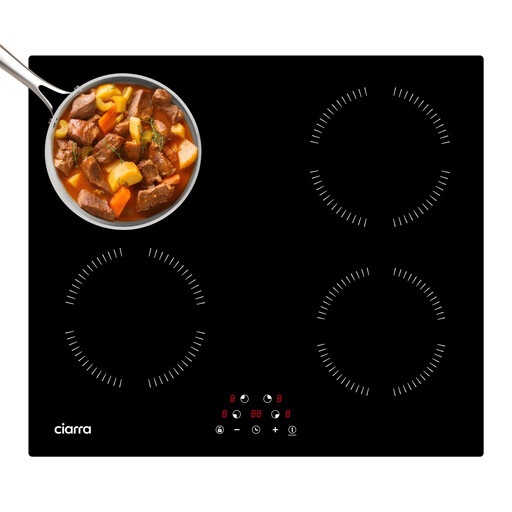 No image available
Four zones make this a model to consider when gravy cooks alongside other family-meal pans.
Check whether the zone positions fit your usual saucepans, then confirm induction compatibility, the worktop cut-out and electrical instructions.
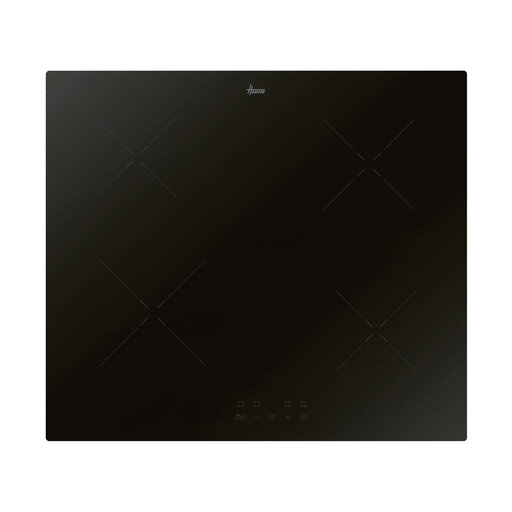 No image available
This four-zone model is relevant when the gravy saucepan needs room alongside other dishes.
Check the fit of your pans and worktop before choosing it. The model is listed as hardwired, so confirm its connection requirements with the installer.
Induction is an option if the saucepan is compatible and you want heat generated in the pan. Check how the particular hob lets you lower a zone's setting; a boost function is not a substitute for assessing its lower controls.
It will work only if its base is induction-ready. Check the pan's own markings or manufacturer guidance before buying; do not assume compatibility from its general material description alone.
No, if one occasional extra zone is enough, a portable induction unit may meet that need. It still requires a compatible pan, suitable stable placement, clear ventilation and supervision; it does not provide the space of a multi-zone hob.
Do not assume that a hardwired hob is a straightforward DIY installation. Check the appliance instructions and existing electrical arrangement with a qualified installer. GOV.UK's Approved Document P addresses electrical safety in dwellings in England; ask about the applicable requirements where your hob will be installed.
Keep the hob under supervision while the gravy reduces, particularly as it thickens. Electrical Safety First advises against leaving electrical appliances on and unattended; follow the hob manufacturer's safety instructions too.