What matters when choosing
Start with where the hob will live: a removable single-zone unit suits occasional one-pan cooking, while a fitted hob commits worktop space to a broader cooking routine. Then check simmer control and the size of the pan you actually use.
| Concern | What to check | Who this matters to |
|---|
| Controlled simmering |
Compare manual low-power settings and timer controls; a boil or boost function does not replace monitoring fruit as it reduces. |
Once the berries have heated through, I want to adjust the simmer without leaving the pan on full power. Around 36% of consumers put simmer control first. |
| Storage and footprint |
Check appliance dimensions, a suitable work surface and whether the pan falls within the portable model’s stated size range. |
If worktop space is scarce, I need to put the hob away after making one pan of compote. For around 29% of consumers, that removable format is the primary concern. |
| Permanent installation |
For a fitted model, compare the appliance and cut-out dimensions, clearances and specified electrical connection. |
I cook often enough to want a permanent hob, but it has to fit my kitchen and be installed as the model requires. Installation suitability comes first for around 21% of consumers. |
| Larger or parallel cooking |
Match your cookware base to the zone layout, and check whether a bridge function suits the larger pan you intend to use. |
When I prepare a larger batch or cook another dish alongside it, one zone may not be enough. Around 14% of consumers prioritise that extra cooking capacity. |
Joybuy product choices
These choices include portable hobs that can be put away after one-pan cooking and a compact fitted two-zone hob for a more permanent setup. Compare their controls, cookware fit and installation needs with your kitchen.
 No image available
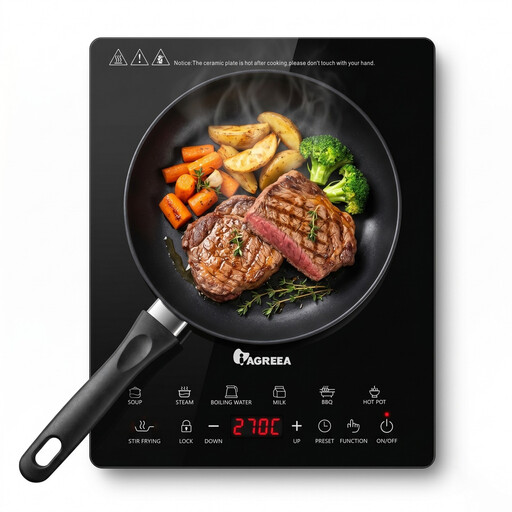
IAGREEA DF200-14V10 portable induction hob, 2000 W
A portable option for making one pan of compote when you need to clear the worktop afterwards.
The product name specifies eight power levels, 60–270°C temperature control, a three-hour timer and suitable cookware from 12 to 26 cm. Check that your pan’s flat base fits and confirm the connection arrangement before buying; the timer does not make compote safe to leave unattended.
Joybuy
 No image available
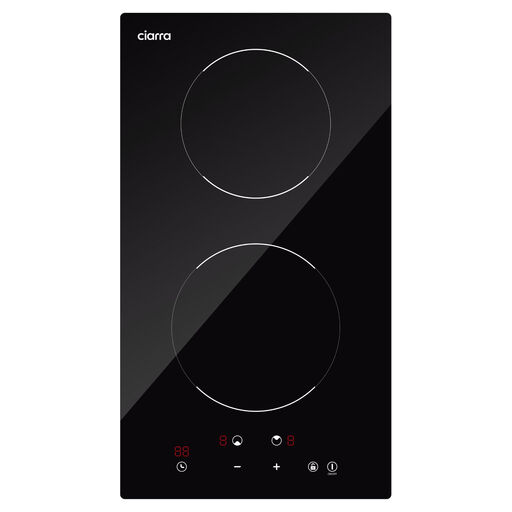
CIARRA CBBIH292T built-in induction hob, 29 cm, two zones
A compact permanent option if you want to make compote while keeping a second zone available.
The product name specifies nine power levels and a timer. Check the required cut-out, ventilation, connection instructions and whether its lower settings suit the simmer you want; this hob cannot be stored away after use.
Joybuy
 No image available
ochama portable induction hob, 2000 W
A removable hob to consider if permanent worktop space is limited.
The product name specifies ten power settings and six functions. Before choosing it for compote, check the low-setting output, timer, supported pan diameter and connection arrangement against your cooking needs.
Joybuy
Common questions
Will my existing saucepan work on an induction hob?
It needs a magnetic base, and its flat base must fit the hob’s stated cookware or zone-size limits. Test the base with a magnet and measure it before choosing a model; Electrolux UK’s cookware guidance identifies a magnetic base as necessary for induction.
Which portable-hob controls matter most for compote?
Look for manual adjustment that lets you reduce the heat after the fruit warms, along with a timer that suits how you cook. Maximum boost power and automatic boiling modes do not tell you how well a model will maintain a monitored simmer.
Can I leave berry compote unattended if the hob has an automatic boil mode?
No: an automatic programme does not establish that it can manage a reducing fruit-and-sugar mixture without supervision. Tefal warns in its IH201840 guidance that smaller quantities of liquid may boil dry if left unattended.
Do all fitted induction hobs need hardwiring?
No; the connection depends on the exact model. Electrolux specifies the LIB60420C as hardwired only, whereas Bosch describes the PWP611BB5B as Plug & Play, so check the installation instructions for the hob you choose.
Should I get installation advice before buying a fitted hob?
Yes, if you are unsure whether the required opening or electrical connection suits your kitchen. GOV.UK’s Approved Document P addresses electrical safety in dwellings in England, rather than setting out one rule for every UK installation; Electrical Safety First recommends using a registered electrician for installation work.


