One-pan shakshuka cooks
If you usually make shakshuka in one round frying pan, focus on a zone that fits its base and leaves other zones available when you make sides.


For shakshuka in an ordinary round pan, start by finding an induction hob with a cooking zone that fits the pan base; a four-zone built-in layout also leaves room for sides. Consider a bridge or flexible zone if you regularly use a long or unusually wide pan, and look for a frying sensor only if that feature matters to your cooking. Before choosing a built-in model, check your pan's compatibility and the exact installation requirements.
If you usually make shakshuka in one round frying pan, focus on a zone that fits its base and leaves other zones available when you make sides.
If you use a long or unusually large pan, or cook several dishes at once, a bridge or flexible cooking area may be worth checking against your cookware.
If the onion, pepper and spice base is the stage you find hardest to manage, compare the frying-temperature features of exact models rather than assuming every hob in a range has a sensor.
Start with your pan base and available worktop space, then decide whether separate zones, flexible pan placement or frying-temperature assistance matters more to your routine.
| Concern | What to check | Who this matters to |
|---|---|---|
| Pan fit and spare zones | Compare your pan-base diameter with the exact cooking zone; check how many other zones remain usable. | If I cook shakshuka in one round pan and sometimes make a side dish, I want both pans to have space. Around 46% of consumers would put this everyday layout first. |
| Frying and simmering control | Check the exact model's heat controls and whether it includes a frying-temperature sensor. | When the spices and vegetables are frying, I want more help managing that stage before the sauce simmers. For around 36% of consumers, control during frying would be the primary concern. |
| Space for larger cookware | Check whether a bridge or flexible area fits your pan, then compare the appliance and cut-out dimensions. | A long or unusually wide pan changes how much cooking area I need, especially when preparing several portions. Flexible cookware space would come first for around 18% of consumers. |
A pan that suits your recipe will not heat on an induction hob unless its base is compatible.
Hotpoint UK suggests checking whether a fridge magnet sticks to the base. Also check that the base sits flat and fits the chosen zone.
You may need a different pan if your preferred one is not compatible.
A larger flexible-zone hob may need a substantially wider opening: AEG specifies a 560 x 490 mm cut-out for TO64IB00FB and an 880 x 490 mm cut-out for KIK95I00FB.
Measure the existing opening and surrounding space against the installation drawing for the exact model.
A mismatch may mean worktop alterations or additional installation work.
Bosch's PerfectFry Plus and NEFF's Extended Frying Sensor are features of particular models, not substitutes for watching the sauce and eggs.
Confirm that the exact hob has the sensor you want, and keep monitoring the pan while cooking.
A portable single-zone hob can heat a compatible shakshuka pan, but it cannot heat a second pan at the same time.
If you routinely prepare sides alongside shakshuka, decide whether one cooking position will work before choosing a portable unit.
Preparing dishes in sequence can take more time.
AEG offers distinct bridge layouts in the 60 cm TO64IB00FB and 90 cm KIK95I00FB. The latter's FlexiBridge can combine up to four segments, according to AEG.
Bosch lists FlexInduction and PerfectFry Plus on PIX631HC1E, combining flexible pan placement with a model-specific frying feature.
NEFF describes flexible-zone placement and frying sensors within its induction range; its T66NUX4A0 lists an Extended Frying Sensor.
These built-in hobs cover 60 cm layouts and a wider, 77 cm four-zone model with a flexible bridge. Match your pan to the cooking area and check the installation drawing before choosing.
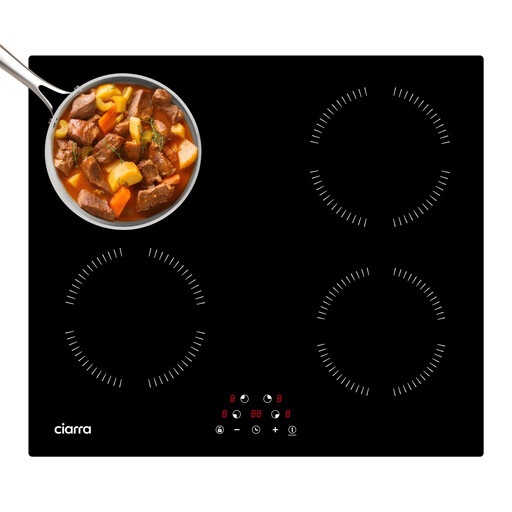 No image available
A built-in layout to consider if shakshuka usually occupies one pan and you want zones available for other cookware.
Check the stated cookware-size ranges against your pan base and confirm the worktop opening and electrical installation requirements.
 No image available
Consider this model if you use a larger pan and want to assess a flexible bridge alongside separate cooking zones.
Its product name specifies four zones and a flexible bridge. Check how your pan fits that area, as well as the worktop opening and electrical connection needed for installation.
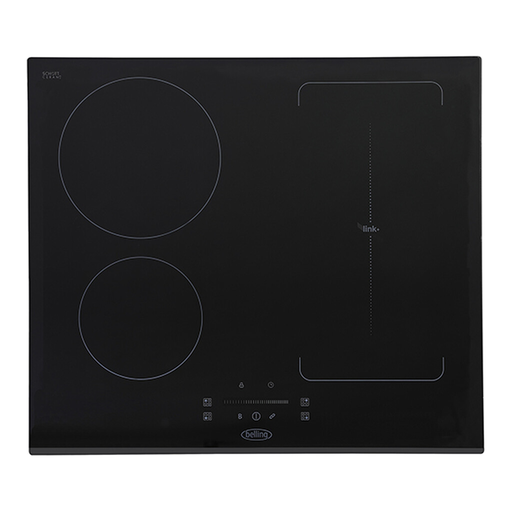 No image available
This built-in 60 cm option is worth assessing if you want room for a shakshuka pan and occasional other cookware.
Check the exact cooking-area dimensions against your pan, and compare the installation drawing and connection requirements with your kitchen.
 No image available
Consider this built-in model for one-pan shakshuka when your main priority is a conventional hob layout rather than a larger flexible cooking area.
The product name specifies a hardwired connection. Check your pan fit, the required worktop opening and the installation arrangement before ordering.
It should work if its base is induction-compatible and fits the selected zone. Hotpoint UK suggests checking whether a fridge magnet sticks to the base; also check that the pan sits flat.
An ordinary round frying pan does not necessarily need one; check whether its base fits a conventional zone first. A bridge or flexible area becomes more relevant for a large or long pan: AEG says its TO64IB00FB bridge links two zones, while its KIK95I00FB can combine up to four segments.
Do not assume a built-in hob uses a plug. AEG specifies hardwired connections for TO64IB00FB and KIK95I00FB. Confirm the exact model and existing circuit with a qualified installer; GOV.UK's Approved Document P concerns electrical safety in dwellings in England, and the applicable installation route depends on where you live and the work involved.
Follow the exact hob manual and wait until the appliance is safe to clean before removing tomato or oil residue. Electrical Safety First advises regularly clearing greasy build-up and food residue from kitchen appliances; the manufacturer's instructions govern care of the particular hob surface.