One-pot sauce cooks
If you mainly cook the bolognese in one saucepan, controllable heat and compatibility with that saucepan matter more than a second cooking zone.


A portable one-zone induction hob is a sensible starting point if you cook one pan of lentil bolognese and need to clear the shared worktop afterwards. Consider two zones if you regularly boil pasta alongside the sauce; a built-in hob is a permanent-installation decision, not a move-and-store purchase. Before choosing, check your cookware, available worktop and socket space, and the property's rules.
If you mainly cook the bolognese in one saucepan, controllable heat and compatibility with that saucepan matter more than a second cooking zone.
If the preparation area must be shared after dinner, look for a portable hob you can move and store, while keeping enough clear, stable space for it during cooking.
If you regularly simmer the sauce while boiling pasta and cannot rely on another hob ring, two usable zones may matter more than a compact footprint.
Choose the cooking arrangement before comparing controls: a portable hob meets a different need from a permanent fixture, and a second zone earns its space only if you will use two pans together.
Choose when: You mainly cook one pan and need to put the appliance away afterwards.
Trade-off: Without another available ring, pasta and sauce must cook in sequence.
Choose when: Cooking sauce and pasta simultaneously is a regular need.
Trade-off: Two pans need more clear shared worktop space; a stated total power rating is not the output of each zone.
Consider when: The property owner or manager is arranging a permanent shared-kitchen facility.
Trade-off: Installation and responsibility for the fixture need agreement; it cannot be stored after use.
| Concern | What to check | Who this matters to |
|---|---|---|
| Sauce control and cookware | Check that the saucepan has a magnetic base and fits the model's stated pan-size range. Compare manual power settings if you want to reduce heat after boiling. | When I am simmering sauce in my existing saucepan, I want to know the pan will work and that I can adjust the heat. Around 36% of consumers put sauce control and cookware fit first. |
| Worktop space and storage | Compare the appliance's dimensions with the clear, stable space available for cooking and with where it will be stored. | I need to free the shared counter once dinner is finished, rather than leave another appliance in everyone's way. For around 29% of consumers, space and storage are the primary concern. |
| Cooking two pans | Decide whether you need simultaneous zones; for a dual model, check each zone's output as well as its total rating. | If pasta needs to boil while the bolognese simmers and another ring is unavailable, one zone interrupts the meal. Around 21% of consumers place two-pan cooking first. |
| Shared-space safety | Check the lead and placement, avoid overloaded sockets and keep the cooking area clear. Treat a timer or lock as a supplementary feature. | With other people using the kitchen, I need to cook attentively and leave the area ready for the next person. Safe, tidy shared use comes first for around 14% of consumers. |
Induction requires a suitable magnetic base, so a working hob may still be unusable with your existing pan.
Test the pan base with a magnet and compare its diameter with the chosen model's cookware guidance before buying.
If no communal ring is available, a single zone means cooking the pasta and sauce in sequence.
Consider a dual-zone model if simultaneous cooking is frequent and there is enough safe space for the appliance and both pans.
A timer or automatic shut-off is not a substitute for watching food on the hob. London Fire Brigade advises against leaving hob cooking unattended, and Electrical Safety First warns about overloaded kitchen sockets.
Stay with the cooking, keep the appliance and lead away from water, avoid overloading sockets and switch the hob off when finished.
Arun District Council's HMO guidance concerns adequate facilities in its local area; it does not establish permission for a tenant to introduce an appliance elsewhere.
Check your tenancy terms and ask the landlord or property manager before bringing in a portable hob or planning an installation.
These product lines illustrate different portable-hob formats and controls; brand inclusion does not indicate availability or suitability for every kitchen.
Tefal's Everyday portable models offer one-zone cooking, with the Slim IH210840 aimed at kitchens where storage space matters.
IKEA's TILLREDA is a portable one-zone option for an extra cooking position that can be put away.
VonShef has single- and dual-zone portable models relevant to the choice between one-pan cooking and preparing sauce and pasta together.
These choices include portable induction cookers for a movable cooking position and a built-in two-zone hob to consider only for an authorised permanent installation. Check each model against the space and cookware you actually have.
 No image available
For a sauce pan you plan to use on a movable hob, check that its base is magnetic and within the stated 12–26cm cookware range.
The product name lists 2000W, eight power levels, a 60–270°C temperature-setting range, seven preset functions, a three-hour timer and a child safety lock.
 No image available
This portable option suits someone seeking a cooking position they can move after use; confirm that your pan is induction-compatible and that the available settings meet your simmering needs.
The product name lists ten power settings, six functions, touch controls and a safety lock. If you need two pans at once, confirm the number of cooking zones before choosing it.
 No image available
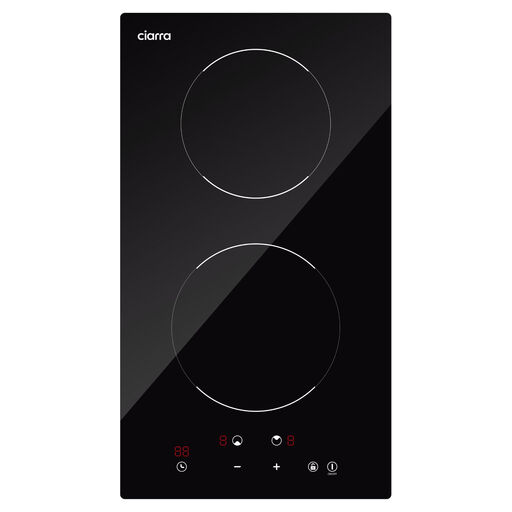
Consider this for sauce and pasta at the same time only if a permanent shared-kitchen installation has been agreed; it is not an appliance to move and store.
The product name lists a 2900W rating, two zones, nine power levels, a timer and a child safety lock. Check the installation requirements, magnetic-pan fit and each zone's output before arranging installation.
It will need a magnetic base, and its base must fit the chosen hob's cookware guidance. IKEA suggests using a magnet to check a pan when you are unsure; compare the pan's diameter with the exact model rather than assuming all portable hobs accept the same sizes.
Look for manual power adjustment so you can reduce heat after bringing the sauce to the boil, then check whether the available settings suit your pan and cooking method. Manufacturer-stated starting settings differ: VonShef lists 200W for its single model, while Tefal UK lists 300W for Everyday Slim IH210840 and 350W for Everyday IH201840. Those figures are settings, not a promise of a particular cooking result.
Place it on a clear, stable surface, use an undamaged appliance and lead, and stay with the cooking. Electrical Safety First warns against overloading kitchen sockets, while London Fire Brigade advises against leaving hob cooking unattended; a timer or lock does not replace those precautions.
Choose two zones if you regularly want pasta boiling while the sauce simmers, have space for both pans and cannot rely on another cooking ring. Check the output of each zone separately: VonShef states 1400W per plate and 2800W total for its researched portable dual model.