
24/7 Customer Support

Free returns

Same-day & Next-day Delivery

Quality Guaranteed

Unlock Your Welcome Offers: FREE Delivery | Up to 80% OFF | Free 30-day JoyPlus trial
Download the APP
For any tradesperson, a reliable marker is as essential as a tape measure or a spirit level. A standard office marker simply won't do when you're faced with dusty, oily or wet surfaces on a building site or in a workshop. A faded or smudged line can lead to costly mistakes and wasted time. The right industrial markers are built to perform where others fail, providing clear, durable marks that withstand the rigours of the job.
This guide is designed to help you navigate the options and select a marking tool that fits your specific trade and application. We will look at what makes a good trade marker and highlight a few standout products that deliver on performance and reliability.
Selecting the correct marker involves more than just picking one off the shelf. Consider these factors to ensure you get a tool that won't let you down.
The most critical factor is the surface you need to mark. A marker that works brilliantly on smooth plastic may be useless on rough-sawn timber or oily steel. Look for a multi-surface marker if your work involves various materials.
Where you work dictates the type of durability you need. A builders marker pen used on an external site must be able to handle changing weather conditions.
A mark is only useful if it can be seen clearly and lasts as long as you need it to. The colour of the marker should contrast sharply with the surface material. While black is a common choice, vibrant colours like red or yellow can offer superior visibility on dark materials. The permanence of the mark is also key, with paint-based markers generally offering greater resistance to abrasion and chemicals than ink-based ones.
Based on their features, versatility and suitability for professional environments, here are our recommendations for industrial markers that can handle demanding tasks.
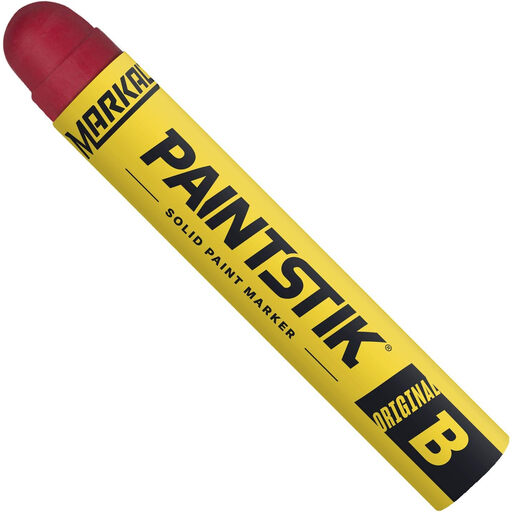
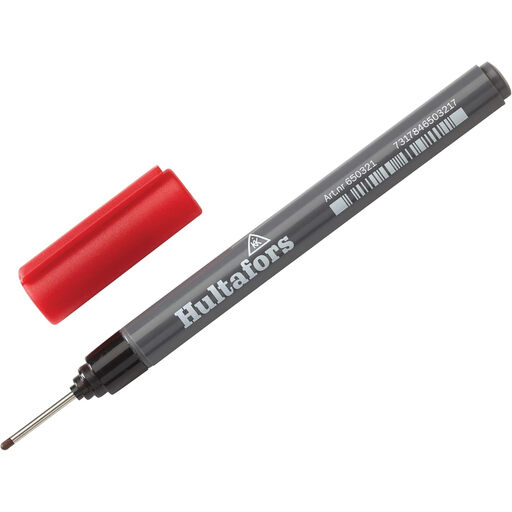
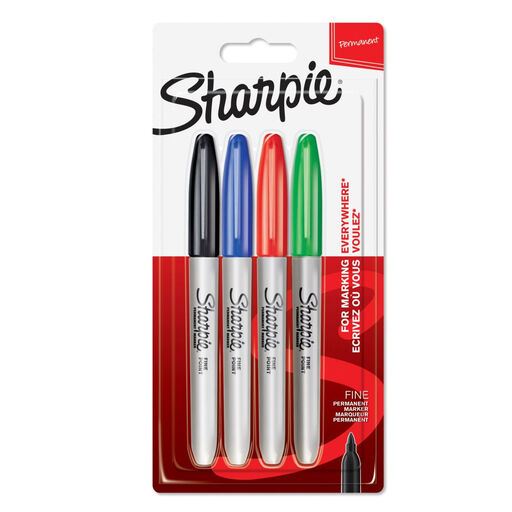
While our recommendations cover a range of professional needs, you might be looking for a specific tip style or a different colour. For a wider selection of marking tools, including various red pens and other colours suitable for different tasks, you can browse our full category.
Explore Our Full Range of Red Pens
What makes an industrial marker different from a regular permanent marker? The main differences are durability and surface compatibility. Industrial markers are formulated to adhere to a wider range of materials, including oily, wet and rough surfaces like metal and concrete. Their marks are typically more resistant to chemicals, abrasion, UV light and extreme temperatures.
Can I use a paint marker on wet surfaces? Some industrial markers are specifically designed for this. Solid paint marker sticks, for example, often perform well on damp or even oily surfaces where a standard liquid ink marker would fail to leave a coherent mark. Always check the product's specifications to confirm its capabilities.
How do I remove permanent industrial marker? Removal depends on the marker type and the porosity of the surface. For non-porous surfaces like metal or glass, a solvent such as isopropyl alcohol or acetone can often be effective. For paint markers, a more aggressive paint stripper or specialised industrial cleaner may be necessary. It is always advisable to test any removal agent on a small, inconspicuous area first to avoid damaging the surface.