
24/7 全天候客户支持

免费退货

当日/次日达

品质保障

开启新人专享福利: 全场免邮 | 低至 2 折 | 免费试用 30 天 JoyPlus 会员
下载 Joybuy
As a tradesperson, builder or serious DIY enthusiast in the UK, you know that a clear, durable mark is the foundation of a job done right. Yet, choosing the right marking tool can feel like a minefield. A standard office marker simply won't cut it on a dusty, damp or oily worksite. This guide, from your Joybuy Product Recommendation Officer, cuts through the marketing clutter to help you select the right industrial markers for the task at hand, ensuring your money is spent on tools that perform, not ones that fail when you need them most.
Before you add another marker to your toolkit, be aware of these common purchasing pitfalls that lead to frustration and wasted budget.
To ensure your marks are clear, accurate and lasting, focus on these three core parameters. Understanding them is key to selecting reliable construction markers and avoiding the pitfalls mentioned above.
The "ink" inside an industrial marker is a specialised formula designed for specific conditions. The main types you'll encounter are:
A marker's effectiveness is entirely dependent on the surface it's used on. A marker for metal needs a formula that can adhere to a non-porous, sometimes oily, substrate. In contrast, a builders marker for porous surfaces like wood or concrete needs a thicker ink that won't simply soak in and become invisible. Always consider the material you are marking and the conditions (e.g., wet, dusty, hot, cold) it will be exposed to.
The tip must match the task and the surface.
Based on these practical criteria, we've matched several products to common user profiles to help you find the right tool for your specific needs.
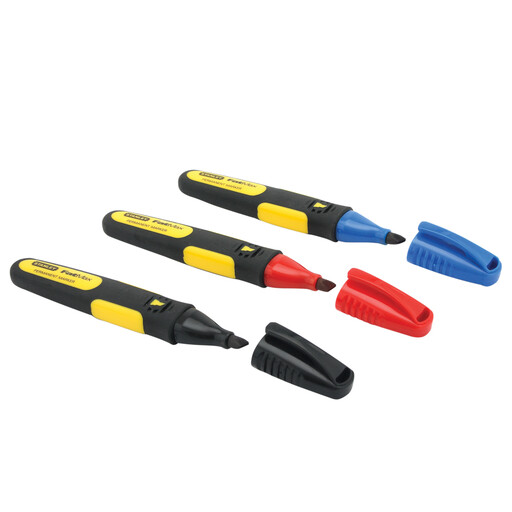
Why This Fits Their Persona: For the general builder, plumber or electrician who needs a reliable set of markers for everyday tasks on various site materials. This pack provides essential colours for coding and visibility on everything from plastic pipe to timber frames.
The ink is designed to be fade-resistant and waterproof, directly countering the "permanent isn't permanent" problem. Its durable construction is built for tough environments, avoiding premature tip failure on common building materials.
The versatile chisel tip allows for both broad, visible lines and finer, more precise marks. The inclusion of three distinct colours aids in complex layouts.
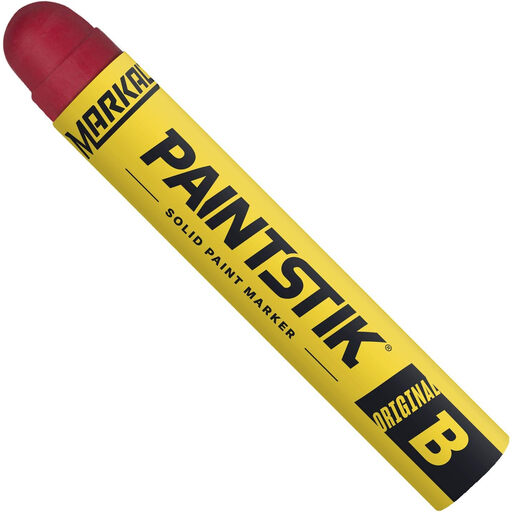
Why This Fits Their Persona: Ideal for metal fabricators, welders and mechanics who need to make clear, durable marks on oily, wet or rough metal and concrete surfaces. This is a tool for environments where a liquid marker would fail instantly.
As a solid paint stick, it completely bypasses the "one-size-fits-all" trap by being specifically designed for challenging multi-surface marking. Its weather-resistant formula ensures true permanence where ink-based markers would wash away.
The solid, no-drip formula can be used on vertical or overhead surfaces without mess. It provides highly visible, long-lasting marks on a huge range of materials, including metal, wood and concrete.
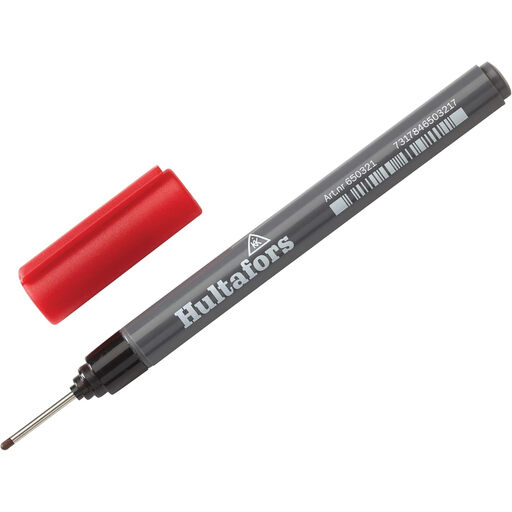
Why This Fits Their Persona: A non-negotiable tool for joiners, kitchen fitters and anyone needing to transfer marks through materials or into tight recesses. This is a specialist tool for a common and frustrating problem.
This marker is the definition of avoiding the "one-size-fits-all" trap. It is purpose-built for a single, critical task that standard markers cannot perform, saving immense time and improving accuracy on installation jobs.
Its long, narrow nib is specifically designed for marking in hard-to-reach places. The vibrant red ink provides high visibility on common construction materials like wood, plasterboard and metal.
We have compiled a complete, real-time list of products that fully satisfy these strict selection criteria and UK safety regulations.
The lifespan of an industrial marker depends heavily on its type and how it's stored. Ink-based permanent markers can dry out within months if their caps are not replaced tightly. Solid paint sticks have a significantly longer shelf life as they don't contain volatile solvents that evaporate. For all marker types, storing them horizontally is a good practice to keep the tip saturated and ready for use.
You must check the product's specifications. Most standard paint markers are designed for use at ambient temperatures. Applying them to a hot surface, such as recently welded metal, can damage the tip and cause the paint to fail. For these applications, you must source a specialised high-temperature marker designed to withstand extreme heat.
Many oil-based paint markers and some permanent inks contain solvents like xylene, which can produce strong fumes. It is always a firm recommendation to use these types of trade marker pens in a well-ventilated area. Always read the product's safety warnings and material safety data sheet (MSDS) if you are using them frequently in an enclosed space.