
24/7 Customer Support

Free returns

Same-day & Next-day Delivery

Quality Guaranteed

Unlock Your Welcome Offers: FREE Delivery | Up to 80% OFF | Free 30-day JoyPlus trial
Download the APP
In any trade, from construction and fabrication to warehouse logistics, clear and lasting marks are essential. A line that fades halfway through a cut or a label that smudges in the rain can cause costly mistakes and delays. Standard office markers often fall short when faced with dust, moisture or challenging surfaces like metal and plastic. This guide is designed to help you navigate the options and find the right industrial markers for your specific needs, ensuring your marks stay put.
Selecting the correct marking tool goes beyond just picking a colour. To ensure performance and reliability, consider these key factors.
The material you are marking is the most important factor. A marker that works brilliantly on wood might be useless on galvanised steel. Look for multi surface markers designed for versatility.
Where will the marker be used? An indoor workshop has very different demands from an outdoor construction site.
The marker's tip determines the type of line you can create.
Here are a few standout options that cater to a range of professional and demanding DIY tasks.
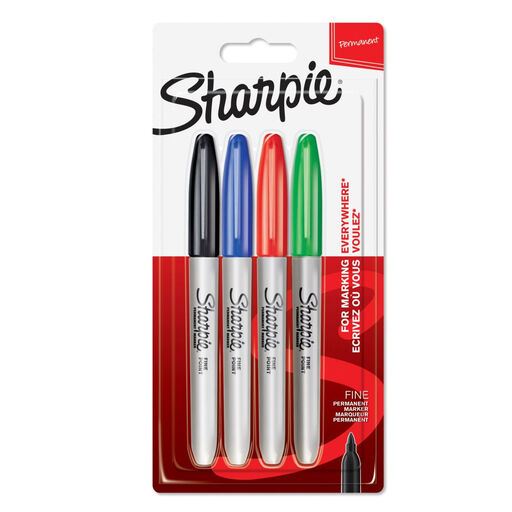
Why It Stands Out: While a familiar name, the classic Sharpie holds its own for general-purpose industrial tasks due to its reliable, quick-drying ink and precision tip. It performs consistently across a variety of common surfaces found in workshops and warehouses.
Pros:
Who is it for? This pack is well-suited for warehouse operatives, electricians and mechanics who need to make clear, detailed labels on parts, cables or storage bins in a controlled environment.
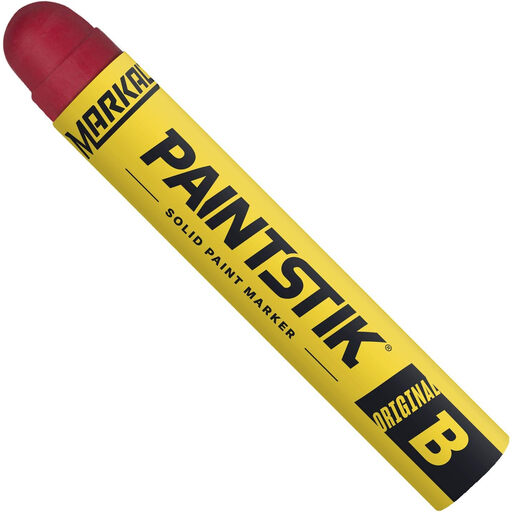
Why It Stands Out: This is not a typical marker. The Markal Paintstik is a solid stick of industrial-grade paint, making it exceptionally durable. Its formulation allows it to mark on rough, rusty, wet or oily surfaces where liquid ink would simply bead up or wipe away.
Pros:
Who is it for? An excellent choice for steel fabricators, welders, construction workers and anyone needing to make lasting marks on challenging surfaces in tough environments.
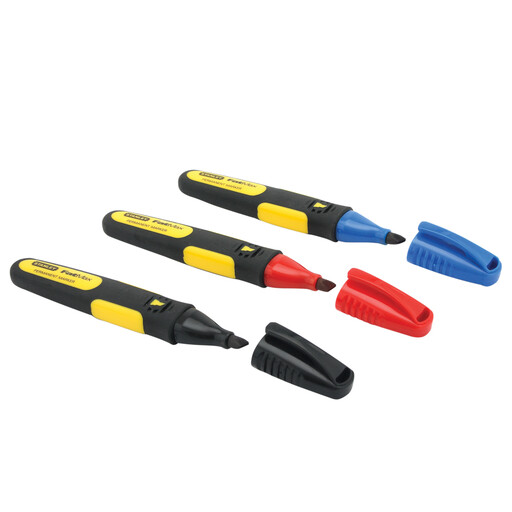
Why It Stands Out: The FatMax marker is built with the job site in mind. Its robust barrel can withstand being dropped or knocked around in a tool bag, and the versatile chisel tip makes it a true workhorse for a variety of marking jobs, from broad layout lines to more specific notations.
Pros:
Who is it for? This is a great all-rounder for general builders, joiners, plumbers and serious DIY enthusiasts who need a reliable and heavy duty marker that can handle the rigours of a busy site.
If our recommendations don't quite fit your project, or if you're looking for a specific tool like a high-visibility red marker pen, we have a wider range available. Explore our full collection of marking tools to find the perfect match for your job.
Explore our full range of marker pens here
What is the difference between a permanent marker and an industrial marker? An industrial marker is a specialised type of permanent marker. While both are designed to be long-lasting, industrial markers are specifically formulated to perform in more demanding conditions. This includes adhering to a wider range of surfaces (like oily metal), withstanding greater temperature variations and offering superior resistance to water, chemicals and UV fading.
Can you use industrial markers on hot metal? This depends entirely on the specific marker. Standard ink markers may fail or release unpleasant fumes on hot surfaces. However, certain solid paint markers are designed for high-temperature applications. Always check the product's specifications to ensure it is rated for the temperatures you will be working with.
How do you remove industrial marker ink? Removal can be challenging, as these markers are designed for permanence. The method depends on the ink type and the surface. For solvent-based inks, a strong solvent like isopropyl alcohol or acetone may work. For paint markers, you may need a more aggressive paint stripper or a specialised graffiti remover. Always test any removal agent on a small, inconspicuous area first to avoid damaging the underlying surface.