For gardening podcasts on a long flight, start with an ear-tip seal you can wear comfortably for hours, then check that the cable connects to your playback device. Published isolation figures can help you identify models to consider, but the result depends on fit; the wired earphones covered here do not all use the same connection.
Who these earphones suit
Listeners focused on hearing speech in cabin noise
If aircraft noise makes gardening dialogue hard to follow, look for ear tips you can seal reliably rather than assuming a published isolation figure will apply to your ears. Shure and Etymotic publish isolation claims for particular models, while the World Health Organization recommends well-fitted headphones to reduce the need to raise volume in noisy places.
Travellers who prioritise hours of comfortable wear
If you expect to listen for much of the flight, allow time to try different supplied tip sizes and assess pressure before travelling. Shure, Sennheiser and Audio-Technica describe different tip and cable-fitting options, but none can guarantee comfort for your ears throughout a flight.
Travellers planning around their playback device
If you will switch between a phone, tablet, player or seat-back system, check the output you intend to use before buying. A detachable cable may also be useful if you want to replace one later, but Shure, Sennheiser and Audio-Technica use model-specific cable arrangements that need checking individually.
What matters when choosing
For a long-flight podcast, assess the seal and comfort together before comparing sound-tuning claims. Check the playback connection separately: a comfortable earphone is of little use if it cannot connect to the device you brought.
| Concern |
What to check |
Who this matters to |
| Speech in cabin noise |
Try the supplied tips for a stable seal. Treat published attenuation as dependent on the model and your fit, not as a promise of silence. |
If aircraft noise masks the gardening discussion, I want to follow the voices without repeatedly turning up the volume. Around 31% of consumers would put speech clarity in cabin noise first. |
| Comfort over several hours |
Check tip materials and sizes, housing fit and cable routing; try them before departure. |
If sealed tips become uncomfortable, I may stop listening well before the flight ends. Long-wear comfort would come first for around 31% of consumers. |
| Playback connection |
Identify the output on your device or intended seat-back system and confirm any required audio adapter works with it. |
I need to know that my earphones will connect to the device I actually plan to use. Around 25% of consumers would make connection compatibility their primary concern. |
| Cable replacement |
Check whether the cable detaches and confirm the exact replacement connector for that model. |
If a cable snags or fails during repeated travel, I would rather be able to replace a compatible cable. That would be the leading need for around 13% of consumers. |
Mistakes to avoid
-
Treating an isolation figure as a guaranteed result
Shure says isolation varies with ear-canal shape, sleeve choice, model and fit. Its earphones are not rated as hearing-protection devices; a poor seal may leave podcast speech masked by cabin noise.
Use published figures as conditional product information, try the supplied tip options and keep listening volume conservative.
-
Ordering without checking the playback output
The Shure SE215, Sennheiser IE 200 and Audio-Technica ATH-E40 discussed here use 3.5 mm wired connections. Check your own phone, tablet and intended aircraft system rather than assuming they have a matching output.
If your device lacks a 3.5 mm output, confirm which audio adapter or DAC is compatible with that device.
An additional compatible audio adapter or DAC may be needed.
-
Assuming detachable cables are interchangeable
Shure identifies an MMCX connection for the SE215, Sennheiser describes an MMCX cable for the IE 200, and Audio-Technica uses A2DC for the ATH-E40. A shared connector name alone does not confirm that a replacement fits a particular earphone.
Check the exact model against the replacement cable's stated compatibility before ordering.
-
Turning up the volume for the whole flight
The World Health Organization explains that listening risk depends on both sound level and duration. Aircraft noise is not a reason to keep raising the volume over several hours.
Work on the tip fit first, keep volume down, use exposure monitoring if your device provides it and take listening breaks.
Relevant brands to consider
Shure
The SE215 is a wired, over-ear IEM with interchangeable sleeves and a detachable MMCX cable ending in a 3.5 mm plug.
- Shure's UK product page states up to 37 dB sound isolation and lists fitting options for its low-profile design.
- Shure says isolation depends on the sleeve, ear-canal shape and fit; the earphones are not rated as hearing protection.
Etymotic
The ER2XR is a wired option for listeners who want to investigate a published passive-attenuation claim.
- Etymotic states 35–42 dB passive attenuation for the ER2XR.
- That claim depends on obtaining a suitable ear-tip seal; check the package and seller terms for the version you intend to buy.
Sennheiser
The IE 200 has adjustable ear hooks, silicone and memory-foam tips, and a wired 3.5 mm MMCX cable arrangement.
- The documented tip choices give you different fitting options to try before a long flight.
- Choose it for a fit you find suitable, not on the assumption that its cabin-noise reduction matches another model's published attenuation figure.
Audio-Technica
The ATH-E40 is a monitor-style wired IEM with over-ear cable loops, four silicone tip sizes and a detachable A2DC cable.
- Audio-Technica says its tip assortment supports a customised fit and its housing improves isolation.
- Its A2DC connector requires a compatible replacement cable; check current seller availability if this model interests you.
Joybuy wired in-ear options
These wired in-ear options are relevant to listening to podcasts on a long flight. Check each model's connection and how its tips fit you before ordering.
 No image available
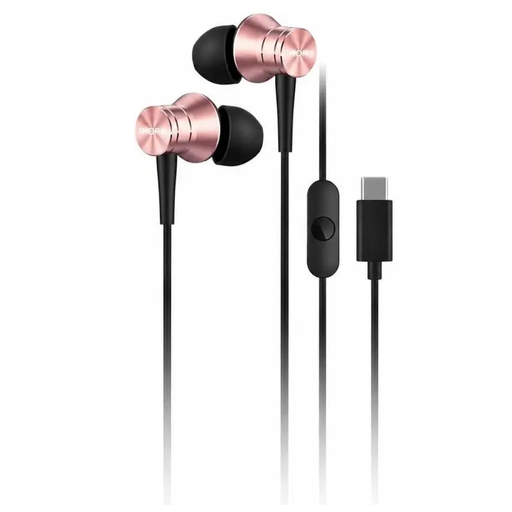
P10 1MORE Piston Type-C wired earphones, Pink
Consider this Type-C version if you plan to play podcasts from a device with compatible USB-C audio output. Check the fit for extended listening and confirm the package contents before ordering.
View on Joybuy
 No image available
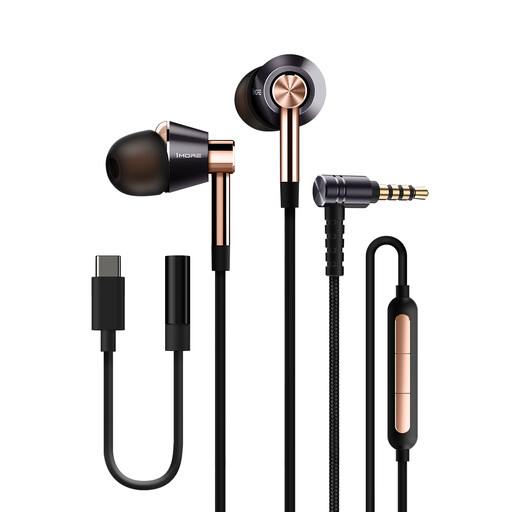
1MORE E1001 Triple Driver wired in-ear earphones, Gold
If you are considering these for a long flight, try the ear-tip fit before relying on them for hours of listening. The named variant is wired and has a MEMS mic; confirm its plug type against your intended playback device or aircraft connection.
View on Joybuy
Frequently asked questions
Do these in-ear monitors actively cancel aircraft noise?
Do not equate a passive-isolation claim with active noise cancellation. The seal between an ear tip and your ear canal is central to the isolation described for these models; Shure also says its earphones are not rated as hearing protection.
How can I follow a podcast without turning the volume up throughout the flight?
Start with a well-fitting tip, keep the volume down and take listening breaks. The World Health Organization recommends well-fitted headphones in noisy places and advises that both listening level and duration matter.
Will a wired IEM connect to my phone or the aircraft entertainment system?
It will connect directly only if its plug matches the available audio output. The SE215, IE 200 and ATH-E40 routes use 3.5 mm connections, while the P10 1MORE Piston option shown here is Type-C; check your device and seat-back connection, and confirm any adapter's compatibility before travelling.
Does a detachable cable make any replacement cable suitable?
No. The SE215 uses MMCX, the IE 200 has an MMCX cable arrangement and the ATH-E40 uses Audio-Technica's A2DC connector. Confirm that a replacement is specified for your exact model rather than relying on a general connector description.


