
24/7 Customer Support

Free returns

Same-day & Next-day Delivery

Quality Guaranteed

Unlock Your Welcome Offers: FREE Delivery | Up to 80% OFF | Free 30-day JoyPlus trial
Download the APP
Welcome to your straightforward guide to selecting an inflatable paddle board (iSUP). As a Joybuy Product Recommendation Officer, my role is to help you navigate the market and find a board that genuinely suits your needs, saving you from common buyer's remorse. The popularity of stand-up paddle boarding has led to a flood of options and not all are created equal. Let's look at how to avoid the costly mistakes many first-time buyers make.
Many promising-looking boards can turn out to be a disappointment on the water. Here are the most frequent issues we see UK consumers encounter:
inflatable paddle board with accessories. However, corners are often cut. You might find yourself with a heavy aluminium paddle that sinks, a flimsy single-action pump that requires 20 minutes of exhausting effort or a backpack that rips after just a few trips to the water's edge.stand up paddle board for beginners or family use, it's a recipe for a swim. Stability is paramount when you're starting out or enjoying leisurely paddles and choosing a board that's too narrow is the quickest way to lose confidence.To ensure you get a durable and enjoyable board, focus on these non-negotiable specifications.
For most recreational paddlers, stability is the most important factor. This is determined primarily by the board's width and thickness.
wide SUP board, especially if you are a beginner or plan to use it for activities like yoga or fishing. A width of 32 to 34 inches provides a stable platform that is forgiving and confidence-inspiring. Anything less than 31 inches is generally better suited for intermediate to advanced users focused on speed.The material and construction method directly impact the board's rigidity and lifespan. Don't just look at the PSI rating; consider the materials.
Instead of a generic list, we've matched specific boards to different types of users. This helps you find a paddle board for adults and families that aligns with how you'll actually use it.
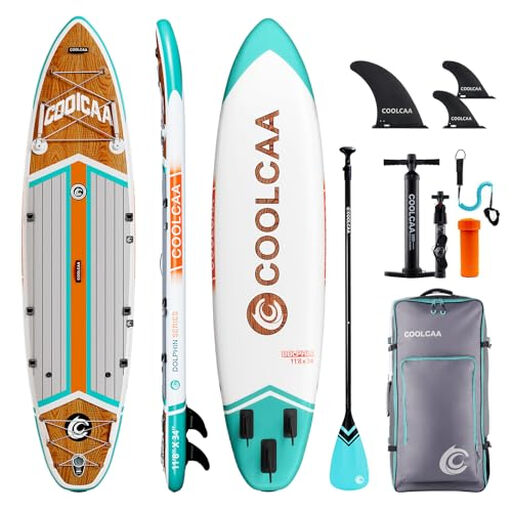
Why This Fits Their Persona: This user needs a board that can handle a parent and child, or even the family dog. The high weight capacity and extra-wide deck provide a secure and spacious platform, making it ideal for shared fun on lakes and calm coastal waters around the UK.
Its 34-inch width directly counters the "one-size-fits-all" trap by prioritising stability. The military-grade PVC construction and high 490 lb capacity prevent the "banana board" effect, even with multiple riders.
Features a very high load capacity (490 lb / 222 kg) and a thick 5mm EVA deck for comfort and grip. The complete accessory package includes a carbon fibre paddle, which is lighter and more efficient than standard aluminium paddles.
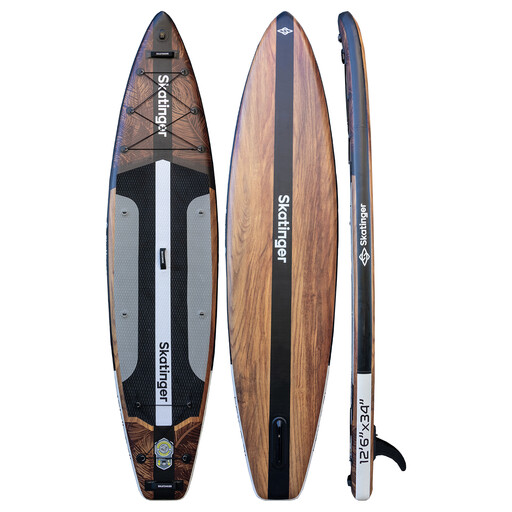
Why This Fits Their Persona: This user wants a versatile and reliable board to explore canals, lakes and calm seas. They value a complete, quality kit that's ready to go. The option to add a kayak seat and the inclusion of practical extras like a waterproof bag make it a great long-term choice.
It avoids the "incomplete kit" trap by providing a genuinely useful set of accessories, including a 10L dry bag and a shoulder strap for easier carrying. The 34-inch width and dual-layer sidewalls ensure it's a stable and rigid platform for beginners.
Highly versatile with D-rings for attaching a kayak seat (sold separately). The comprehensive accessory package and high weight capacity (450 lb / 204 kg) offer excellent value and flexibility for various water activities.
We have compiled a complete, real-time list of products that fully satisfy these strict selection criteria and UK safety regulations.
The lifespan of an inflatable SUP board depends heavily on its construction and how it's cared for. A quality board made from dual-layer, military-grade PVC can last for many years (5-10 is not uncommon). To maximise its life, always rinse it with fresh water after use (especially in the sea), ensure it is completely dry before storing and keep it out of direct, prolonged sunlight when not in use.
While it requires some physical effort, it's not overly difficult. Most included kits come with a dual-action hand pump, which inflates on both the up and down strokes. It typically takes an able-bodied adult between 5 and 10 minutes of steady pumping to reach the recommended pressure of 12-15 PSI. For those who want to save time and energy, electric pumps that connect to your car's 12V socket are a popular and convenient alternative.
Without a doubt, the most critical feature is width. A wider board (32-34 inches) provides significantly more stability than a narrow one, making it much easier to balance, stand up and feel confident on the water. While length and shape matter for speed and tracking, a beginner's primary focus should be on securing a stable platform to learn and have fun on.