
24/7 Customer Support

Free returns

Same-day & Next-day Delivery

Quality Guaranteed

Unlock Your Welcome Offers: FREE Delivery | Up to 80% OFF | Free 30-day JoyPlus trial
Download the APP
Stand-up paddle boarding has rapidly become one of the most accessible ways to explore the United Kingdom's coastal inlets, tranquil lochs, and scenic canal networks. The primary appeal of an inflatable model lies in its sheer portability: rather than contending with car roof racks or dedicated storage trailers, you can deflate your board, pack it into a rucksack, and store it neatly in a flat cupboard or car boot. Modern inflatable construction delivers a surprisingly rigid surface underfoot, making launching from pebble beaches, grassy riverbanks, or concrete slipways entirely practical.
Finding the right inflatable paddle board requires balancing stability, forward glide, and load capacity to match your intended outings. Narrower designs track swiftly across open stretches, whereas broader platforms offer dependable reassurance for novices, family use, or carrying touring cargo. By focusing on vital factors such as hull outline, recommended operating pressure, sidewall layering, and deck gear, you can confidently select a board that delivers a smooth, balanced experience every time you head onto the water.
A paddle board's length, beam width, and volume directly dictate how it handles different water conditions and paddler experience levels.
The internal construction and maximum pressure rating determine the overall stiffness and long-term durability of an inflatable board.
Practical deck additions ensure you stay balanced and can securely carry hydration, dry bags, and essential safety accessories.
These reliable inflatable paddle boards offer varied shapes and capacities to suit different waterways, paddler weights, and touring styles.
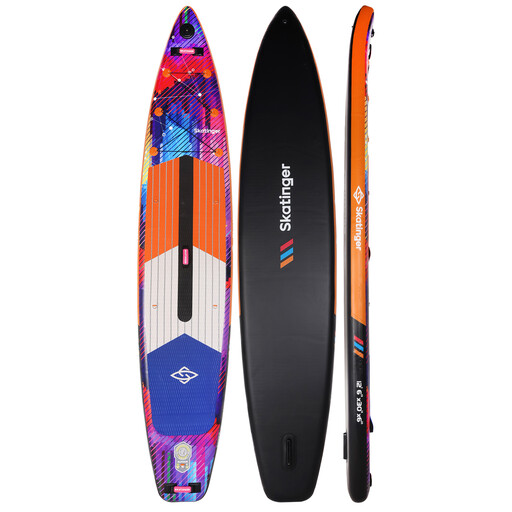
Why It Stands Out: Shaped with a 12-foot 6-inch waterline and a sleek 30-inch beam, this inflatable SUP is built for efficient glide across coastal bays and lochs. It inflates up to 18 PSI, giving its double-layer PVC sidewall construction exceptional stiffness that minimises hull deflection. A 6-point bungee deck system keeps your dry bags locked down securely, and the board arrives with both a fin and an ankle leash.
Pros:
Who is it for? Intermediate paddlers and touring enthusiasts who want a longer, faster board for sustained paddling across open stretches.
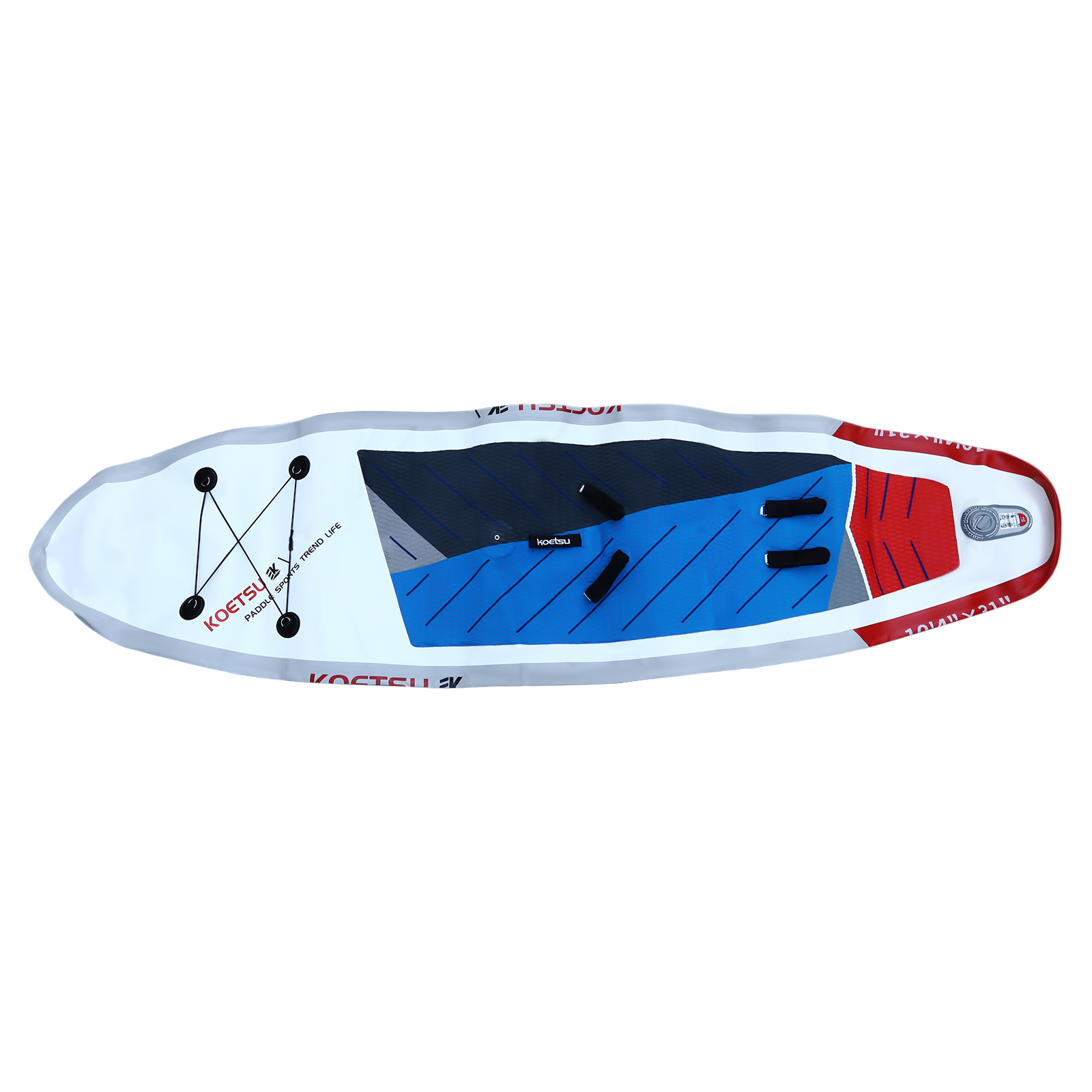
Why It Stands Out: Engineered for responsive coastal sessions, this inflatable board incorporates a hydrodynamic V-shaped hull paired with dual fins for clean water release and agility. It inflates within a practical 10 to 15 PSI working range and supports a maximum load of 286.6 lbs. An integrated EVA anti-slip pad cushions feet and prevents slipping in tidal chop, while the hull folds down neatly for effortless boot storage.
Pros:
Who is it for? Riders seeking a compact, nimble inflatable board for playing in coastal waves, shoreline paddling, and beach day trips.
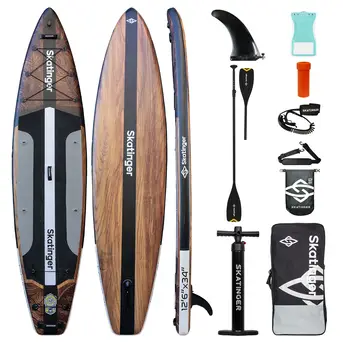
Why It Stands Out: Combining a generous 12-foot 6-inch length with an expansive 34-inch beam and 6-inch thickness, this board offers outstanding stability across calm or choppy waters. It supports up to 450 lbs, providing ample buoyancy for heavier riders, tandem paddling with a child, or extensive expedition kit. The layout includes dual cargo bungees, a durable dual-layer PVC sidewall, an ankle leash, and a 10-inch US fin for steady tracking.
Pros:
Who is it for? Paddlers looking for supreme primary balance, multi-day expedition paddlers carrying hefty gear, or those wanting to paddle with a pet or family member.
Explore our broader selection of watersports gear to discover compact boards, high-output pumps, dry bags, and safety essentials tailored for your next aquatic adventure. Browse all paddle boards and watersports gear
Inflation pressure depends on the board's internal design and sidewall construction. Most recreational models perform reliably between 10 and 15 PSI, while heavy-duty models with reinforced multi-layer sidewalls can accommodate up to 18 PSI. Achieving the recommended pressure ensures the deck remains rigid underfoot, eliminating unwanted flex and reducing drag in the water.
After outings in coastal salt water or muddy inland canals, rinse your board thoroughly with clean fresh water to clear away debris and salt crystals. Allow the surface to dry completely before rolling it loosely, keeping valve caps shut to protect internal seals. Store your deflated board indoors in a temperate, dry spot away from direct sunlight, damp outbuildings, and winter frost.
Yes, wearing a properly fitted personal flotation device or buoyancy aid is a vital safety measure across all UK waterways. An ankle leash keeps you connected to your board if you fall in, though on fast-flowing rivers or tidal waters with underwater obstacles, a quick-release waist leash is strongly advised to prevent snagging risks.