
24/7 Customer Support

Free returns

Same-day & Next-day Delivery

Quality Guaranteed

Unlock Your Welcome Offers: FREE Delivery | Up to 80% OFF | Free 30-day JoyPlus trial
Download the APP
A 12 ft 6 in inflatable paddle board can offer a useful balance between glide, stability and portability. The longer shape is suited to touring, calm-water cruising and carrying extra equipment, while an inflatable construction can be stored in a flat, dry place rather than taking up space in a garage.
However, length alone does not determine whether a board will suit your routine. A narrow 12'6 inflatable SUP may feel efficient for experienced paddlers but less reassuring for a first outing. Likewise, a board advertised with a high weight capacity may become difficult to control when loaded close to its limit. Before buying, check the dimensions, included equipment and realistic use case rather than relying on prominent marketing phrases.
A long paddle board can track well in a straight line, but width has a major effect on balance. A 30-inch board may suit solo touring, whereas an extra-wide paddle board measuring 34 inches gives more standing area for beginners, children, pets or yoga equipment.
Consider where you will paddle. Sheltered canals and calm lakes may be suitable for a broad recreational board. On busier or more exposed water, stability, personal ability and suitable safety equipment matter more than a simple length comparison.
A listed maximum weight is not a promise that the board will feel equally responsive at that weight. Add together the paddler, clothing, water, dry bags, phone, snacks and any child or pet. A high-capacity paddle board can be useful for shared outings, but leaving some allowance generally makes handling more manageable.
Look for the manufacturer’s stated capacity, thickness and width together. A 12 ft 6 in by 34 in board with a 450 lb recommendation is specified differently from a 12 ft 6 in by 30 in board with a 330 lb recommendation.
A listing may show a paddle, pump, leash and backpack in the photographs, but included components can vary between models. Check whether the package contains a fin, repair kit, waterproof storage and transport strap. Also check whether a paddle board with kayak seat attachment includes the seat itself or only the D-rings needed to attach one.
For general leisure use, a six-inch-thick inflatable board is a common format. PVC construction and a double-layer sidewall can provide abrasion resistance according to the product specification, but the board still needs careful handling around sharp edges, rough ground and poorly maintained launching points.
A 30-inch width offers a balance between a more streamlined outline and standing room. A 34-inch platform is more forgiving for beginners and shared use, although it may feel less nimble when making quick turns.
Maximum pressure is normally expressed in PSI. The supplied products specify maximum pressures of either 15 PSI or 18 PSI. Always follow the individual product instructions and use the supplied pump correctly. Inflating beyond the stated limit is not an upgrade and may damage the board or valve.
A correctly inflated board should feel firm and support the intended use. Check the valve before every outing, particularly if the board has been stored for several months.
A longer touring paddle board benefits from a fin designed to help it hold a straighter course. This can reduce the need for constant corrective strokes on longer journeys, although wind, current and paddling technique will still affect direction.
Cargo bungees are useful for light, secured items. Keep essential belongings in a waterproof bag and avoid placing heavy or loose loads where they interfere with foot placement. A paddle board with backpack and pump is easier to transport, but remember that an inflated 12'6 board can still be awkward to carry over distance.
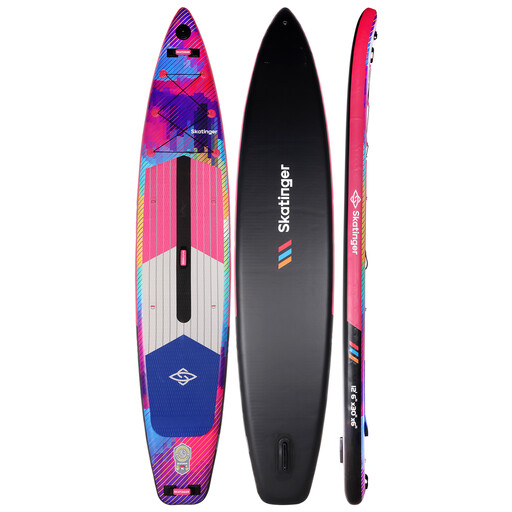
Why This Fits Their Persona: A practical option for adults beginning to explore calm-water touring, with a 12'6" length and a package containing a paddle, pump, fin, leash, backpack and repair kit.
The 330 lb stated maximum makes capacity easier to compare, while the 6-point front bungee provides a defined place for light cargo.
30-inch width; maximum inflation pressure of 18 PSI; fibreglass paddle and 10L waterproof bag included.
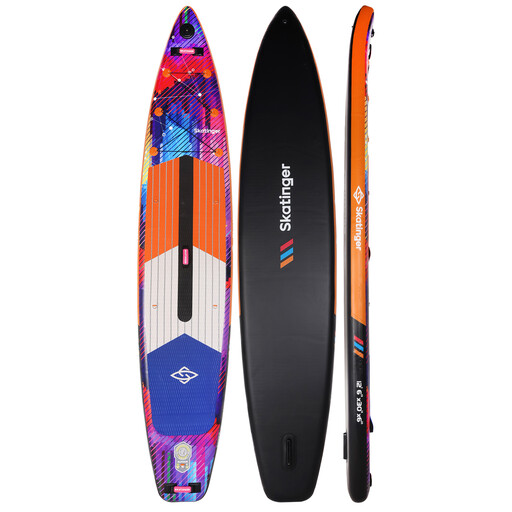
Why This Fits Their Persona: Suitable for paddlers who prioritise a longer touring outline, defined cargo storage and a listed 18 PSI maximum for a firm setup.
The specification identifies the board’s width, pressure, capacity and included components instead of leaving key comparisons to product photography.
330 lb stated maximum; high-performance fin; shoulder strap, backpack and waterproof bag included.
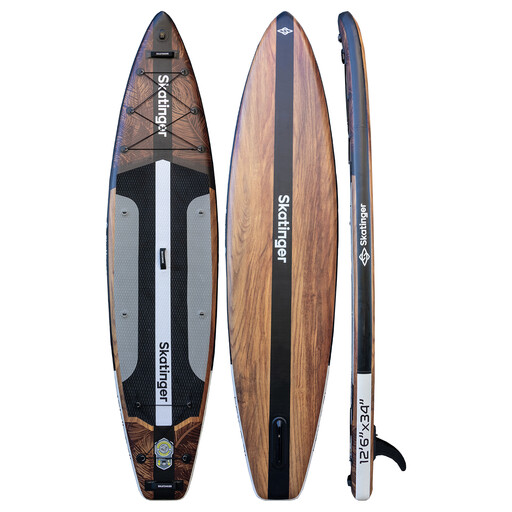
Why This Fits Their Persona: The broad deck is suited to beginners, families, yoga, leisure paddling or carrying a child or pet within the stated load recommendation.
Its 34-inch width and 450 lb stated maximum are clearly specified, helping heavier or shared-use buyers assess capacity before ordering.
10-inch US fin; four central D-rings for an optional kayak seat or shoulder strap; dual bungee storage.
Before launching, inflate the board to its specified pressure, secure the fin and connect the ankle leash. Rinse it with fresh water after use, allow it to dry fully and store it deflated in a cool, dry place. This routine helps reduce salt, grit and moisture-related issues, particularly after coastal use.
A leash is not a substitute for appropriate buoyancy equipment. Check the rules of your chosen canal, lake or coastal location, and follow local guidance on personal flotation devices, weather, access and navigation. Beginners should start in sheltered water and avoid carrying more weight than they can safely control.
We have compiled a complete, real-time list of products that fully satisfy these strict selection criteria and UK safety regulations.
It can be, particularly when the board is sufficiently wide and used on calm, sheltered water. A 34-inch platform generally provides more standing room than a 30-inch touring design. Beginners should still learn basic balance, turning and falling techniques and should use appropriate safety equipment.
Setup time varies with the pump, pressure and paddler. Allow time to inflate fully, fit the fin, adjust the paddle and secure the leash. A board with a hand pump, backpack and removable fin is convenient to transport, but packing it away before it is completely dry can encourage odours or storage problems.
There is no fuel cost for paddling, but ownership involves storage, transport and maintenance. Rinsing with fresh water, drying thoroughly and checking the valve, seams, leash and fin can help identify wear early. You may also need to replace consumable accessories such as a leash or fin over time.