Colour itinerary teams
Studios producing maps, colour-coded schedules or traveller packs need to decide whether those details must remain in colour. For multi-page packs, automatic duplex printing can also avoid manual page turning.


Choose a colour ink-tank multifunction printer if maps or colour-coded schedules are routine, particularly if the studio also scans or copies documents. A mono laser suits text-only itineraries when print-queue speed matters more than colour or multifunction features; whichever route you choose, check paper capacity, automatic duplex printing and how staff collect documents containing personal data.
Studios producing maps, colour-coded schedules or traveller packs need to decide whether those details must remain in colour. For multi-page packs, automatic duplex printing can also avoid manual page turning.
Where several people send jobs from computers or phones, connection options and paper capacity affect the daily workflow. Scanning and copying matter if the team handles paper source documents as well as printing itineraries.
For text-only itineraries during busy periods, monochrome throughput and a larger paper tray may matter more than colour or scanning. Brother UK specifies up to 32 pages per minute and a 250-sheet tray for the print-only HL-L2445DW.
Decide whether the itinerary must retain colour before comparing print speed. Then match paper handling and connection options to the busiest shared-use periods, rather than treating a document feeder as extra capacity for print jobs.
| Concern | What to check | Who this matters to |
|---|---|---|
| Colour and two-sided packs | Check A4 colour output, automatic duplex printing and support for the paper used in itinerary packs. | If maps or colour-coded bookings lose meaning in greyscale, I need the printed pack to preserve those details without manually turning every sheet. Around 40% of consumers put colour and two-sided packs first. |
| Shared-workflow interruptions | Compare input-tray capacity and connection options against the studio's devices and network. | When several colleagues print batches, I want paper loading and device connections to interrupt the work less often. Around 30% of consumers make shared-workflow continuity their primary concern. |
| Text-only queue speed | Confirm colour is unnecessary; compare stated A4 mono and duplex speeds, and check whether scanning or copying is needed. | If every routine itinerary is black-and-white text, I would prioritise getting a busy queue moving over colour output. Roughly 20% of consumers put text-only throughput first. |
| Personal-data handling | If printing other people's details, assess who can submit jobs, access the printer and collect finished pages. | When itineraries contain traveller details, I need a collection process that does not leave pages unattended in the shared space. Around 10% of consumers put that handling need first. |
A mono laser cannot reproduce colour maps or colour-coded information, even if its text-printing speed suits a busy queue.
Review a representative itinerary in greyscale before deciding that colour output is unnecessary.
Manufacturer page yields do not specify how many of your itinerary packs a bottle will produce; coverage, colour use and settings affect consumption.
Compare yield claims for the exact models and supplied bottles, then consider the documents the studio actually prints.
An automatic document feeder moves originals through scanning or copying. It does not increase the amount of blank paper held for print jobs.
Check ADF capacity for multi-page source documents and input-tray capacity for itinerary batches.
Wi-Fi or Ethernet does not control who picks up a printed itinerary. The Information Commissioner's Office calls for security measures appropriate to the circumstances and risk when personal data is processed.
Assess job access and agree how staff will collect pages containing traveller information.
Brother UK lists both the colour DCP-T780DW ink-tank multifunction printer and the text-focused HL-L2445DW mono laser. Their specifications illustrate two different routes for a shared studio.
Epson's EcoTank ET-5150 is a colour multifunction reference for studios considering paper capacity alongside scanning and copying.
Canon's MAXIFY GX2051 is a colour multifunction reference where wired networking and handling multi-page originals matter.
HP's LaserJet Pro MFP 3102fdw represents a monochrome multifunction route for teams that need more than printing.
These models provide colour-printing options to consider for studio itineraries, including ink-tank and other inkjet designs. Check each exact model against the paper format, document-handling and connection methods your studio needs.
 No image available
For shared itinerary batches, check whether this model's colour output, paper handling and document functions match the studio's workflow.
 No image available
Consider this all-in-one inkjet if the studio also handles paper documents; check its exact print format, connection options and consumables against your needs.
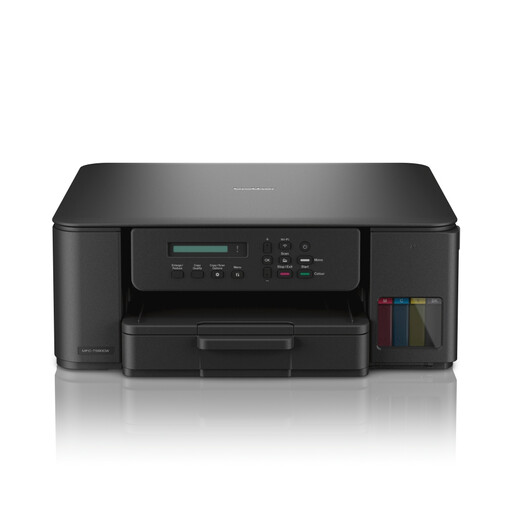 No image available
The wireless ink-tank design is relevant to recurring colour-itinerary work. If the studio scans multi-page originals, confirm the document-feeding arrangement for this exact model.
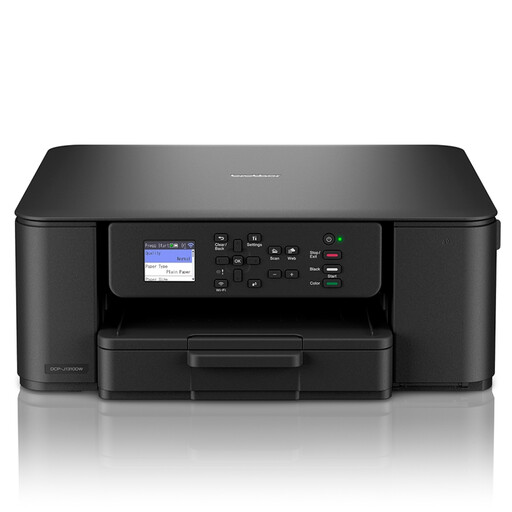 No image available
Consider this wireless inkjet for colour itineraries if its paper handling meets the studio's batch size. Confirm document-feeding needs and the replacement-cartridge arrangement for recurring use.
 No image available
If considering this model for itinerary printing, confirm support for the intended paper format and whether separate scanning or copying equipment is needed.
Choose a colour ink-tank multifunction printer when maps or colour-coded details need colour, or when the team routinely scans and copies. Choose a mono laser when routine itineraries are entirely black-and-white text and print-queue speed takes priority; check the functions of the exact model before deciding.
Yes, if the studio regularly prints multi-page packs on supported paper: automatic duplexing avoids manually feeding sheets again to print the reverse side. Check the model's supported paper types and duplex specifications for the format you use.
An automatic document feeder is mainly useful if you routinely scan or copy multi-page originals. It does not increase the blank-paper capacity for printing; compare the input tray instead for itinerary batches.
No. Wi-Fi enables a connection but does not determine who can submit jobs or collect printed pages. Where the studio processes personal data, the Information Commissioner's Office calls for security measures appropriate to the circumstances and risk, so assess network access and the physical collection process together.