Choose an inkjet for bookmark printing by checking whether its documented feed path supports the paper type, weight and sheet size you intend to use. In a student flat, wireless setup and space for open trays also matter, but a printer’s automatic double-sided feature does not necessarily apply to photo paper or card.
Who is this for?
Bookmark makers using coated or heavier paper
If you plan to cut bookmarks from printed sheets, match the paper’s type, weight and size to the printer’s documented feed path. Borderless printing may help with artwork at the edge of a supported photo size, but you will still need to cut the finished bookmarks.
Students sharing desk and network space
Check the printer’s footprint with its trays open and how each person will connect. Wi-Fi Direct is worth considering if access to the flat’s shared wireless network is inconvenient.
Occasional printers making small batches
Allow for alignment tests, trial sheets and replacement ink when planning a batch. HP advises checking a printer’s paper-handling specifications before choosing paper, since unsuitable media can cause jams or poor print quality.
What matters when choosing?
Start with the bookmark paper and feed path, then check how the printer will fit, connect and handle your printing routine. Document-printing features alone do not establish compatibility with card or photo paper.
| Concern |
What to check |
Who this matters to |
| Paper and feed path |
Match the intended paper type, weight and sheet size to a documented tray or manual feed. Canon UK specifies up to 300 g/m² for Canon photo paper in the PIXMA TS5350a rear tray, not for every card of that weight. |
I want my chosen coated or heavier sheet to feed reliably before I cut it into bookmarks. Around 36% of consumers put paper compatibility first. |
| Placement and connection |
Check dimensions with trays open, device compatibility and whether Wi-Fi Direct is available. Epson lists Wi-Fi Direct for the Expression XP-5200. |
Sharing a small desk and an awkward network makes a workable setup my priority; around 29% of consumers primarily care about placement and connection. |
| Ink and trial sheets |
Compare replacement-ink options and stated yields on the same basis, and try a small pack of the intended paper before committing to a batch. |
For occasional colourful batches, I want to avoid using too much ink and specialty paper on failed prints. Running supplies are the main concern for around 21% of consumers. |
| Two-sided finishing |
Confirm that double-sided printing supports the chosen paper; test front-to-back alignment and plan any cutting or other finishing separately. |
If artwork must line up on both sides, I need a workable turning and finishing process. Around 14% of consumers put that workflow first. |
Common buying mistakes
-
Assuming any colour inkjet accepts bookmark card
Paper limits can differ by tray and media type. Canon UK’s 300 g/m² figure for the PIXMA TS5350a applies specifically to Canon photo paper in its rear tray; HP warns that unsuitable paper can cause jams and poor print quality.
Check the exact printer and paper specifications together, then try a small pack before printing a full batch.
Failed feeds can use up specialty sheets, ink and time.
-
Assuming automatic double-sided printing works on card
Canon UK specifies automatic double-sided printing on plain paper for the PIXMA TS5350a. Epson describes A4 double-sided printing for the Expression XP-5200; that alone does not establish support for bookmark card.
Check for media-specific double-sided support. Otherwise, test manual turning and front-to-back alignment on one sheet before printing the batch.
A misaligned reverse side may mean repeating a sheet by hand.
-
Overlooking ink and trial sheets
Colour proofs and feed tests can use supplies before you have a finished bookmark. Cartridge arrangements and optional ink plans also differ between models.
Compare replacement options, stated yields and any plan terms for the exact printer, then test the intended paper in a small quantity.
-
Forgetting the finishing work
Borderless printing does not cut, round or protect a bookmark. The printable sheet size and the finished bookmark size are separate decisions.
Set the finished dimensions before laying out the artwork, and test trimming, drying and reverse-side alignment.
A cutter, corner-rounder or laminating supplies are separate items if your chosen finish needs them.
Brands to consider
Canon
The PIXMA TS5350a is relevant if documented rear-tray photo-paper handling is central to your bookmark plan.
- Canon UK specifies rear-tray support for Canon photo paper up to 300 g/m² and borderless printing on listed photo sizes.
- That weight limit does not establish support for arbitrary cardstock; its automatic double-sided specification applies to plain paper.
Epson
The Expression XP-5200 offers connection options worth considering when several people print from a shared flat.
- Epson lists Wi-Fi Direct, mobile setup, a 150-sheet cassette and automatic A4 double-sided printing for the XP-5200.
- Check its model-specific paper guidance before choosing bookmark card; those convenience features do not establish card compatibility.
HP
The ENVY 6032e is a general print, copy and scan option to assess if coursework and occasional creative sheets will share one printer.
- HP documents built-in dual-band Wi-Fi and automatic double-sided capability for the ENVY 6032e.
- Check the exact paper-handling specification before selecting bookmark media; colour printing and double-sided capability alone do not confirm suitability.
Joybuy products
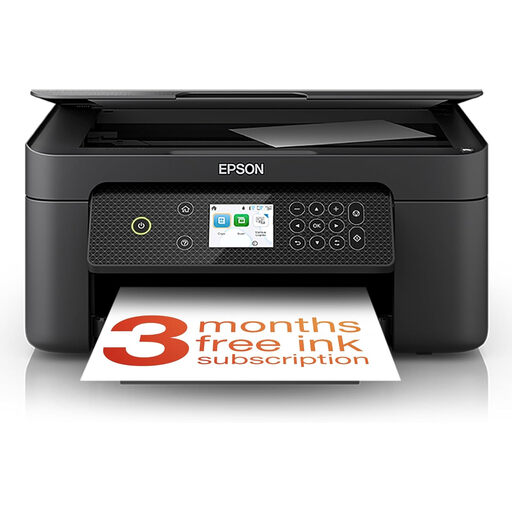
The Epson Expression Home XP-4200 is an A4 Wi-Fi inkjet to consider for bookmark sheets alongside everyday student printing. Check its media guidance against your chosen paper before buying supplies.
 No image available
Epson Expression Home XP-4200 A4 Wi-Fi inkjet
For bookmark sheets in a student flat, check that your intended paper type and weight suit this model and that there is room to use its trays. The product name specifies A4, Wi-Fi and 5760 × 1440 DPI; confirm media-specific double-sided support before relying on it for bookmarks.
Joybuy
Frequently asked questions
Can I print bookmarks on 300 g/m² card?
Only choose that card if the exact printer supports its weight and type in the tray you will use. Canon UK lists Canon photo paper up to 300 g/m² in the PIXMA TS5350a rear tray, but that is not approval for every third-party card of the same weight. Check both the printer guidance and the paper’s inkjet compatibility before buying a large pack.
Can automatic double-sided printing handle bookmark card?
Do not rely on it unless the printer documentation specifies double-sided support for your chosen card. Canon UK limits the PIXMA TS5350a’s automatic double-sided specification to plain paper, while Epson describes A4 double-sided printing for the Expression XP-5200. Test manual turning and alignment if card support is not specified.
Can I print without joining the flat’s shared Wi-Fi?
You may be able to use Wi-Fi Direct if the chosen printer and your device support it. Epson lists Wi-Fi Direct for the Expression XP-5200, allowing a connection without a wireless network; check the setup instructions for the exact model you intend to buy.
How should I keep bookmark paper between print runs?
Keep unused sheets flat and protected in their packaging, following the paper maker’s storage instructions. HP advises resealing opened paper and avoiding temperature and humidity extremes, which can affect feeding and print quality.


