Frequent manuscript proof printers
If you regularly print chapters or whole drafts, ink capacity, automatic two-sided printing and a paper supply suited to your usual batch size deserve attention.


For regular, long manuscript drafts, start with a refillable ink-tank inkjet that has confirmed automatic A4 two-sided printing: it avoids manually reinserting each batch of pages. If you also scan annotated chapters or share the printer, check the document feeder, paper tray and connections. For occasional short drafts, accepting manual two-sided printing may make more sense than choosing features you rarely use.
If you regularly print chapters or whole drafts, ink capacity, automatic two-sided printing and a paper supply suited to your usual batch size deserve attention.
If you annotate printed drafts, automatic two-sided printing lets you produce A4 proofs without turning and reinserting the sheets yourself.
If several devices use the printer or you scan marked-up pages, check its connections, tray capacity and whether a document feeder suits the number of pages you scan at once.
Decide how often you print long drafts before weighing ink capacity against the convenience of two-sided printing, scanning and paper handling.
| Concern | What to check | Who this matters to |
|---|---|---|
| Ink interruptions | Check the exact model’s ink system and the stated black-page yield for the supplied ink. | If I print complete drafts regularly, I want to plan fewer ink changes during long text runs. Around 36% of consumers put that need first. |
| Two-sided proofs | Confirm automatic duplex for A4 and check whether it supports your intended paper. | When I revise on paper, I do not want to turn and reload every batch of sheets. Around 29% of consumers primarily seek that convenience. |
| Shared workflow | Check tray capacity, connections and whether a document feeder is needed for multi-page scanning. | I need to print from more than one device and scan annotated chapters without handling every page separately. For around 21% of consumers, that workflow is the main concern. |
| Occasional simplicity | Decide whether short, infrequent batches make manual duplex and simpler paper handling acceptable. | If I print only occasional sections, I would rather turn a few sheets myself than choose scanning and paper-handling features I seldom use. That is the primary need for around 14% of consumers. |
Ink delivery and two-sided printing are separate choices. HP lists manual two-sided printing for its Smart Tank 5100 series but automatic two-sided printing for its 7000 and 7600 series; manual printing means reinserting sheets during a long draft.
Look for automatic two-sided printing or automatic duplex in the exact model’s specifications, rather than relying on the word “duplex” alone.
Page yields refer to particular models and ink sets. Brother, Epson and Canon publish different figures for the DCP-T780DW, ET-2950 and GX1050, which should not be treated as interchangeable promises for your manuscripts.
Check whether a figure refers to supplied or replacement ink and read the manufacturer’s test conditions alongside your likely mix of text and colour pages.
A document feeder matters when you scan multiple marked-up pages; a larger paper cassette matters when your print batches would otherwise require frequent reloading. Neither replaces checking whether the printer fits your usual tasks.
Think about your largest typical draft and how many annotated pages you scan together before prioritising either feature.
GOV.UK describes electrical-equipment recycling as a way to encourage recovery and reuse when equipment reaches the end of its life.
If you replace a printer, check an appropriate local council, retailer take-back or electrical-recycling route, and remove any personal documents or account data stored on a connected device.
Brother’s DCP-T780DW is an A4 colour ink-tank multifunction model with automatic two-sided printing for a home-office workflow.
The Epson EcoTank ET-2950 is a refillable A4 print, scan and copy model with automatic two-sided printing.
The Canon MAXIFY GX1050 is a refillable A4 home-office multifunction model with Wi-Fi and Ethernet connections.
HP Smart Tank includes refillable models with different two-sided-printing arrangements.
These inkjet choices cover refillable-tank and other home-office printing setups. Compare each exact model’s two-sided printing, ink and scanning arrangements against the size and frequency of your drafts.
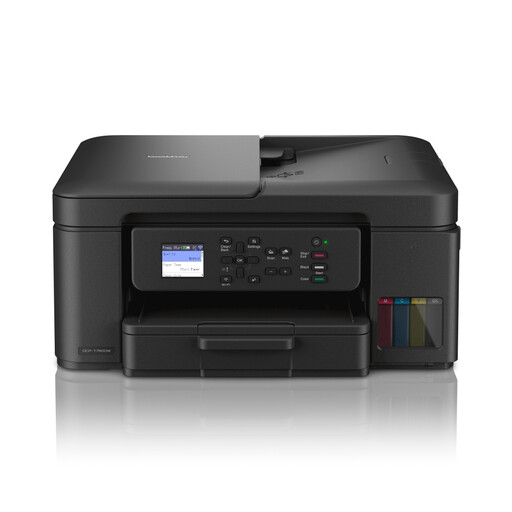 Image unavailable
Consider this model if you regularly print two-sided A4 drafts and scan multiple annotated pages.
Brother UK lists automatic A4 two-sided printing, a 150-sheet tray and a 20-sheet document feeder. Check that automatic duplex supports the paper you intend to use.
 Image unavailable
Consider this model if long print batches and scanning marked-up pages are part of your home-office routine.
Before relying on it for two-sided manuscript proofs, confirm automatic duplex and its supported paper in the exact GX6150 specifications. Check the stated ink-yield conditions for this model rather than using figures for another MAXIFY printer.
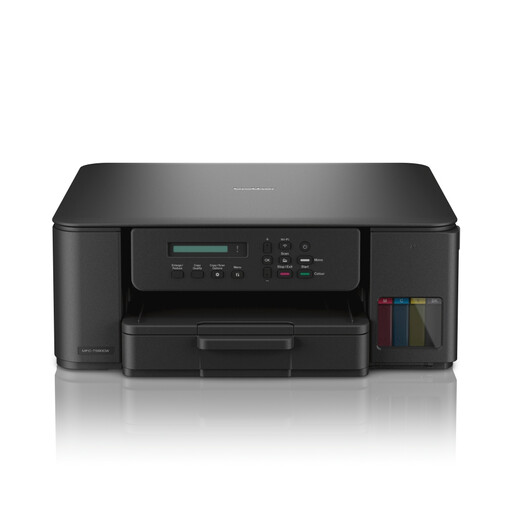 Image unavailable
This wireless ink-tank model is worth considering if you print recurring drafts but normally scan pages one at a time.
If you need automatic two-sided proofs or multi-page scanning, confirm the exact model’s duplex and feeder arrangements. Check the conditions behind any stated ink yield before comparing it with another printer.
 Image unavailable
Consider this all-in-one inkjet if your manuscript workflow also calls for scanning and office document tasks.
Check the exact printer’s two-sided paper support, ink-cartridge yields and dimensions against your usual print runs and available workspace.
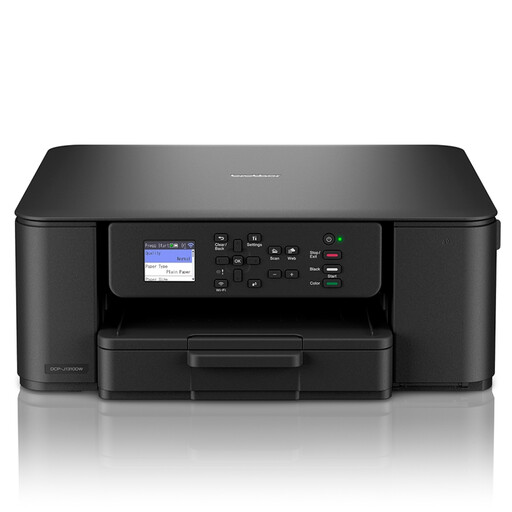 Image unavailable
This wireless inkjet may suit shorter, less frequent drafts if you do not need the refillable-tank arrangement offered by other models here.
For longer runs, check the replacement-ink yields. If scanning a stack of revisions matters, confirm the exact feeder configuration and capacity before buying.
It is worth prioritising if you repeatedly print long, two-sided drafts and want to avoid reinserting sheets. Brother explains that automatic duplex prints the reverse side without that intervention; for infrequent short batches, manual duplex may be acceptable if you are comfortable managing page order.
Check the exact printer’s supported paper types and sizes before relying on automatic duplex. Brother lists plain and recycled paper for automatic two-sided printing on the DCP-T780DW; that does not establish support for heavyweight or speciality paper.
Compare the black-page figures for the exact models and check whether each refers to supplied or replacement ink under the manufacturer’s stated test conditions. A published yield does not promise the same number of manuscript pages in your own mix of printing and printer maintenance.