Shared-desk music learners
Several people send A4 exercises from laptops or phones and want to avoid turning sheets over by hand. Brother UK’s specifications illustrate why checking wireless connections and the exact model’s duplex mode matters.


For music exercises at a shared desk, start with an A4 inkjet that works with everyone’s devices and prints both sides automatically on the paper you use. A refillable-tank all-in-one suits frequent printing when ink replenishment matters most; a compact cartridge all-in-one makes sense when desk space and scanning matter, while a print-only model suits batches if copying and scanning are handled elsewhere.
Several people send A4 exercises from laptops or phones and want to avoid turning sheets over by hand. Brother UK’s specifications illustrate why checking wireless connections and the exact model’s duplex mode matters.
Recurring practice sheets make ink replenishment a regular consideration. A refillable-tank model such as Epson’s EcoTank ET-2950 offers a different supply arrangement from cartridges; expected printing volume still matters when choosing between them.
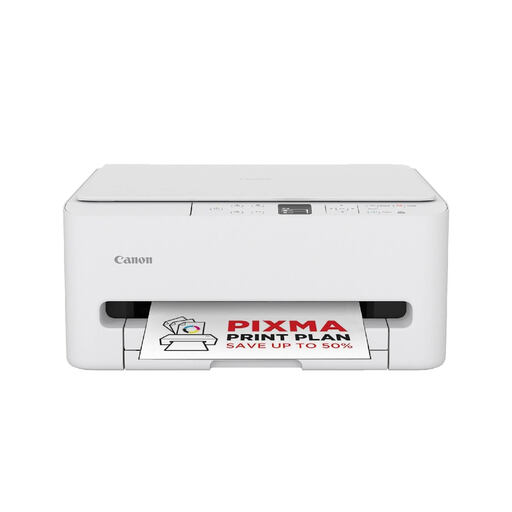
When the desk is used chiefly to print sheets, paper capacity may matter more than built-in copying or scanning. Canon’s print-only PIXMA TS705a is an example to consider if those other tasks are already covered.
Decide whether the shared desk needs copying and scanning as well as printing, then check how each model handles two-sided sheets, connections and ink replenishment.
Consider it when: Exercise printing is frequent and replacing cartridges less often is a priority.
Bear in mind: Manufacturer page-yield figures depend on test conditions, so relate them to the pages you expect to print.
Consider it when: One desk device needs to print, copy and scan without taking up unnecessary space.
Bear in mind: Duplex capability varies even between nearby models: Brother lists automatic two-sided printing for the DCP-J1360DW but manual two-sided printing for the DCP-J1260W.
Consider it when: Printing batches is the main task and another device covers scans and copies.
Bear in mind: A print-only device cannot take over those scanning or copying tasks.
| Concern | What to check | Who this matters to |
|---|---|---|
| Shared-desk convenience | Check printing compatibility with each person’s device and whether the printer’s placement works for everyone using the desk. | If several of us send exercises from different devices, I want printing to fit around other desk work. Around 44% of consumers would put shared-desk convenience first. |
| Two-sided sheets and paper handling | Confirm automatic duplex for your sheet size and paper type, and check the input capacity against a typical batch. | For multi-page exercises, I would rather not turn sheets over or refill the tray partway through a batch. Around 33% of consumers would make paper handling their primary concern. |
| Ink replenishment | Compare the exact model’s cartridge or refill arrangement with your expected black-and-white and colour printing. | When I print practice sheets regularly, I want an ink arrangement I can keep up with. Around 23% of consumers would prioritise replenishment. |
Brother UK specifies automatic two-sided printing for the DCP-J1360DW but manual two-sided printing for the DCP-J1260W. Choosing by series name alone could leave you turning over exercise sheets yourself.
Check the exact model for wording such as automatic two-sided printing or auto duplex.
Manual duplex adds a paper-handling step each time you print on both sides.
Canon lists automatic duplex and up to 350 sheets of plain-paper input for the PIXMA TS705a, but identifies it as print only. Those features do not provide a way to copy or scan at the shared desk.
Decide where copying and scanning will happen before choosing a print-only printer.
If those tasks are needed later, they require access to a separate device.
Epson’s published ET-2950 yields describe its supplied ink under stated conditions. The number of pages you get can differ with the content of your exercises and how you print them.
Think about your usual mix of black-and-white and colour sheets when comparing a refillable tank with cartridges.
The EcoTank ET-2950 illustrates a refillable A4 all-in-one for recurring exercise printing.
Brother’s compact A4 cartridge all-in-ones are relevant when wireless printing, copying and scanning need to share one desk.
The PIXMA TS705a illustrates a print-only A4 option for exercise sheets when scanning and copying are covered elsewhere.
These choices cover a refillable-tank all-in-one for recurring exercises and a compact cartridge all-in-one for a shared desk. Check each model’s paper handling and device compatibility against how your group prints.
 No image available
Consider this model for recurring exercise printing if a refillable-tank all-in-one fits your needs. Check that its A4 duplex settings suit your paper, and that the printer fits the space available on the shared desk.
 No image available
Consider this model if a compact cartridge all-in-one suits the shared desk. Confirm its automatic duplex settings for your exercise sheets, compatibility with each user’s device and the cartridge arrangement you would use.
Automatic duplex is useful if you routinely print exercises on both sides and want to avoid turning sheets over yourself. Check support for your exact paper size and type: Canon UK specifies it for A4, A5, B5 and Letter plain paper on the PIXMA TS705a, while Brother UK specifies automatic two-sided printing for the DCP-J1360DW.
Several people can use one printer if its connection and software options work with their devices. Brother UK specifies wireless and mobile printing for the DCP-J1360DW, while Canon UK specifies Wi-Fi and Ethernet for the PIXMA TS705a; check the operating-system and app requirements for the model you choose.
A refillable tank is worth considering when you print exercises regularly and reducing cartridge changes matters to you. Epson rates the supplied ink for its ET-2950 at up to 8,500 black or 6,500 colour pages under stated conditions, so use your expected page volume rather than treating those figures as your own likely yield.
Check collection or take-back options with your local authority or retailer before disposing of an old printer. GOV.UK describes equipment that depends on electrical current to work as electrical and electronic equipment; the collection route available to you depends on local arrangements.