Groups making illustrated bookmarks on card
If the design calls for craft paper, thicker card or a particular finish, start with the printer’s supported media and feed path rather than assuming that any inkjet will handle the stock.


Choose around the card you intend to use: check its weight, thickness, size and feed path before treating print speed or automatic two-sided printing as decisive. Epson United Kingdom specifies a straight feed for media up to 1.3 mm thick on the ET-8500, but that limit is specific to that model. A refillable A4 printer may suit recurring batches on supported media, while an A3 office inkjet makes more sense if flyers and paperwork are also substantial parts of the group’s workload.
If the design calls for craft paper, thicker card or a particular finish, start with the printer’s supported media and feed path rather than assuming that any inkjet will handle the stock.
For recurring event or reading-club runs, a refillable ink system, a manageable loading routine and suitable connectivity may matter alongside card compatibility.
If the same machine will also handle flyers, forms or scanning, consider those document tasks separately from its ability to feed the intended bookmark stock.
Settle on the bookmark stock and whether it needs printing on both sides, then weigh the ink system and batch workflow against the group’s other printing jobs.
| Concern | Buying checks | Who this matters to |
|---|---|---|
| Card and finish | Check the exact model’s supported media weight, thickness, size and feed path against the intended stock. | If our bookmarks use thicker or coated card, I need to know it will feed before planning the design. Around 40% of consumers put card compatibility first. |
| Recurring ink use | Check the ink system and compare published yields only when their test conditions are comparable; full-colour artwork may use ink differently. | When we print colour bookmarks repeatedly, I need a refill routine that works for our group. Keeping consumables manageable is the primary concern for around 30% of consumers. |
| Batch workflow | Check connectivity and the loading routine for the chosen stock; a plain-paper tray capacity is not a card capacity. | If several volunteers prepare event packs, I want printing and loading to fit the time we have. Around 20% of consumers chiefly prioritise batch workflow. |
| Other group tasks | Check whether A3 printing or scanning is needed as well as bookmarks, then verify card support separately. | When our printer also has to handle flyers and forms, I need those jobs covered by the same purchase. Broader group administration comes first for around 10% of consumers. |
A stated sheet capacity may refer to ordinary paper, while heavy or coated bookmark stock has different loading and feed requirements.
Check the model’s media table for the exact stock. If possible, try a small pack before ordering card in bulk.
Two-sided printing can be restricted by paper type and size. Canon UK, for example, specifies plain-paper conditions for automatic duplex on the PIXMA TS9550 series; that specification does not establish the conditions for another model.
Check the intended printer’s duplex media conditions. If the card is not listed, plan a manual two-sided test and check alignment before producing a batch.
A refillable ink system addresses ink replenishment, not whether a particular craft card will pass through the printer.
For card-focused work, compare documented media limits and feed options for the exact model alongside its ink system.
A3 printing and document-handling features may help with flyers and administration, but they do not establish compatibility with decorative bookmark card.
Decide whether those wider tasks justify the office features, then check the bookmark stock against the model’s own media specifications.
The EcoTank ET-8500 is a photo-oriented A4 model to examine when speciality media is central to the bookmark plan.
The refillable PIXMA G3590 is relevant when bookmarks are part of regular A4 colour and document printing.
The MFC-J5340DW is worth considering when the group also needs A3 printing and document handling.
The Smart Tank range offers refillable ink systems for groups considering recurring colour printing.
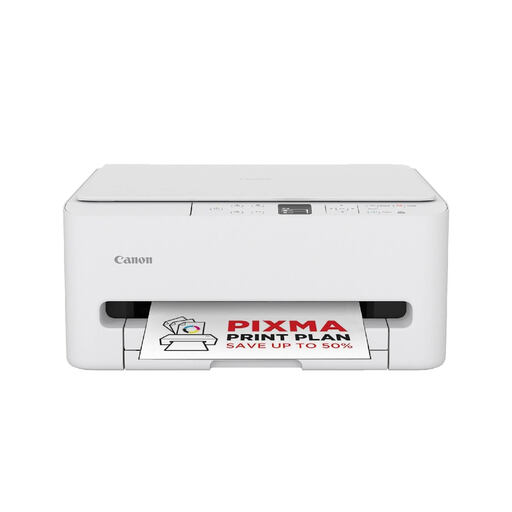
This Canon PIXMA model is an inkjet option to consider for bookmarks and routine group printing. Check its manual against the intended card, including any two-sided printing conditions, before choosing it for a batch.
 No image available
For volunteer bookmark printing alongside other group documents, check whether the TS6550i accepts your chosen card size, weight and finish. Confirm its two-sided media conditions and ink system if you expect recurring batches.
No. Paper weight alone does not describe a card’s thickness, stiffness, coating or dimensions. Check the exact printer’s supported media and feed instructions against the stock you plan to use.
Only if the printer supports automatic duplex for that card type and size. Canon UK specifies plain-paper and size conditions for automatic duplex on the PIXMA TS9550 series, illustrating why the intended model’s own media table matters. Otherwise, test manual two-sided printing and alignment.
Start with a small amount of the intended stock and confirm its dimensions and specifications against the printer manual. In a short print run, check feeding, image alignment, drying and reverse-side marking before committing to more card.