Frequent schedule-printing coordinators
If several learners need updated schedules at once, paper capacity and the frequency of ink replacement can affect preparation time. Compare the tray size with your largest usual batch.


For regularly updated A4 training schedules, look for a refillable ink-tank printer with automatic two-sided printing and a paper tray that can hold your usual batch. A document feeder matters if staff also scan or copy multi-page materials; for lighter printing, a smaller print, scan and copy model may suit the available workspace better.
If several learners need updated schedules at once, paper capacity and the frequency of ink replacement can affect preparation time. Compare the tray size with your largest usual batch.
Staff printing from different devices should check that the printer works with their classroom network. If they also copy or scan administration documents, those tasks may influence whether they need a document feeder.
For smaller A4 batches, a print, scan and copy model may be enough without a large paper cassette. Check both the printer’s footprint and the space needed to load paper.
Start with the number of schedules printed in a normal session, then decide whether shared access or multi-page scanning changes the choice of printer.
| Concern | What to check | Who this matters to |
|---|---|---|
| Ink interruptions | Check the refill system and the availability of the exact replacement bottles or cartridges. Treat stated page yields as test estimates, particularly for colour-heavy schedules. | If I print updated schedules often, I want to avoid running out of ink during preparation. Around 36% of consumers put avoiding ink interruptions first. |
| Batch handling | Compare the input tray with your largest usual A4 batch, and check for automatic two-sided printing if schedules remain easy to use on both sides. | When I prepare hand-outs for a group, stopping to reload paper is my main concern. Around 29% of consumers prioritise batch handling. |
| Shared printing and scanning | Confirm compatibility with staff devices and the classroom network. For multi-page originals, check whether the printer has an automatic document feeder and how many sheets it holds. | Several staff members need to use the printer, and I may also scan or copy forms. Around 21% of consumers put that shared workflow first. |
| Workspace fit | Measure the available surface and allow room for paper loading, including behind a rear-feed model. | I print smaller batches and need the machine to fit the available work surface. Around 14% of consumers prioritise a compact setup. |
Manufacturer page-yield figures are test estimates. Colour coverage, print settings and the design of your schedules can change how many pages you actually print.
Estimate your monthly A4 volume and check that replacement supplies for the exact model are available.
Print, scan and copy functions do not, by themselves, establish that a printer has an automatic document feeder. Without one, scanning a stack may mean placing pages on the glass individually.
If staff regularly scan or copy training packs, confirm both the presence and capacity of the feeder.
A tray that holds fewer sheets than a normal print run can interrupt schedule preparation.
Count the sheets needed for your largest routine session and leave room for ordinary replenishment.
A listing for the right model does not establish that it can currently be ordered.
Check current availability and the exact model number before placing an order.
The MAXIFY GX2051 is a refillable-tank A4 print, scan and copy option to consider when classroom administration includes larger paper batches and multi-page originals.
The DCP-T780DW is a refillable-tank A4 print, scan and copy model for regular schedules and occasional multi-page administration.
The EcoTank ET-2950 is an A4 refillable-tank print, scan and copy option for lighter schedule batches where workspace fit matters.
These printers cover refillable-tank choices for recurring A4 schedules and a cartridge-based option to consider for lighter use. Match paper handling and scanning needs to your classroom before choosing a model.
 No image available
Consider this model if recurring schedule batches and multi-page administration are both priorities. Compare its paper input and document-feeder capacities with your busiest session, and check the space needed to operate it.
 No image available
For recurring A4 schedules alongside scanning or copying, check its paper handling and connection options against the devices staff use. Confirm its footprint and paper-loading clearance before assigning it a workspace.
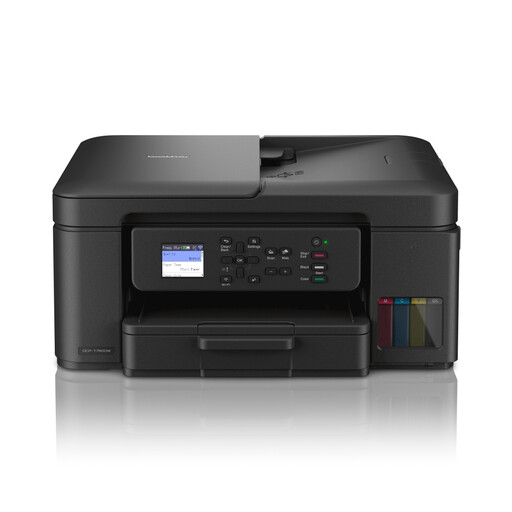 No image available
For regular schedules and occasional multi-page scanning, Brother UK lists a 150-sheet tray, automatic two-sided printing and a 20-sheet document feeder. Check whether the tray holds a normal classroom batch and whether wireless access suits staff devices.
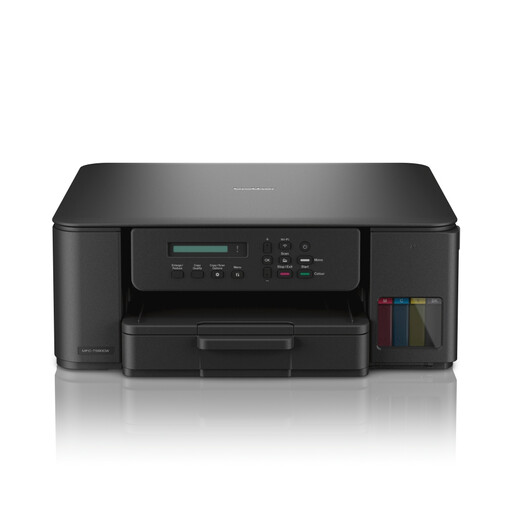 No image available
This ink-tank model is worth considering when wireless access and smaller A4 schedule batches matter more than feeding stacks of originals. If staff regularly scan or copy multi-page forms, confirm whether it has a document feeder.
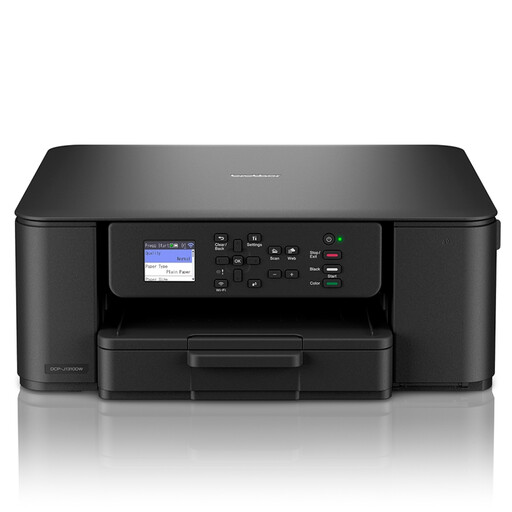 No image available
For lighter schedule printing, compare this wireless inkjet with the refillable-tank models if avoiding frequent ink changes is important. Check replacement-cartridge availability and confirm its scanner arrangement if staff need to copy or scan multi-page documents.
No: an automatic document feeder handles originals for scanning or copying, not ordinary schedule printing. It becomes useful if staff routinely process multi-page forms; Canon UK lists a 35-sheet feeder on the MAXIFY GX2051, while Brother UK lists a 20-sheet feeder on the DCP-T780DW.
Use automatic two-sided printing when both sides will remain easy for learners to read and use. Canon UK, Brother UK and Epson United Kingdom list automatic two-sided printing for the MAXIFY GX2051, DCP-T780DW and EcoTank ET-2950 respectively.
No: a stated page yield is a manufacturer test estimate, not a count of your classroom schedules. Canon UK says its MAXIFY GX2051 yield uses its test method and a continuous-printing simulation; colour coverage, settings and maintenance can change the output you achieve.