For recurring batches of membership forms, consider a refillable ink-tank printer with automatic double-sided printing. If you also copy or scan stacks of returned forms, look for an automatic document feeder (ADF); if both sides must be scanned without turning each sheet over, confirm that the scanner itself supports two-sided scanning.
Who needs which features?
Recurring membership-form coordinators
If you print repeated A4 batches, automatic double-sided printing and a paper tray suited to each run can reduce manual page turning and reloading. A refillable tank may also mean fewer ink replacements; compare the stated yields with the amount you expect to print.
Administrators handling returned forms
If completed forms need copying or scanning, an ADF can feed a stack instead of requiring you to place each page on the scanner glass. Check for an explicit two-sided scanning specification when both faces of a returned form need capturing automatically.
Occasional home-office issuers
If forms are printed only at renewal time or on request, check the paper feed, available desk space and connection to the devices you use. A compact all-in-one may suit those tasks without making the largest tank or tray your starting requirement.
What matters when choosing?
Start with how often you print and whether returned forms need scanning. Those tasks determine which paper-handling features deserve closer attention.
| Concern |
What to check |
Who this matters to |
| Repeat batches and refills |
Check included ink, the manufacturer’s yield basis and automatic double-sided A4 printing. |
When renewals create repeated batches, I want to finish a run without stopping to replace ink. Roughly 36% of consumers put fewer refill interruptions first. |
| Returned-form handling |
Check ADF capacity and whether it scans one or both sides. |
If completed forms come back in stacks, I need to copy or file them without feeding every sheet by hand. Around 29% of consumers prioritise returned-form handling. |
| Home-office operation |
Check dimensions, paper capacity and compatibility with your computer or mobile device. |
With limited desk space, I need a printer I can place and use without making routine form jobs awkward. About 21% of consumers put day-to-day convenience first. |
| Occasional flexibility |
Check supported paper types, double-sided printing restrictions and the functions you will use. |
When forms are needed only occasionally, I want one device that also handles my other administration tasks. Roughly 14% of consumers prioritise flexible occasional use. |
Checks that prevent a poor fit
-
Assuming double-sided printing means double-sided scanning
A printer can turn paper over while printing yet scan only one side through its ADF. Brother documents automatic two-sided printing for the DCP-T780DW, while its ADF specification describes one-sided scanning; HP explicitly lists two-sided scanning for the OfficeJet Pro 9120.
If returned forms have information on both sides, confirm the scanner’s two-sided scanning specification and ADF capacity.
-
Assuming every cartridge will work in an HP OfficeJet Pro
HP states that dynamic security can block cartridges using a non-HP chip, including following firmware updates. A cartridge you planned to use could therefore interrupt printing.
Check HP’s cartridge requirements for the exact model before choosing supplies.
-
Choosing an ADF without checking the forms it can feed
An ADF’s sheet capacity and one-sided or two-sided operation affect how you process returned forms. Paper requirements matter too if your forms include heavier stock or inserts.
Confirm the supported paper size and weight, feeder capacity and scanning sides against the forms you actually use.
Relevant brands and model examples
These examples show different document-handling arrangements; the listed features apply to the named models, not every printer from each brand.
Brother
The DCP-T780DW is an ink-tank example for recurring A4 printing and stacks of single-sided returned forms.
- Brother UK documents automatic two-sided A4 printing, a 150-sheet input tray and a 20-sheet ADF for this model.
- Its documented ADF scanning is one-sided; double-sided printing does not remove the need to turn over double-sided originals.
HP
The OfficeJet Pro 9120 illustrates a document-administration option when scanning both sides of returned forms is a priority.
- HP lists two-sided printing and scanning, a 35-sheet ADF and a 250-sheet input tray for this model.
- HP states that dynamic security can block cartridges using a non-HP chip; check the supplies you intend to use.
Epson
The EcoTank ET-2950 illustrates a refillable-tank route for recurring A4 printing when multi-page scanning is not the deciding feature.
- Epson documents refillable tanks and automatic double-sided A4 printing, and states included-ink yields of up to 8,500 black and 6,500 colour pages.
- If you need to scan stacks of returned forms, confirm whether the exact printer you choose has an ADF.
Canon
The PIXMA TR7650 is an occasional or mixed-administration example with front and rear paper feeding.
- Canon specifies automatic double-sided printing on supported plain-paper sizes and a 20-sheet ADF for this model.
- The ADF is specified as one-sided. Check the supported media and cartridge variant against your form-printing pattern.
Joybuy product choices
These inkjet models offer choices for printing membership forms at home. For any model you intend to use with returned forms, check its exact feeder and scanning specifications before deciding.
 No image available
Canon MAXIFY GX6150
Consider this model for recurring membership-form batches if its paper feed meets the size of your runs. Confirm the ADF’s scanning sides before relying on it for double-sided returned forms.
View on Joybuy
 No image available
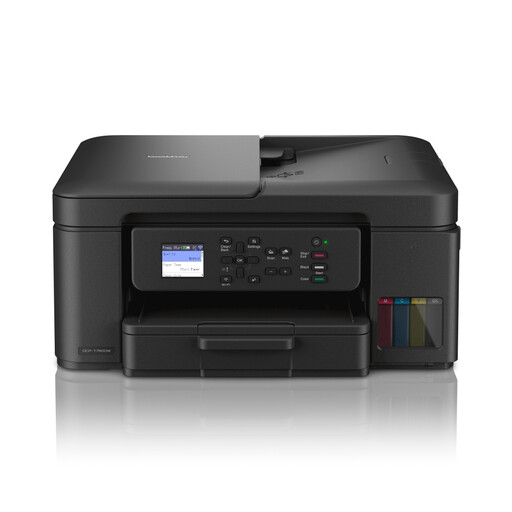
Brother DCP-T780DW 3-in-1 wireless ink-tank printer
Suited to recurring A4 form batches and scanning stacks of single-sided returns. Brother UK documents automatic two-sided A4 printing, a 150-sheet tray and a 20-sheet ADF; its documented ADF scanning is one-sided.
View on Joybuy
 No image available
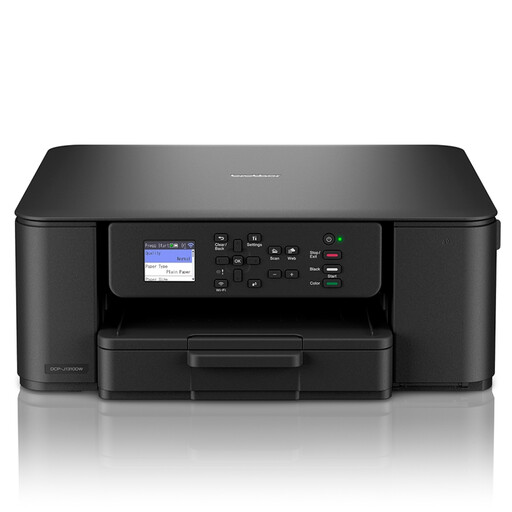
Brother DCP-J1310DW wireless inkjet printer
For home-office form printing, check that this model’s double-sided printing and paper handling suit your forms. If you expect to scan returned batches, confirm the ADF capacity and whether it scans both sides.
View on Joybuy
 No image available
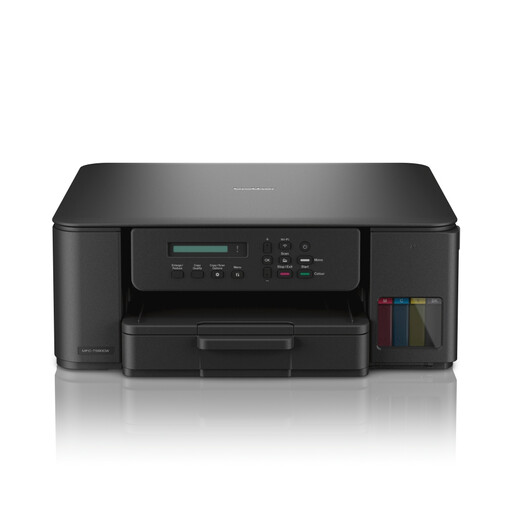
Brother DCP-T580DW 3-in-1 wireless ink-tank printer
Its ink-tank design makes it a model to consider for repeated form printing. Check its paper-handling specifications for your batch size, and confirm whether it has an ADF if you need to process stacks of returned forms.
View on Joybuy
 No image available
Brother MFC-J6760DW all-in-one inkjet printer
Consider this all-in-one for membership-form administration if its paper handling suits the work. Check its dimensions against your home-office space and confirm two-sided scanning if returned forms need both faces captured automatically.
View on Joybuy
Frequently asked questions
Do I need an ADF for membership forms?
An ADF is useful if you regularly copy or scan stacks of completed forms; it is less important for printing-only jobs. Which? describes it as a feeder that moves multiple pages through a printer automatically, so check its capacity as well as whether it scans one or both sides.
Does double-sided printing mean double-sided scanning?
No. They are separate functions: Brother documents two-sided printing but one-sided ADF scanning for the DCP-T780DW, whereas HP explicitly lists two-sided scanning for the OfficeJet Pro 9120. Check the scanner specification for the exact model.
Should I choose an ink tank or cartridges for form batches?
An ink tank is worth considering when repeated batches and fewer ink replacements are your main concerns; a cartridge all-in-one may suit intermittent printing if its paper handling better fits your tasks. Compare each model’s stated yield basis with your expected black-and-white and colour use rather than treating a yield figure as a complete answer.
What should I do with a printer at the end of its life?
Check an appropriate collection, reuse or recycling route for the electrical printer rather than placing it with ordinary residual waste. GOV.UK identifies the Waste Electrical and Electronic Equipment Regulations 2013, as amended, as the legislation underpinning UK measures for electrical and electronic equipment.


