Studios printing frequent grid batches
Recurring A4 print runs make paper reloads, ink refills and queues between users practical considerations. Compare the tray and connection options against the studio’s busiest session, not just its usual day.


For regular batches of A4 number grids in a shared studio, start with an inkjet whose paper supply suits the busiest run; a refillable ink-tank model with automatic duplex printing may reduce routine interruptions. Consider Ethernet if the printer will have a fixed wired connection. Before choosing, check the exact model’s printable margins and paper support against your grid template, and assign someone to manage shared access and firmware updates.
Recurring A4 print runs make paper reloads, ink refills and queues between users practical considerations. Compare the tray and connection options against the studio’s busiest session, not just its usual day.
If sheets will be marked or highlighted, check the ink type, supported paper and printable margins of the exact printer. A proof sheet can reveal whether lines and numbers sit safely within the printable area.
When contributors print from different computers or mobile devices, plan how each will connect and who will manage access and updates. The National Cyber Security Centre identifies firmware updates as a way to apply device fixes and security updates.
For shared-studio number grids, work from the busiest print run to the grid template and paper, then check how everyone will connect to and maintain the printer.
| Concern | What to check | Who this matters to |
|---|---|---|
| Keeping batches moving | Compare paper capacity with the busiest run, plus automatic duplex printing and refill arrangements. | If several people need recurring packs, I want fewer stops to reload paper or ink; around 46% of consumers put batch continuity first. |
| Clear, usable grids | Check exact-model margins, supported paper and ink type; proof the template at its intended scale. | When grids will be handled, marked or highlighted, I need lines and numbers to remain usable; roughly 27% of consumers make grid legibility and annotation their primary concern. |
| Shared access and upkeep | Confirm the required Wi-Fi or Ethernet connections and assign responsibility for access and firmware updates. | If contributors use different devices, I need printing access that the studio can manage; about 27% of consumers prioritise shared access and upkeep. |
A manufacturer’s page-yield figure does not tell you how many sheets your particular grid, coverage and print settings will produce.
Use the figure to compare stated test conditions, then print a representative grid and check the replacement ink and maintenance consumables for the exact model.
Grid borders or numbers near the edge can be clipped. Canon UK specifies minimum margins of 5 mm on every edge for the MAXIFY GX1050; another model may differ.
Set the template’s safe border from the chosen printer’s specifications and print a proof at 100% scale before sharing it.
A clipped proof can mean reworking the template and reprinting sheets.
Tray capacity and stated workload vary by model. HP describes the Smart Tank 7606 for teams of up to three users and up to 1,200 pages per month, while Canon UK lists a 350-sheet paper supply for the MAXIFY GX6150. Neither figure guarantees uninterrupted printing in your studio.
Estimate pages for the busiest week and compare paper capacity, duplex printing and connections against that pattern.
A tray that needs frequent refilling can interrupt a shared print session.
Shared access also needs an update routine. The National Cyber Security Centre says firmware updates can deliver bug fixes and security updates.
Give a responsible studio member control of administration and access settings, and use the manufacturer’s support channel to review updates.
Canon’s MAXIFY refillable-ink range includes document-focused options for shared printing. Canon UK lists Wi-Fi, Ethernet and a 250-sheet cassette for the GX1050; the GX6150 has a 350-sheet paper supply and 50-sheet automatic document feeder.
Epson’s EcoTank range includes refillable models with differing document features. Epson United Kingdom specifies automatic duplex printing, a 250-sheet front tray and a 35-page automatic document feeder for the ET-5150.
HP Smart Tank includes refillable-ink printers aimed at small teams. HP Store UK describes the Smart Tank 7606 with automatic two-sided printing, a 35-sheet automatic document feeder and print, copy, scan and fax functions.
These choices include document-focused refillable printers, a photo-oriented printer and a cartridge-based option. Match each one to the studio’s batch size, grid layout and connection needs rather than assuming they suit the same workload.
 No image available
Consider this document-focused model when recurring grid batches and sheets that will be highlighted both matter. Epson United Kingdom specifies a 250-sheet front tray, automatic duplex printing and a 35-page automatic document feeder; its description of the all-pigment prints’ resistance to highlighting is a manufacturer claim, so try a proof with your own paper and markers.
Check the exact printer’s printable margins and supported paper before fixing the grid template.
 No image available
Consider this refillable model if frequent shared batches call for a larger paper supply and both wired and wireless access. Canon UK specifies a 350-sheet paper supply, automatic duplex printing, a 50-sheet automatic document feeder, Wi-Fi and Ethernet.
Check the GX6150’s own printable margins and paper limits before setting grid borders; another MAXIFY model’s limits need not apply.
 No image available
Consider this photo-oriented printer only if its media handling also fits the studio’s number-grid work. Before preparing an A4 template, confirm A4 paper support, printable margins and ordinary-paper compatibility for the exact model.
If sheets will be highlighted or annotated, print a proof with the paper and marking materials the studio intends to use.
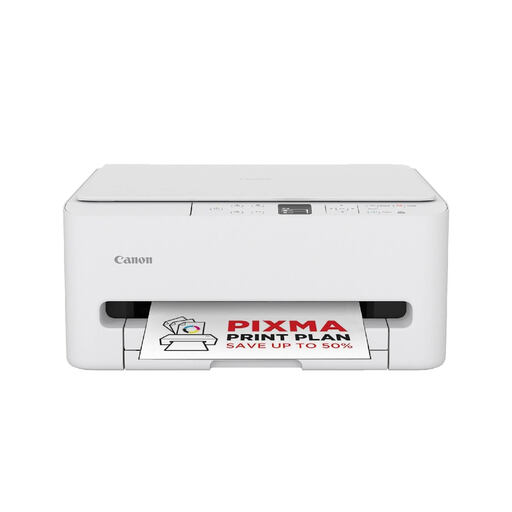 No image available
For smaller grid batches, compare this cartridge-based option with refillable models according to how often the studio expects to reload paper and replace ink. Check that its paper input suits the busiest session.
Confirm the exact model’s printable margins and supported paper, and proof any grid that will be annotated.
Do not assume that every printer can print the grid to the edge. Canon UK specifies 5 mm minimum margins on every edge for the MAXIFY GX1050; check the chosen model’s margins and keep borders and numbering inside its printable area unless it supports the borderless mode and paper size you need.
Ethernet is useful when the printer has a fixed location and the studio wants a wired connection alongside Wi-Fi. Canon UK lists both connections for the MAXIFY GX1050 and GX6150, but having Ethernet does not itself guarantee faster printing or fewer queues.
Assign a responsible person to manage access and review the manufacturer’s firmware updates. The National Cyber Security Centre says firmware updates can provide bug fixes, new functionality and security updates.
Check an appropriate retailer or local electrical-equipment collection route when replacing it. GOV.UK’s guidance on UK waste electrical and electronic equipment explains the role of recovery, reuse and recycling, but the available collection route depends on the service you use.