Occasional ticket-maker using thicker stock
You need a small batch of physical tickets and want to check that the printer accepts your chosen paper, rather than assuming any inkjet will handle card.


Choose the ticket stock and estimate how often the flat will print before settling on an inkjet printer. For an occasional batch, documented support for the chosen paper matters more than capacity intended for repeated printing; if tickets and other colour jobs will be frequent, a refillable-tank model is worth considering, but its exact media compatibility still needs checking.
You need a small batch of physical tickets and want to check that the printer accepts your chosen paper, rather than assuming any inkjet will handle card.
Tickets will be one of several colour-printing jobs for housemates or a student group, so the printer’s suitability for repeated use matters beyond this raffle.
You expect modest ticket runs alongside coursework and need a printer that fits those everyday tasks, provided it also accepts the exact ticket stock.
Settle on a feasible ticket stock before deciding how much repeated printing the flat needs.
| Concern | What to check | Who this matters to |
|---|---|---|
| Ticket-stock compatibility | Check the exact model’s supported media types and paper weights, then try a small amount of your chosen stock. | If I want tickets that can be handled and kept, I need the printer to feed and print the stock I choose; around 42% of consumers put ticket-stock compatibility first. |
| Practicality for a short run | Consider whether the printer will also serve coursework and whether its wireless setup suits the devices in the flat. | For a one-off raffle, I do not want to choose around printing I may never do; around 33% of consumers make short-run practicality their primary concern. |
| Ink for recurring batches | Consider how often you will print tickets and other colour sheets; treat stated ink yields as conditional, not as a prediction for your artwork. | When our group expects further events and shared printing, I care about managing repeated ink use; around 25% of consumers put recurring batches first. |
Canon specifies 64–105 g/m² for plain paper in the PIXMA TS7550i cassette, while its approximately 265 g/m² maximum applies to Canon specialty paper. A similar weight on third-party card does not establish compatibility.
Match the stock type and weight to the exact printer’s guidance, then test a few sheets before printing numbered tickets.
A failed batch uses card, ink and reprinting time.
Epson’s stated ink yield for the EcoTank ET-2950 is more relevant if the flat will continue printing colour material after the raffle. It does not tell you how much ink your ticket design will use.
Consider the likely coursework and future event printing as well as the raffle; for a short run, compare whether using a print service meets the need.
The Gambling Commission describes a residents’ lottery in terms of people living at the same single physical location. Its guidance for an event raffle instead restricts ticket sales to the event location while the event is taking place.
Identify which arrangement applies before preparing tickets or arranging sales, and check the Gambling Commission’s full conditions for it.
The PIXMA TS7550i is a reference point for occasional ticket sheets when documented specialty-paper support matters.
The refillable-tank EcoTank ET-2950 is relevant when ticket batches are part of continuing shared colour printing.
The wireless DeskJet 4310 is a model to consider for modest ticket runs alongside ordinary student printing.
These inkjet models offer options to examine for occasional ticket sheets or continuing shared printing. Check each model’s guidance against your exact ticket stock before choosing.
 No image available
If the flat expects to print beyond one raffle, assess this model against the planned workload. Check its model-specific guidance for the exact ticket stock before ordering card.
 No image available
Consider this model if the flat also needs continuing A4 printing, scanning and copying. Its title identifies Wi-Fi connectivity; check the exact ticket stock against the model’s media guidance.
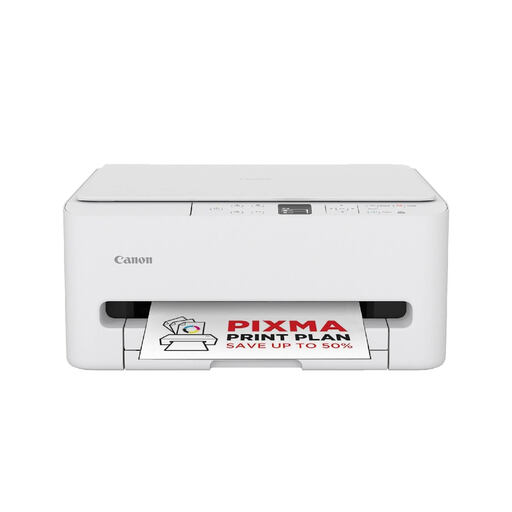 No image available
For occasional ticket sheets and other flat printing, compare this model’s supported media with the card you plan to use. Do not apply the PIXMA TS7550i’s paper-weight figures to the TS6550i.
 No image available
If you plan larger ticket-sheet layouts, check this model’s supported sheet sizes and whether it accepts your chosen card. Confirm any copying or scanning functions you need for other flat tasks before choosing it.
Start with the exact printer model’s supported media types and weights, then test a small amount of the card you intend to use. Canon, for example, distinguishes the PIXMA TS7550i’s 64–105 g/m² plain-paper range from its approximately 265 g/m² maximum for Canon specialty paper.
No: the Gambling Commission’s residents’ lottery guidance applies to people living at the same single physical location, while its event-raffle guidance has different conditions. Decide who can take part and where tickets will be offered before relying on either arrangement.
For the incidental event lottery described in the Gambling Commission’s guidance, tickets may be sold only at the event location while the event is taking place. Check that the fundraiser meets the conditions for that type of lottery before arranging sales.
It is more relevant if the flat will keep printing colour tickets or other material after the first event. Epson’s stated page yields for the EcoTank ET-2950 are conditional and do not predict ink use for your ticket design; you must also check the model’s compatibility with your chosen paper.