Regular-event register coordinators
Groups preparing fresh A4 sign-in sheets for frequent sessions may benefit from a tray that holds their print batch and automatic duplex printing when the template and paper allow two-sided sheets.


For frequent A4 register printing, consider a refillable-tank all-in-one with automatic duplex printing and a tray that fits your event batches. If volunteers also scan completed pages in batches, check for an automatic document feeder (ADF); for occasional printing, a compact cartridge model may be sufficient, but compare replacement-ink needs against your expected volume.
Groups preparing fresh A4 sign-in sheets for frequent sessions may benefit from a tray that holds their print batch and automatic duplex printing when the template and paper allow two-sided sheets.
Groups that copy or scan completed registers as well as printing blank sheets should check for an ADF. It can feed a batch of supported pages without placing each one separately on the scanner glass.
For infrequent, small print runs, a compact A4 cartridge all-in-one may meet the need. Compare its included and replacement ink with the number of sheets the group expects to print.
Decide how often registers are printed and whether completed sheets need scanning before choosing between a compact cartridge machine and a refillable-tank all-in-one.
Consider when: The group prints small batches occasionally and wants a compact machine.
Trade-off: Check how often cartridges would need replacing at your expected print volume.
Consider when: Register printing is regular and the group wants to assess bottle-based ink supply alongside paper capacity.
Trade-off: Compare the machine and replacement ink for your expected use; an ADF matters only if batches of completed pages need scanning or copying.
| Concern | What to check | Who this matters to |
|---|---|---|
| Uninterrupted printing | Check A4 automatic duplex support, tray capacity for a session and the stated ink yield for the exact model. | When fresh registers are needed for frequent events, I want to prepare a batch without stopping to refill paper or ink; around 43% of consumers put uninterrupted printing first. |
| Scanning completed registers | Check whether the model has an ADF and whether it accepts the size and type of sheets you use. | If volunteers process several completed pages together, feeding them individually would add work; roughly 29% of consumers place scanning and copying first. |
| Occasional use and space | Estimate monthly pages, then compare the machine's size and its included and replacement ink. | For only a few register sheets at a time, I would rather keep equipment compact and weigh the initial outlay against future ink needs; about 28% of consumers prioritise this balance. |
An all-in-one can print, copy and scan without necessarily feeding a stack of completed registers. If batch scanning matters, that distinction changes the volunteers' workload.
Check the exact model's ADF, sheet capacity and supported document sizes before buying.
Automatic duplex support can depend on media. Canon UK specifies A4 or Letter plain paper for automatic duplex printing on the MAXIFY GX6050; that condition should not be assumed for other models or specialist stock.
Check the chosen printer's media specification and test the final register template within its printable margins.
Unsuitable paper or a misaligned template may mean reprinting register sheets.
Manufacturer page-yield figures are measured under specified conditions, not from your group's template. A register with different page coverage may use ink differently.
Compare the stated yields and current replacement-ink options, then plan around your own expected number of pages.
Visitor entries may contain personal information. The Information Commissioner's Office advises a retention schedule that reflects an organisation's needs and legal requirements, rather than one fixed period for every register.
Decide why entries are collected, who can access them, how long they are needed and how they will be disposed of; check current ICO guidance and any rules relevant to the group.
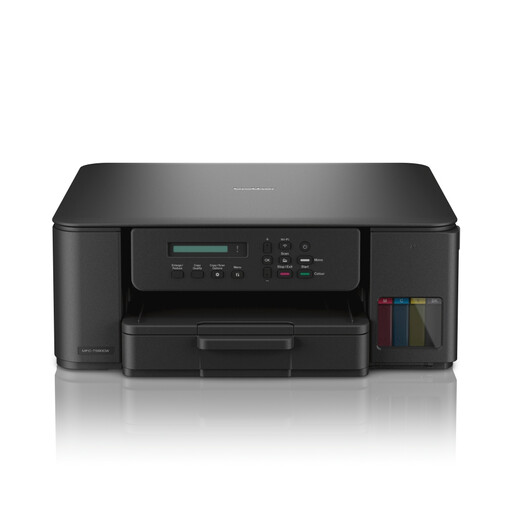
Brother offers both a compact cartridge all-in-one, the DCP-J1360DW, and a refillable-tank A4 all-in-one, the DCP-T580DW, relevant to different register-printing volumes.
The EcoTank ET-5150 is a refillable-tank A4 all-in-one to consider when printing and scanning are both regular tasks.
Canon's MAXIFY GX6050 is a refillable-ink model relevant to groups that routinely handle batches of register paperwork.
These refillable-tank all-in-ones are relevant to groups preparing regular A4 registers. If scanning completed sheets in batches is essential, check the ADF specification of the exact model before choosing.
 No image available
Consider this model if volunteers regularly print registers and need to feed completed sheets for scanning or copying.
Canon UK lists a 50-sheet ADF for the GX6150 and stated bottle yields of 6,000 black and 14,000 colour pages. Actual ink use depends on the register layout; confirm that the intended paper supports the duplex printing you need.
 No image available
Consider this model for recurring A4 register batches when printing capacity matters more than an established batch-scanning workflow.
Brother UK lists automatic duplex printing, a 150-sheet tray and bottle yields of 7,500 black and 5,000 colour pages. Those yields do not predict output from a particular register; if completed pages need scanning in batches, check the exact model's document-feeding features.
Automatic duplex printing is useful if the register is designed for both sides of a sheet and the printer supports your paper. Canon UK specifies A4 or Letter plain paper for automatic duplex printing on the MAXIFY GX6050; check the media rules for whichever model you choose.
An ADF is useful when volunteers routinely scan or copy several completed register pages. Epson United Kingdom lists a 35-page ADF for the ET-5150, while Canon UK lists a 50-sheet ADF for the GX6050; a group that only prints blank sheets may not need one.
That depends on the group's print volume and the machine and replacement ink being compared. Stated bottle yields can help assess refill frequency, but compare the exact consumables against your expected annual pages rather than treating a yield figure as an overall cost result.
Set a retention period that fits the purpose of the entries and any applicable requirements; the printer itself does not determine one. The Information Commissioner's Office advises organisations to maintain a retention schedule reflecting their needs and legal requirements. Check current ICO guidance when setting and reviewing the group's process.