Frequent worksheet printers
Teachers and classroom staff producing A4 puzzle sheets throughout term time may value refillable ink, two-sided printing and a tray that can hold enough paper for their usual batches.


For regular A4 maths-puzzle handouts, start with a refillable ink-tank all-in-one with automatic two-sided printing, then choose its paper capacity around your usual class-set size. A larger tray can mean fewer reloads; an automatic document feeder matters chiefly if staff routinely copy or scan multi-page originals. For occasional sheets, a cartridge model may also suit if its ink requirements work for your expected use.
Teachers and classroom staff producing A4 puzzle sheets throughout term time may value refillable ink, two-sided printing and a tray that can hold enough paper for their usual batches.
Staff using several devices may also need copying and scanning. An automatic document feeder becomes relevant when they regularly work from multi-page originals.
Where puzzle sheets are printed less often, a compact all-in-one may be more useful than higher paper capacity, provided its ink arrangement and placement suit the classroom.
Start with how often you print whole-class sets, then consider ink replacement and whether copying or scanning is part of the same job. Check the largest normal batch rather than choosing by a headline speed alone.
| Concern | What to check | Who this matters to |
|---|---|---|
| Ongoing ink use | Compare the included ink, replacement supplies and the conditions behind stated black-page yields. | If I print puzzle sheets throughout term, I want to plan ink replacement without relying on a headline yield as my actual output. Around 42% of consumers put ongoing ink use first. |
| Class-set handling | Check plain-paper tray capacity and automatic A4 two-sided printing against your largest usual batch. | When I print a class set at once, I want to avoid stopping halfway to load paper. Around 33% of consumers prioritise batch handling. |
| Shared use and copying | Confirm the school’s network compatibility and decide whether a flatbed or document feeder suits the originals you copy. | With several staff sharing a small room, I need straightforward access and an occasional scan or copy. Around 25% of consumers make simple shared use their main concern. |
Recurring handouts also mean recurring ink use. A manufacturer’s page-yield figure is measured under stated conditions, not a promise of how many classroom worksheets one set of ink will produce.
Check the exact model’s included ink, replacement supplies and yield conditions against the number of sheets you expect to print.
Canon UK lists a 250-sheet cassette for the MAXIFY GX1050, while Brother UK lists a 150-sheet tray for the DCP-T583DW. That difference can affect how often staff reload paper during repeated batches.
Count the largest usual run, including likely reprints, and check tray capacity and two-sided printing alongside speed.
An automatic document feeder helps with multi-page originals, but a flatbed can handle a single puzzle master.
Choose a feeder when multi-page copying or scanning is routine; otherwise give greater weight to the printing and paper-handling features you will use regularly.
Department for Education guidance asks schools to consider their software, hardware and network infrastructure when planning printing. Worksheets bearing pupil names also need to be handled under the school’s data-protection procedures.
Involve the relevant ICT staff, check network access and agree where printed sheets will be collected before placing a shared printer.
Epson’s EcoTank ET-2950 is an A4 refillable-ink model with printing, copying, scanning, automatic two-sided printing and wireless operation.
Canon’s refillable-ink MAXIFY GX1050 combines A4 printing, copying and scanning with Wi-Fi and Ethernet connectivity.
Brother’s tankbenefit range includes the refillable-ink DCP-T583DW for printing, scanning and copying, and the DCP-T780DW for users who also need a document feeder.
These A4 inkjet choices cover different classroom workflows: recurring batches, multi-page copying and scanning, and occasional puzzle sheets. Compare their ink arrangements and paper handling with your own print volume before choosing.
 No image available
Consider this model for recurring class sets where paper handling and ink refills are important; compare its tray arrangement with your largest batch and check that it fits the intended space.
 No image available
Consider this all-in-one for staff who regularly copy or scan multi-page originals. Check its cartridge replacement needs and placement requirements against the classroom’s expected use.
 No image available
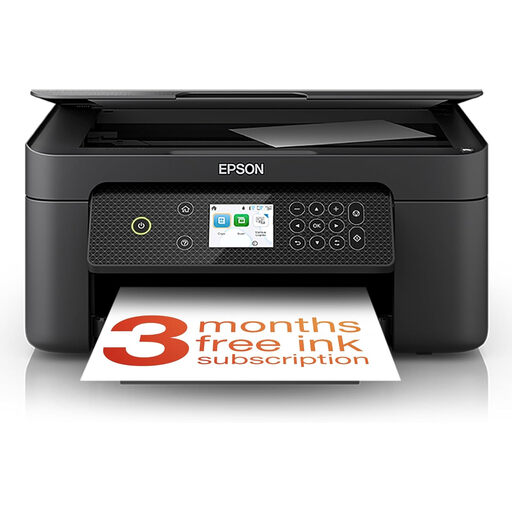
For occasional puzzle sheets and single-page masters, check whether its paper capacity and cartridge replacement needs suit your largest normal batch. The named variant is an A4 Wi-Fi inkjet printer.
Choose automatic two-sided printing if you regularly place puzzles, instructions or answers on opposite sides of a sheet. Single-sided printing may be preferable when pupils need to write on or display each page separately. Canon UK, Epson and Brother specify automatic two-sided printing for the GX1050, ET-2950 and DCP-T583DW respectively.
Not necessarily: choose tray capacity around the batches you actually print and how often you can reload paper. Canon UK lists a 250-sheet cassette for the MAXIFY GX1050, while Brother UK lists a 150-sheet tray for the DCP-T583DW.
It is worth considering when staff routinely copy or scan multi-page originals, rather than single puzzle masters. Brother UK lists a 20-sheet feeder for the DCP-T780DW; for one-page originals, check whether a flatbed meets your needs instead.
Check the printer against the school’s software, devices and network arrangements, and involve the relevant ICT staff before setup. Department for Education purchasing guidance asks schools to identify their existing infrastructure so suppliers can advise on a suitable printing arrangement.
Follow the school’s data-protection and print-collection procedures, including how named sheets are collected from a shared output tray. Department for Education guidance states that staff have a responsibility to protect personal data.