Recurring inventory-pack coordinator
You prepare repeated A4 lists for several households. Automatic two-sided printing and a tray that holds a normal batch can reduce interruptions; an ADF becomes relevant if you also copy or scan source forms.


For recurring household-inventory packs, choose an inkjet with automatic two-sided printing and a paper tray suited to the group’s usual batch. Add an automatic document feeder (ADF) if volunteers regularly scan or copy stacks of source forms; for shorter runs in a home workspace, a compact refillable-tank model may be enough without the paper capacity of a larger office-style machine.
You prepare repeated A4 lists for several households. Automatic two-sided printing and a tray that holds a normal batch can reduce interruptions; an ADF becomes relevant if you also copy or scan source forms.
You receive multi-page handwritten or printed forms before preparing the final sheets. An ADF-equipped multifunction printer can feed a stack for scanning or copying, whereas a flatbed requires you to place pages individually.
You print shorter batches from a home workspace. Check the printer’s footprint, connection options and ink-replacement routine before choosing paper and scanning capacity intended for longer group sessions.
For household-inventory work, start with the task that causes the most handling: ink refills, paper feeding, source-form scanning or finding room for the printer. Then check the exact model against the paper and devices the group uses.
| Concern | What to check | Who this matters to |
|---|---|---|
| Ink refills | Compare the exact model’s refill system and stated bottle yield with the group’s expected printing volume. | If I prepare inventories repeatedly, I want to interrupt a print session for ink changes as rarely as practical. Around 31% of consumers put that refill burden first. |
| Paper handling | Check automatic duplex printing for your A4 paper and the input tray’s sheet capacity. | When several households need multi-page packs, I want to avoid turning sheets by hand and reloading paper mid-batch. Around 31% of consumers prioritise that print workflow. |
| Source forms | Check ADF capacity and whether the feeder handles the size, condition and sides of the originals you need to scan. | If volunteers bring stacks of forms, placing every original on a flatbed takes time away from preparing the final lists. About 23% of consumers make source-document handling their main concern. |
| Home setup | Measure the space needed for the printer and its paper paths, and confirm compatibility with volunteer devices. | For occasional batches at home, I need a setup that fits my workspace without choosing capacity I rarely use. About 15% of consumers place that practical fit first. |
A manufacturer’s page yield is measured under stated conditions; it does not tell you how many inventory packs your group will produce before a refill.
Estimate the group’s usual monthly output and compare the exact printer’s included and replacement ink before deciding whether a refillable system suits that workload.
A flatbed handles individual originals, while an ADF feeds a stack within its stated capacity. The distinction matters when volunteers regularly copy or digitise multi-page forms.
Choose an ADF-equipped model if that work recurs; for occasional single sheets, decide whether a flatbed meets the need.
Loading originals individually also uses volunteer time during each scanning session.
Automatic two-sided printing can depend on paper size and type. Canon, for example, specifies automatic duplex printing on A4 and Letter plain paper for the MAXIFY GX7050.
Check the precise model’s duplex conditions before choosing the paper or final format for your inventory sheets.
A printer used by changing volunteers needs its network access and connected accounts managed as responsibilities change.
Keep its firmware and companion software current, use a unique router password and remove former volunteers’ connected accounts or cloud-print access.
The MAXIFY MegaTank GX7050 and GX7150 are relevant when recurring packs and source-document handling call for larger paper reserves or an ADF.
EcoTank includes refillable models suited to different A4 document workloads, so the printer’s tray and feeder matter as much as the tank system.
The Tankbenefit DCP-T780DW provides a document-focused A4 option for groups whose usual sessions fit a more modest tray and feeder.
Smart Tank models are worth considering when refillable printing and occasional copying matter more than regularly feeding stacks of originals.
These inkjets offer different starting points for household-inventory printing, from refillable-tank models to a wireless document printer. Match each exact model to your usual batch and check its scanning requirements separately if volunteers handle source forms.
 No image available
For recurring packs that also involve source forms, consider whether this 3-in-1 MegaTank inkjet’s paper and scanning workflow matches your normal session.
Confirm the exact model’s automatic duplex conditions and document-feeder arrangement before relying on either for inventory work.
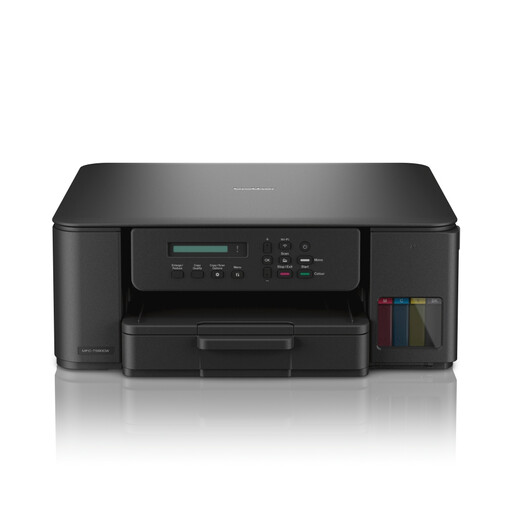 No image available
For moderate inventory batches from a home or group workspace, this wireless ink-tank model is a 3-in-1 option.
If volunteers need to scan or copy stacks of forms, confirm the exact model’s feeder arrangement and capacity before choosing it.
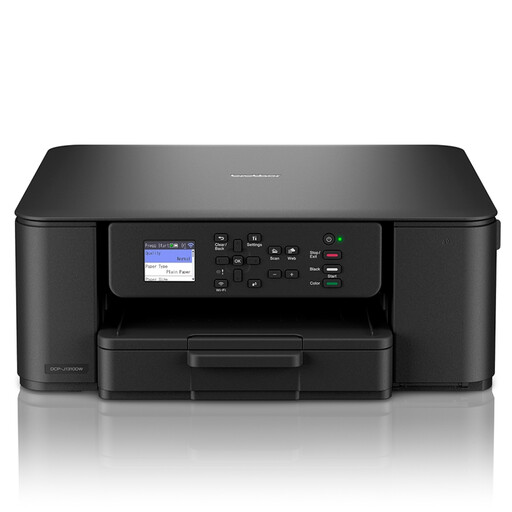 No image available
For shorter batches printed from a shared home workspace, consider this wireless inkjet if its paper handling fits the group’s sheets.
Check its duplex conditions, ink-replacement routine and scanning arrangement if volunteers also process source forms.
 No image available
If inventory sheets are the main task, check this photo-oriented EcoTank printer against the document format the group actually uses.
Confirm A4 plain-paper handling and any required automatic duplex operation for the exact model; check copying and scanning requirements separately.
No: an ADF is for feeding originals to scan or copy, not for printing the finished sheets. It becomes useful when volunteers repeatedly process multi-page source forms; Epson lists a 35-page ADF for the ET-5170, Brother a 20-sheet ADF for the DCP-T780DW and Canon a 50-sheet ADF for the GX7050.
Yes, if the group intends to use both sides of multi-page inventory sheets and wants to avoid turning them manually. Confirm that the exact printer supports automatic duplex printing on your chosen paper: Canon specifies A4 and Letter plain paper for the GX7050, while Epson lists double-sided printing for the ET-5170.
No, but judge a refillable printer by the group’s expected use rather than its stated ink yield alone. Epson describes EcoTank reservoirs as refillable from bottles; for short, infrequent batches, also consider the printer’s size and whether its paper and scanning features would be used.