Recurring itinerary-pack coordinators
If you revise and reprint A4 packs for several outings, ink refills, paper capacity and wireless printing can affect how easily you prepare each run.


For a community group that repeatedly prints A4 itinerary packs, a refillable-ink printer is worth considering, but paper handling matters as much as stated ink yield. Prioritise automatic two-sided printing if volunteers prepare many multi-page sets; an automatic document feeder matters instead when they regularly copy or scan paper originals.
If you revise and reprint A4 packs for several outings, ink refills, paper capacity and wireless printing can affect how easily you prepare each run.
If every outing calls for multi-page packs, automatic duplex printing avoids turning and reloading sheets for each two-sided run.
If you also copy or scan stacks of booking notes, lists or consent paperwork, an automatic document feeder (ADF) may save repeated trips to the scanner glass.
For A4 group itineraries, start with the task most likely to change your printer choice: repeated print runs, two-sided packs, edits from several devices or batches of paper originals.
| Concern | What to check | Who this matters to |
|---|---|---|
| Repeated print runs | Compare black and colour ink yields on the stated test basis, and check replacement supplies and paper capacity. | If I reprint packs after each change of plan, I want fewer interruptions for ink. Around 30% of consumers put repeated printing first. |
| Two-sided packs | Confirm that A4 duplex printing is automatic rather than manual, then check a sample for page order and margins. | Preparing several multi-page sets is easier when I do not have to turn the sheets myself; around 30% of consumers prioritise automatic two-sided printing. |
| Printing from shared devices | Check compatibility with the organisers’ computers or phones and the wireless network where printing will take place. | Last-minute edits may come from another organiser’s device. For around 20% of consumers, getting those revisions onto paper is the primary concern. |
| Copying and scanning | If you handle stacks of originals, check ADF capacity and whether it scans one or both sides. | When booking notes arrive on paper, I need to process several pages without placing each one on the glass; around 20% of consumers put batch copying or scanning first. |
Canon specifies manual two-sided printing for the PIXMA G3570 and G4570, while Epson lists double-sided printing for the EcoTank ET-2950 and Brother lists automatic duplex for the DCP-T780DW. Manual duplex requires someone to reload the sheets.
Check the exact model’s duplex specification and print a sample pack to confirm page order and margins before a full run.
An ADF feeds paper originals for copying or scanning; it does not feed pages into a print job made from a digital itinerary.
Make ADF capacity a priority only if your group regularly processes multi-page paper records as well as printing finished itineraries.
Manufacturer page yields depend on their stated test conditions. Itineraries with maps, colour artwork or different print settings may use ink differently.
Compare black and colour figures separately and check the test basis before estimating how often your group will need replacement ink.
The EcoTank ET-2950 is an A4 refillable-ink print, copy and scan option for organisers who want wireless printing and two-sided output.
The refillable-ink PIXMA G3570 and G4570 offer different approaches to document handling.
The refillable-ink DCP-T780DW and cartridge-based MFC-J4340DWE are multifunction options for groups considering both handouts and paper-record handling.
The Smart Tank range offers refillable-ink printers, but the two-sided workflow depends on the series.
These wireless inkjet choices are relevant to printing group itineraries. Check each exact model’s two-sided printing, paper handling and consumables against the number of packs you prepare.
 No image available
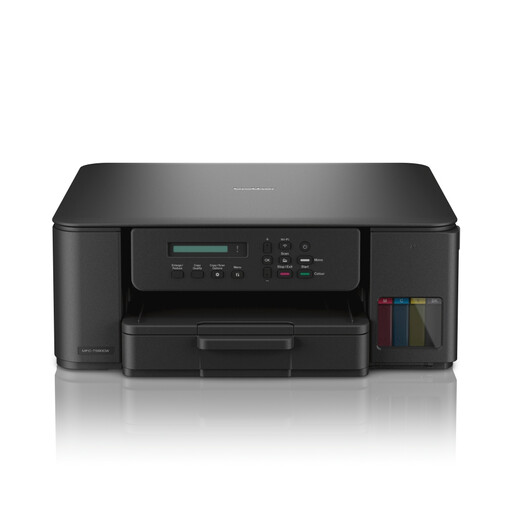
The refillable ink-tank design is worth considering if your group prints revised itinerary packs regularly. If you also prepare two-sided sets or copy stacks of paper records, confirm automatic duplex printing and document-feeder details for this exact model.
 No image available
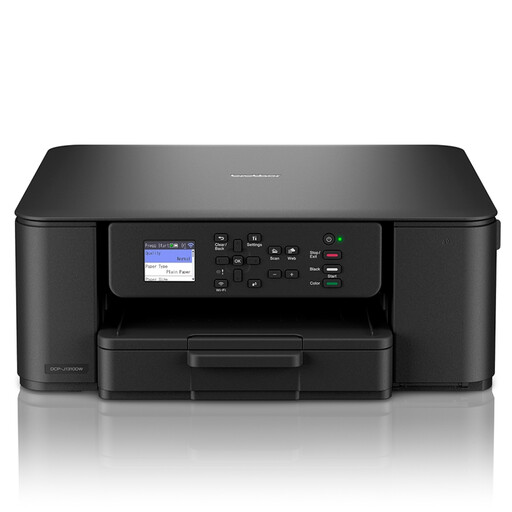
Wireless operation is relevant when organisers prepare itinerary edits on different devices. Before choosing it for repeated packs or paper-record work, confirm its duplex operation, ink supplies and document-feeder capacity for your expected jobs.
Yes, if you regularly prepare multi-page packs on both sides of the paper: it avoids manually reloading sheets between sides. Check the exact model wording, because Canon lists manual two-sided printing for the PIXMA G3570 and G4570, whereas Brother lists automatic duplex for the DCP-T780DW.
No. An automatic document feeder handles paper originals for copying or scanning, not the pages of a digital print job. It becomes useful when your group regularly processes stacks of booking sheets or similar records; check both its capacity and whether it handles one- or two-sided originals.
Compare the manufacturer’s black and colour figures separately, using the stated test basis rather than treating either figure as a guaranteed number of itineraries. Layout, colour coverage and print settings can change how much ink your packs use.
No. Brother presents EcoPro as optional for the MFC-J4340DWE. If you are considering a subscription, compare its current terms and page allowance with your group’s printing pattern and the standard supply option.