What matters when choosing?
Start with how often you print notes and whether you scan loose pages in batches. Then decide which paper-handling and connection features would make those tasks easier.
| Concern |
What to check |
Who this matters to |
| Regular note printing |
Check what ink comes with the printer and the model-specific page-yield claims against your mix of text and colour material. |
When I print batches of transcripts and drafts, I want fewer interruptions to refill ink. Around 36% of consumers put regular, lower-interruption note printing first. |
| Multi-page scanning |
Confirm that the exact model has an ADF and that its stated capacity and scanning functions suit your loose originals. |
If I work through packs of source pages, I do not want to place every loose sheet on the scanner separately; around 29% of consumers prioritise batch scanning or copying. |
| Paper handling |
Verify automatic two-sided printing and input-tray capacity; check that your intended paper is suitable for the printer. |
For long sets of notes, I would rather avoid turning pages by hand or frequently reloading the tray. Roughly 21% of consumers put this handling need first. |
| Device connections |
Check compatibility with your devices and whether Wi-Fi is sufficient or a wired Ethernet connection is useful. |
If several devices need to use the hobby-room printer, straightforward connections matter more to me than a larger tray; about 14% of consumers make mixed-device use their primary concern. |
Joybuy products for regular note printing
These ink-tank models are choices to examine for regular hobby-room notes and loose source-page work. Check each model’s paper handling and scanning functions against the originals you use.
 No image available
Canon MAXIFY GX6150
Consider this model for regular hobby-room notes and loose source packs; confirm that its feeder, scanning functions and paper support match your work. If you need to scan both sides of an original automatically, check that function separately.
View on Joybuy
 No image available
Epson EcoTank ET-5150 +Ink A4 Multifunction Printer
For A4 notes and documents that need copying or scanning, this listing identifies print, scan and copy functions, plus Wi-Fi. If you regularly scan loose page packs, confirm the feeder specification and whether it can scan both sides automatically.
View on Joybuy
 No image available
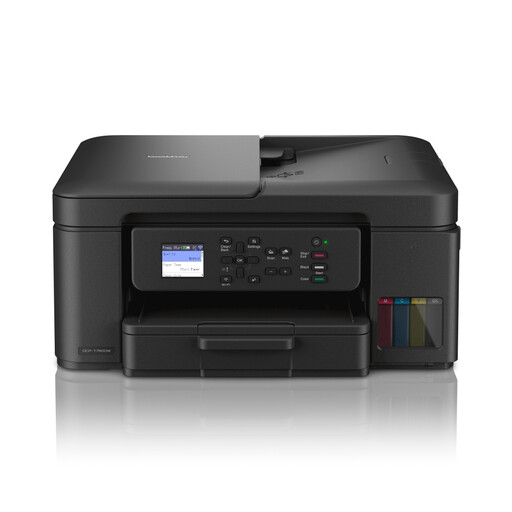
Brother DCP-T780DW 3-in-1 Wireless Ink Tank Printer
This model suits regular note printing when you also copy or scan loose multi-page sources. Brother specifies a 20-sheet ADF, automatic two-sided printing and a 150-sheet front tray. Confirm whether its scanning functions cover both sides of your originals if that matters to your workflow.
View on Joybuy
Frequently asked questions
Do I need an automatic document feeder for local-history research?
An ADF is worth considering if you regularly scan or copy loose multi-page source packs; Brother specifies a 20-sheet ADF for the DCP-T780DW. For occasional single sheets, bound items or fragile originals, check the appropriate handling method rather than assuming they should go through a feeder.
Should I prioritise automatic two-sided printing?
Prioritise it if you often print multi-page notes and are happy to use both sides of suitable paper. Epson lists double-sided printing for the ET-2950, and Brother lists automatic two-sided printing for the DCP-T780DW; check the exact model you intend to buy.
Will the quoted ink yield match the number of notes I print?
Not necessarily: quoted yields are manufacturer figures for particular models and ink supplies, not a count tailored to your notes. Text-heavy drafts, colour maps and images can make your print mix different, so check what ink is included and the replacement bottles available for the model.
What should I do with an old printer in the UK?
Use an appropriate electrical-waste route rather than treating the printer as ordinary household rubbish. GOV.UK describes retailer responsibilities for same-type electrical-equipment take-back; ask the seller how its service works or check your local authority’s recycling options.


