Occasional exercise-sheet printer
If you print short A4 exercises intermittently, a compact wireless device that also scans and copies may suit your flat better than a setup chosen for large batches.


For occasional A4 music exercises, choose a compact printer with Wi-Fi and print, scan and copy functions if those are the features you need. If you regularly print multi-page worksheets, prioritise automatic two-sided printing; whichever route you take, compare compatible ink supplies without treating published cartridge yields as a promise of how many music pages you will get.
If you print short A4 exercises intermittently, a compact wireless device that also scans and copies may suit your flat better than a setup chosen for large batches.
If practice packs often run to several pages, automatic duplex avoids turning and re-feeding sheets for each two-sided job.
If you print repeated batches, consider paper-tray capacity, replacement-ink options and automatic duplex alongside the space the printer occupies.
For music exercises in a student flat, start with your usual print volume and available space, then check how you will print from your devices.
| Concern | What to check when buying | Who this matters to |
|---|---|---|
| Space and simplicity | Measure the footprint with paper trays in use; check A4 support and the print, scan and copy functions you need. | If I print short exercises occasionally, I need a device that fits beside my study materials. Around 31% of consumers would put space and simplicity first. |
| Two-sided printing | Check whether the exact model has automatic duplex rather than manual two-sided printing, which requires re-feeding sheets. | For regular multi-page worksheets, I want both sides printed without stopping to turn the paper. Around 31% of consumers would prioritise duplex and paper handling. |
| Ink and repeat batches | Compare compatible replacement inks and declared yields on a comparable basis; check tray capacity for longer runs. HP advises treating standard cartridge yields as a starting point for comparison. | When I print practice packs repeatedly, I want manageable ink replacement and fewer paper refills. Around 23% of consumers would put supplies and capacity first. |
| Mobile access | Check your device’s supported printing method and whether the printer can connect through the flat’s network or Wi-Fi Direct where needed. | If my exercises are on a phone or the flat’s Wi-Fi is awkward to use, I need a connection method that works with my device. Around 15% of consumers would make wireless and mobile access their primary concern. |
Canon lists manual two-sided printing for the PIXMA TS3750i, so you must re-feed its pages. Epson lists automatic duplex for the XP-3200, and Brother lists it for the DCP-J1050DW.
Look for “automatic duplex” or “automatic 2-sided printing” in the specification for the exact model.
HP explains that standard yield figures are a comparison starting point: page content, intermittent printing, setup and maintenance can affect actual output.
Compare compatible cartridges and their declared yields on the same test basis, allowing for the possibility that notation-heavy or annotated sheets differ from standard test pages.
A rear paper feed needs accessible space behind or above the printer. Canon lists a rear feed of up to 60 plain-paper sheets for the TS3750i; Brother lists an enclosed 150-sheet tray for the DCP-J1050DW.
Measure your desk or shelf with the input and output areas in use, then choose a feeding arrangement that suits how often you refill paper.
Recycle Your Electricals advises that a connected printer may retain network details after it has been disconnected.
Follow the manufacturer’s factory-reset instructions and remove cartridges and memory cards where applicable before reuse or electrical recycling.
Canon’s documented PIXMA options here range from the occasional-use TS3750i to the compact TS6550i.
The Expression Home XP-3200 is a compact A4 all-in-one to consider for regular double-sided exercise sheets.
The DCP-J1050DW is a route for repeated A4 exercise batches where an enclosed paper supply matters.
These models offer two routes to consider for music exercises: one to assess for recurring batches and one with documented automatic duplex for regular double-sided sheets. Check each printer’s fit and ink options against your own workload.
 No image available
For repeat batches of A4 music exercises, consider this model if its paper handling and footprint match your routine.
Check its automatic-duplex setting, compatible ink bottles and clearance with paper trays in use before ordering.
 No image available
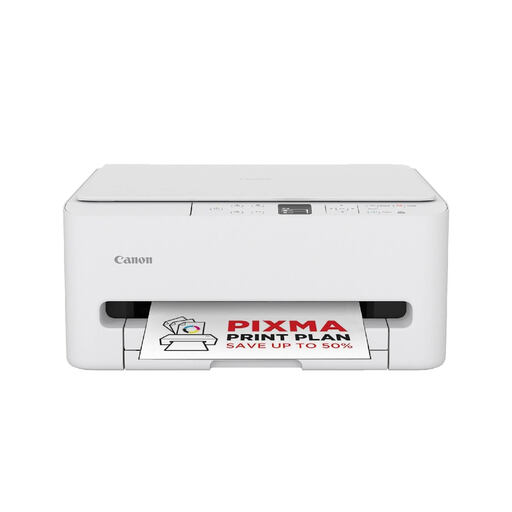
For regular double-sided exercise packs, the PIXMA TS6550i offers automatic duplex according to Joybuy UK’s product description.
Canon UK lists dual-band Wi-Fi, pigment black ink and speeds of up to 14 ipm mono and 9 ipm colour. Check tray clearance and compatible replacement cartridges for your setup.
Not for occasional short sheets: manual two-sided printing can work if you are willing to re-feed the paper. For regular multi-page exercises or booklet-style packs, choose an exact model specified with automatic duplex to avoid that step.
No: use declared yield as a comparison starting point only when the test bases are comparable. HP notes that actual yield can vary with page content, intermittent use, setup and maintenance, so annotated music sheets need not match standard test pages.
Measure the space needed with the paper input and output in use, not just the printer body. Check the feed arrangement and how your laptop or phone will connect; Canon lists a rear feed for the TS3750i, while Brother lists an enclosed 150-sheet tray for the DCP-J1050DW.
Factory-reset it using the manufacturer’s instructions, then remove cartridges and memory cards where applicable before passing it on. Recycle Your Electricals recommends clearing retained connection details and using an appropriate reuse or electrical-recycling route.