Teams sharing one printer
Several studio users print A4 speech notes and want to avoid queues, repeated paper loading and connection workarounds.


For recurring A4 speech notes in a shared studio, choose automatic duplex printing, a tray that accommodates your busiest batch and a connection method everyone can use. Canon UK lists a 250-sheet cassette and Ethernet for the MAXIFY GX1050, while Brother UK lists a 150-sheet tray for the DCP-T780DW; the smaller tray can suit lighter print runs but may need refilling more often. If the studio also scans multi-page paperwork, consider an automatic document feeder (ADF) alongside the printing features.
Several studio users print A4 speech notes and want to avoid queues, repeated paper loading and connection workarounds.
Recurring text-document work makes refillable ink and the practical upkeep of supplies worth considering.
Users who also scan or copy multi-page documents may benefit from an ADF, rather than a flatbed scanner alone.
Start with the busiest speech-note print run, then decide how much attention the studio can give to ink supplies and whether scanning is part of the same workflow.
| Concern | What to check | Who this matters to |
|---|---|---|
| Uninterrupted shared printing | Check automatic A4 duplex printing, tray capacity and whether the studio can use the printer's available network connections. | When several people need notes just before a session, I want printing to continue without a paper reload or connection workaround; around 37% of consumers put workflow continuity first. |
| Ink upkeep | Compare refillable tanks and cartridges, the stated yield conditions and any maintenance consumables for the exact model. | If speech notes are revised and printed regularly, I want to manage ink supplies without frequent interruptions; for around 27% of consumers, that recurring upkeep is the primary concern. |
| Scanning and copying | Check whether an ADF is needed for multi-page originals, rather than assuming a flatbed scanner will handle the same workflow. | When I need to scan or copy several pages of supporting paperwork, feeding them one by one slows the task; around 18% of consumers chiefly need a workable scan-and-copy setup. |
| Capacity for lighter use | Match the tray to the largest likely batch and the number of people likely to print at once. | If our print jobs are occasional and staggered, I would rather choose capacity we will use and accept more paper loading at busy times; lighter-duty fit comes first for around 18% of consumers. |
Manufacturer yields use specified test conditions. Canon UK describes the MAXIFY GX1050 yield as an estimate based on its test method, not a promise for a studio's mix of documents and maintenance cycles.
Use yields as a starting point for comparing like-for-like test conditions, and check the replacement ink and maintenance supplies for the exact model.
Brother UK lists a 150-sheet tray for the DCP-T780DW; Canon UK and Epson United Kingdom list 250-sheet input for the GX1050 and ET-5150 respectively. The difference matters most when a large batch must be ready before a session.
Estimate the largest likely speech-note run and decide whether a paper reload during it would be disruptive.
An ADF helps feed multi-page originals for scanning or copying; it does not change the basic task of printing speech notes.
Choose an ADF-equipped model if multi-page paperwork is a recurring task. Otherwise, focus on paper capacity, duplex printing, connectivity and ink upkeep.
Availability can change between choosing a model and placing an order, particularly when several people depend on the same studio printer.
Confirm the seller, delivery options, current availability and warranty terms before committing to a model.
Canon UK positions the MAXIFY GX1050 as a refillable-ink A4 multifunction printer for small-office work.
Epson United Kingdom presents the EcoTank ET-5150 as an A4 refillable-tank multifunction printer for home-office and small-business use.
Brother UK describes the DCP-T780DW as a refillable-tank A4 multifunction printer for home-office and small-office work.
These inkjet models offer choices to assess for shared-studio speech notes, from refillable-tank printers to a cartridge-based option. Compare each model's paper handling and scan setup with the tasks your studio actually performs.
 No image available
Consider this model if the studio regularly prints shared notes and also handles multi-page paperwork; check its paper capacity, duplex settings and document feeder against your busiest jobs.
 No image available
For studios that print speech notes and regularly scan or copy multi-page paperwork, Epson United Kingdom lists a 250-sheet tray, automatic duplex printing and a 35-page ADF. Confirm current availability before choosing it for a time-sensitive setup.
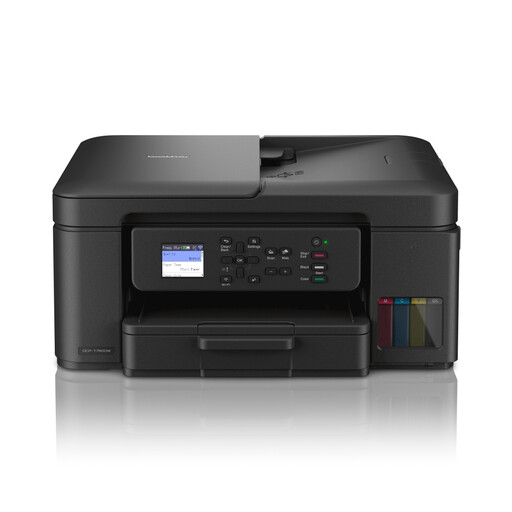 No image available
For lighter shared speech-note runs that still call for multi-page scanning, Brother UK lists automatic duplex printing, a 150-sheet tray and a 20-sheet ADF. The tray may need refilling sooner during large batches than the 250-sheet models discussed above; confirm availability before relying on it for an upcoming session.
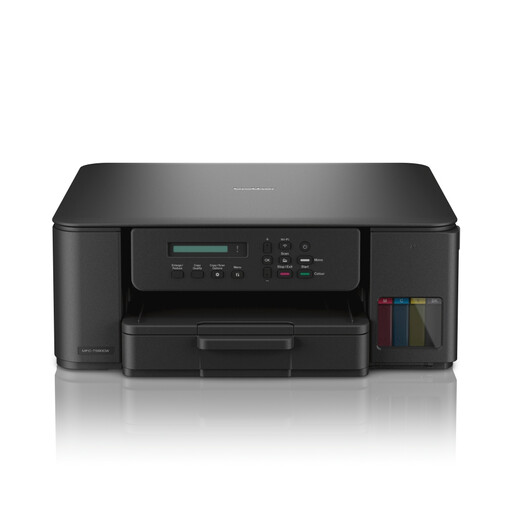 No image available
Consider it for lighter shared printing if a refillable ink-tank model fits the studio's supply routine. Check the largest expected print batch against its tray capacity, and confirm the scanner arrangement if multi-page copying matters.
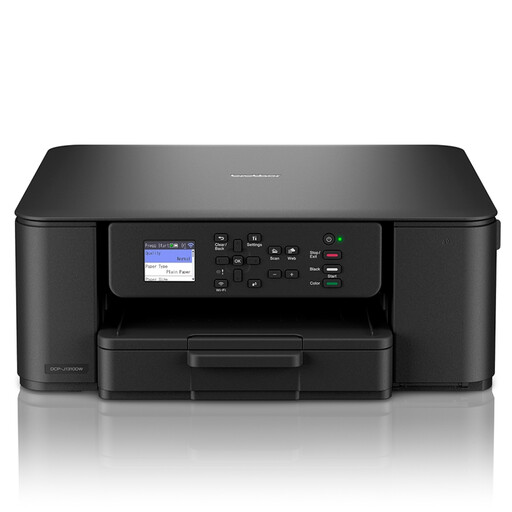 No image available
For smaller shared print runs, compare its cartridge replacement routine with the refillable-tank options. Confirm the exact scan-feeder configuration before choosing it for multi-page paperwork.
Start with automatic A4 duplex printing, then compare tray capacity with the largest speech-note batch. Check the connection methods against the studio's network, especially if several people need to print from the same location.
No, an ADF is for feeding originals when scanning or copying, not for printing notes. If multi-page paperwork is a regular task, Epson United Kingdom lists a 35-page ADF for the ET-5150 and Brother UK lists a 20-sheet ADF for the DCP-T780DW; Canon UK describes the GX1050 scanner as a flatbed.
Not necessarily: a stated yield reflects the manufacturer's test conditions, not a guaranteed number of studio pages. Canon UK describes its GX1050 yield as an estimate based on its test method and continuous-print simulation, so consider your document mix and usage when comparing supplies.
Check an appropriate electrical-equipment recycling or retailer take-back route before disposing of it. GOV.UK identifies the Waste Electrical and Electronic Equipment Regulations 2013, as amended, as the underlying UK legislation; the suitable disposal route should be confirmed locally.