Frequent route-pack printers
If you repeatedly print maps, directions and revised copies, ink replenishment and paper handling can matter more than they do for an occasional sheet.


For regularly revised walking itineraries and multiple colour-map copies, consider a refillable ink-tank printer; for occasional A4 sheets, a cartridge model may be a more suitable setup. If you want finished A5 handouts, look specifically at automatic two-sided printing and cutting rather than assuming either ink system provides them. Check the exact model’s paper handling, connectivity and replacement ink before deciding.
If you repeatedly print maps, directions and revised copies, ink replenishment and paper handling can matter more than they do for an occasional sheet.
If you print a few A4 itineraries at a time, consider where the printer will sit and how easily you can send it a route from your computer or phone.
If you want smaller sheets to carry, decide whether you are happy to turn and trim pages yourself or want a printer that handles those steps.
For walking itineraries printed at home, choose the workflow around your most frequent task: revising route packs, printing an occasional A4 sheet or preparing compact handouts.
Choose when: You print revised routes or several copies regularly and want longer intervals between ink refills.
Bear in mind: Bottle yields are model-specific, and a tank printer does not necessarily turn pages automatically for two-sided printing.
Choose when: You mainly need occasional route sheets and a straightforward printer for the hobby room.
Bear in mind: Check the exact cartridges and duplex method; neither is determined by the printer’s size alone.
Choose when: Finished A5 sheets matter enough that you want to avoid trimming A4 output by hand.
Bear in mind: This is a paper-preparation feature, not evidence of lower ink use or weather-resistant prints.
| Concern | What to check | Who this matters to |
|---|---|---|
| Ink replenishment | Compare the exact replacement inks and the conditions behind black and colour page-yield figures. | If plans change often, I want to reprint maps and directions without frequently replacing ink. Around 44% of consumers put fewer replenishment interruptions first. |
| Occasional-use setup | Check the printer’s footprint, connection options and paper-tray capacity against your room and devices. | For a few A4 sheets at a time, I want to send a route from my usual device without rearranging the hobby room. Around 33% of consumers primarily favour that simpler setup. |
| Two-sided A5 handouts | Confirm whether duplexing is automatic and whether the model supports your intended A5 paper or cuts A4 sheets to size. | When I carry an itinerary, I would rather have a compact finished sheet than turn and trim pages myself. Around 23% of consumers put that handout workflow first. |
Ink supply and two-sided paper handling are separate features. Canon specifies manual two-sided printing for the PIXMA G3570, which means turning pages yourself for a double-sided route pack.
Check the exact model’s duplex method and the paper sizes supported for it.
Manufacturer yield figures depend on the model and its stated test conditions; they do not tell you how many of your colour maps and text-heavy pages an ink set will produce.
Compare replacement consumables and yield conditions for the exact printers you are considering, alongside the mix of pages you expect to print.
A printer’s ability to produce an itinerary does not establish how that paper-and-ink combination will cope with rain, rubbing or repeated folding.
Check the selected paper and ink with the manufacturer, and test a sample under the handling conditions you expect outdoors.
If you choose a protective sleeve or lamination, allow for the extra materials and preparation.
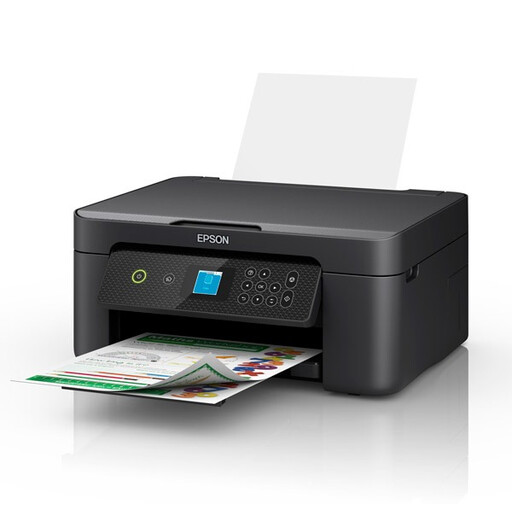
The EcoTank ET-2870 illustrates Epson’s refillable-tank approach to home document and colour-map printing.
The PIXMA G3570 series is a refillable print, scan and copy option to consider for A4 itineraries.
Brother’s DCP-J1260W and DCP-J1800DW illustrate different ways to handle home route sheets and compact handouts.
These models offer options for repeated route-pack printing and occasional A4 itineraries. Decide on the ink system and paper-handling workflow you need, then check the exact model’s settings for your chosen sheets.
 No image available
Consider this model for repeated itinerary packs if a refillable-ink setup fits how often you print.
Check its paper settings for your intended double-sided sheets, and compare replacement ink and yield conditions before judging running costs.
 No image available
For regularly updated A4 routes, consider whether this EcoTank model’s refillable-ink approach suits your printing frequency.
The product name specifies Wi-Fi. Confirm the printer’s footprint, your intended paper settings and the replacement ink details before choosing it for a hobby room.
 No image available
For occasional A4 itineraries, this cartridge-based option is worth considering if you want to send routes wirelessly and print on both sides.
Its product name specifies Wi-Fi, automatic duplex, print, scan and copy functions, and a 1.44-inch LCD. Check cartridge replacement details and the paper supported for duplex printing.
No: manual duplex can work for occasional sheets, while automatic duplex avoids turning pages for frequent multi-page packs. Canon specifies manual two-sided printing for the PIXMA G3570, whereas Brother specifies automatic two-sided printing for the DCP-J1800DW. Check the paper size and type supported by the exact model’s duplex setting.
Yes, on models with a compatible mobile-printing method. Epson lists its Smart Panel app for the ET-2870, Canon lists the Canon PRINT app for the G3570, and Brother lists mobile printing for the DCP-J1260W. Check your phone’s operating system and the route-file format before buying.
Not necessarily. Manufacturer-stated yields can make a tank model worth considering for regular route revisions, but the comparison depends on the exact printer, replacement inks and how often you print black text and colour maps. Compare those details rather than treating all tank printers as equivalent.
Use an appropriate electrical-equipment collection route. GOV.UK describes the UK waste electrical and electronic equipment framework and retailer take-back responsibilities; check the seller’s applicable take-back arrangements or a local collection option before disposing of the printer.