Occasional school-project card makers
If you need one small batch and may also copy or scan schoolwork, concentrate on whether the printer accepts your chosen card stock. Check borderless printing only if the design needs an edge-to-edge finish.


For a small batch of school-project recipe cards, consider a compact colour all-in-one, but choose the paper first and confirm that the exact printer accepts its size, type and weight. A refillable ink-tank model is more relevant if colour printing will continue beyond the project. For illustrated or double-sided cards, check borderless sizes and card-specific two-sided printing separately: automatic duplex may apply only to plain paper.
If you need one small batch and may also copy or scan schoolwork, concentrate on whether the printer accepts your chosen card stock. Check borderless printing only if the design needs an edge-to-edge finish.
If recipe cards are one of many colour-printing jobs at home, a refillable ink system and paper capacity may matter more to you than they would for a single project. Card compatibility still needs its own check.
If food photographs or coloured layouts are central to your cards, look for borderless printing at the intended size and support for the particular photo or card media you plan to use.
Choose the card dimensions and stock before comparing printers. Then decide whether the design needs edge-to-edge colour and whether you expect to print regularly after the school project.
| Concern | What to check | Who this matters to |
|---|---|---|
| Card stock and size | Check the exact model’s supported media types, weight, dimensions and feed path. Canon UK specifies rear-feed media limits for the PIXMA TS5350a series; those limits do not establish support on other models. | If I want to print directly onto my chosen card rather than trim every design from larger sheets, I need that stock to feed at the intended size. Around 45% of consumers put card-stock compatibility first. |
| Colour presentation | Confirm borderless support at your card size and compatibility with your chosen glossy or matte inkjet media. | For cards built around food photographs, I want to know whether the finished layout can reach the edges. Presentation is the primary concern for around 33% of consumers. |
| Repeat printing | Consider the ink system, replacement-ink requirements and paper capacity if you expect further colour projects. | If recipe cards are only the start of regular family printing, I would rather assess refilling and paper loading over many jobs. Around 22% of consumers prioritise that ongoing convenience. |
Paper handling depends on the printer, feed path and media. Epson advises checking the named model’s supported weight and paper types; its guidance for applicable A4 models does not recommend or support third-party media above 90 g/m².
Check your intended stock against the printer’s media specification, then try one card before printing the full batch.
A misfeed or poor print can use up card stock, ink and time.
Canon UK specifies automatic duplex on the PIXMA TS5350a series for A4, A5, B5 and Letter plain paper. That does not establish automatic two-sided printing on recipe-card stock.
If both sides matter, check the exact printer’s media-specific duplex conditions. Otherwise, plan a manual reverse-side test to check alignment.
Manual printing may require extra alignment and trimming.
A refillable ink system becomes more relevant when colour printing will continue after the recipe-card project; it does not resolve card-stock compatibility by itself.
Think about the colour pages you are likely to print later, then compare the exact models’ ink systems and supported paper.
The PIXMA lines include home inkjets with photo and creative-printing features. Check the named model rather than assuming that specifications carry across the range.
Expression includes everyday home printers, while EcoTank models use refillable ink tanks. The relevant choice depends on how often you expect to print beyond this project.
Envy home inkjets are relevant when photographs or decorative colour are part of the recipe-card design.
These two inkjet options are worth considering for different printing plans: a compact-model route for an occasional project and a model to assess if colour printing will continue. For either one, confirm compatibility with your actual recipe-card stock before ordering.
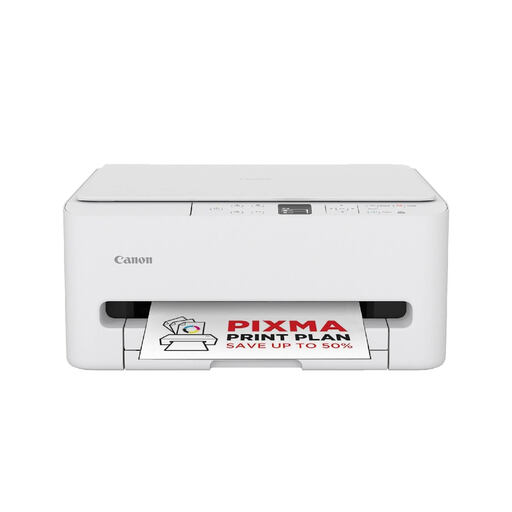 No image available
Consider this model for a small school project, particularly if you also need a printer for other household tasks. Before choosing card stock, check the TS6550i’s supported media type, weight, size and feed path; confirm borderless sizes and duplex conditions if your design needs them.
 No image available
Consider this model if you expect further colour-printing projects after the recipe cards. Check the GX6150’s ink system alongside its support for your card’s size, coating, weight and feed path; verify borderless and two-sided card-printing conditions separately.
No: choose card that meets the exact printer’s media-type, size, weight and feed-path specifications. Epson’s guidance for applicable A4 models does not recommend or support third-party media above 90 g/m², so check the model’s own instructions rather than relying on the word “card” alone.
Only if the printer explicitly supports automatic duplex for your chosen card media and size. Canon UK limits the PIXMA TS5350a series’ stated automatic duplex function to A4, A5, B5 and Letter plain paper; test manual alignment if you need to print cards on both sides.
It is more relevant if you expect regular colour printing after the project. For a single batch, establish card compatibility first, then decide whether a refillable ink system suits your likely future use.
Remove cartridges and memory cards where applicable, and factory-reset a connected printer before passing it on. Recycle Your Electricals notes that Wi-Fi or Bluetooth printers may retain network connection details; use an appropriate recycling or reuse route for the printer.