People maintaining frequent record files
If you regularly print maintenance packs, inspection forms or service documents, paper capacity and the frequency of ink replacement may matter more than occasional-use convenience.


For regular maintenance-record printing, choose an inkjet multifunction printer around the way you handle forms: automatic two-sided printing reduces manual page turning, while an automatic document feeder matters if completed records need scanning in batches. A refillable-tank model is worth considering for frequent printing; for lighter use, focus on the functions you need and the upkeep required when an inkjet sits idle.
If you regularly print maintenance packs, inspection forms or service documents, paper capacity and the frequency of ink replacement may matter more than occasional-use convenience.
If signed or completed forms go back into a digital filing system, check whether the printer can feed a normal batch and scan the sides you need. The Information Commissioner’s Office also advises organisations to classify, title and index records so they can be retrieved and managed.
A lighter all-in-one may cover intermittent forms, but allow for inkjet upkeep. Brother notes that ink can dry in printhead nozzles during infrequent use.
Start with what happens after a form is printed: batch scanning changes the value of a document feeder, while print frequency shapes the choice of paper capacity and ink system.
| Concern | What to check | Who this matters to |
|---|---|---|
| Printing and filing workflow | Check automatic two-sided printing and whether the document feeder scans one or both sides of a batch. | If completed forms must be copied or filed digitally, I want to avoid handling every page separately. Around 36% of consumers put that workflow need first. |
| Ink replenishment | Compare tank and cartridge systems against your likely print frequency; check the yield basis for the exact supplies. | When records are printed repeatedly, I want an ink system whose replacement routine fits that volume. For around 29% of consumers, replenishment is the primary concern. |
| Paper capacity | Check the stated input capacity for the paper size and weight you use, including any additional feed. | If several record packs are printed in succession, I need fewer interruptions to reload paper. Paper handling comes first for around 21% of consumers. |
| Occasional-use upkeep | Consider how often you will print and follow the maker’s nozzle-check and cleaning guidance. | When I print forms intermittently, I need an upkeep routine I can manage between jobs. Around 14% of consumers chiefly prioritise occasional-use practicality. |
A printer’s ink system affects how often supplies need attention. Canon’s stated high yields for the MAXIFY GX4050 are manufacturer figures, not a promise of the same output for every maintenance form or print setting.
Estimate your usual black and colour printing, then compare the exact supplies and stated yield conditions for each model you are considering.
HP distinguishes the OfficeJet Pro 9120 series’ maximum monthly duty cycle from its recommended monthly page volume. The maximum is not a normal-use target.
Compare your expected workload with the recommended monthly volume for the exact printer, rather than relying on the maximum figure alone.
Brother notes that ink can dry in printhead nozzles during infrequent use. Epson advises a nozzle check when output is blank, blurred or missing colours, with head cleaning when indicated.
Follow the instructions for your printer’s normal use and shutdown, and use cleaning procedures when a nozzle check shows they are needed.
Head-cleaning cycles can use ink.
Paper storage alone does not determine how a record is indexed, retrieved or retained. The applicable retention period can depend on the record’s purpose and any relevant obligations.
Set a filing and retention process separately from the printer choice. The Information Commissioner’s Office advises organisations to classify and index records for management and retrieval; check the requirements that apply to your maintenance records.
Canon’s MAXIFY GX refillable-tank line is relevant to frequent maintenance-record printing. Canon lists a 350-sheet plain-paper capacity and a 35-sheet automatic document feeder for the MAXIFY GX4050.
Epson’s WorkForce Pro WF-C4810DTWF is a business inkjet for A4 workflows involving both printed and scanned records. Epson specifies two-sided printing and scanning and a 50-page automatic document feeder.
Brother’s MFC-J4540DW is a cartridge-based all-in-one for A4 documents. Brother specifies automatic two-sided printing, a 400-sheet paper capacity and a 20-sheet automatic document feeder.
HP’s OfficeJet Pro 9120 series is positioned for small-business documents. HP specifies automatic two-sided printing, a 35-sheet two-sided document feeder and a 250-sheet input tray.
These models are relevant to recurring document work or lighter A4 form printing. Match the scanning method, paper handling and ink routine to what your maintenance records require.
 No image available
For frequent maintenance-record work, assess this model against your normal paper batches and ink-replenishment needs.
Confirm the exact variant and replacement supplies before choosing it.
 No image available
For regular maintenance forms, check that this all-in-one’s paper formats and scanning setup suit your files.
If completed forms have information on both sides, confirm whether its document feeder scans both sides automatically.
 No image available
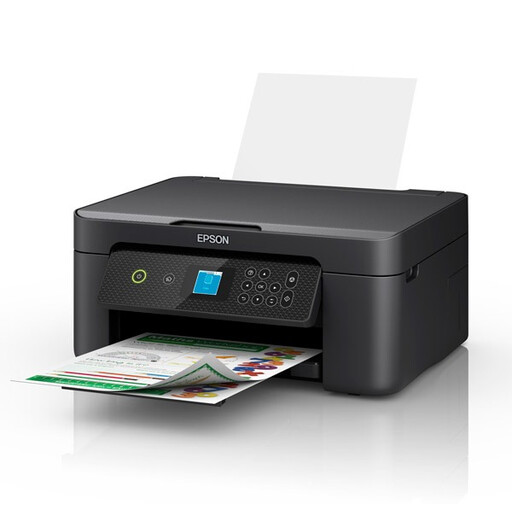
For lighter A4 form printing, this multifunction model offers printing, scanning and copying.
Its named features include Wi-Fi, automatic two-sided printing and a 1.44-inch LCD. If you scan completed forms in batches, confirm whether a document feeder is available.
Automatic two-sided printing is useful when your forms use both sides of a sheet or you want less manual page turning; it is not necessary for every record layout. Check the function on the exact model rather than assuming that scanning and printing have the same two-sided capabilities.
Scan them if a digital filing process helps you retrieve or manage completed records, while keeping any required paper copies. The Information Commissioner’s Office advises organisations to classify, title and index records for management and retrieval; a document feeder can make multi-page scanning less hands-on.
If the records are needed for a Self Assessment return, HM Revenue & Customs says self-employed sole traders and partners must keep them for at least five years after the 31 January submission deadline for the relevant tax year. Other maintenance records may be subject to different requirements, so identify which rules apply to each record type.
Include those printouts in your records-management and security process, rather than treating printing as the final step. The Information Commissioner’s Office advises organisations to classify, index and track records and apply appropriate security when managing or transferring them.
An inkjet can work for occasional records, but it still needs the upkeep specified for that printer. Brother notes that infrequent use can allow ink to dry in printhead nozzles; if output deteriorates, follow the maker’s nozzle-check guidance before running cleaning cycles.