Space-constrained programme maker
You need colour A4 printing on a shared desk, backstage office surface or home worktop. The printer must fit while paper is loaded and printed sheets are coming out, not just while it is closed.


For occasional colour programmes, consider a compact cartridge inkjet if usable desk space is your main constraint. For repeated runs, a refillable ink-tank model is worth comparing, but check its operating space and paper handling. If programmes have two-sided pages, distinguish automatic from manual duplex printing and confirm that your chosen paper is supported.
You need colour A4 printing on a shared desk, backstage office surface or home worktop. The printer must fit while paper is loaded and printed sheets are coming out, not just while it is closed.
You print across rehearsals, performances or several productions and want to plan ink use and paper reloading without sending every revision to a print service.
Your pages include photographs, cast images or sponsor artwork. You need to check that the intended paper works with the exact printer and its chosen feed and duplex settings.
Consider it when: programmes are occasional and fitting the printer into a restricted workspace comes first.
Allow for: checking cartridge capacity against the number of colour pages you expect to print.
Consider it when: repeated colour runs include two-sided pages and you want to avoid turning each sheet by hand.
Allow for: the printer’s operating space; rated bottle yields are not counts of finished programmes.
Consider it when: refillable ink and the paper feed matter to you, but you can turn sheets for two-sided pages.
Allow for: extra handling and page-order checks during a programme run.
For colour theatre programmes on a limited desk, start with the need that matters most to your run, then check the exact printer and paper together.
| Concern | What to check | Who this matters to |
|---|---|---|
| Desk fit during printing | Measure the surface and access space with trays open; check the model’s paper path and operating dimensions. | If the desk is shared, I need to load paper and collect printed sheets without blocking the work area. Around 29% of consumers put usable desk fit first. |
| Two-sided workflow | Confirm whether duplex printing is automatic and which paper types and weights it accepts. | When I have many two-sided pages, I want to avoid turning every sheet and losing track of page order; around 29% of consumers prioritise that workflow. |
| Artwork and paper | Check the intended size, stock, feed method and duplex setting together; proof a page with the final artwork. | My cast images and sponsor artwork need to work on the paper I plan to use. For around 21% of consumers, that match is the primary concern. |
| Ink for repeat runs | Work out pages per programme and expected runs, then compare the exact model’s rated ink capacity with that workload. | If programmes are revised and printed for several performances, I need to plan for repeated colour output; around 21% of consumers put ongoing ink use first. |
A printer can fit on the desk when idle but leave too little room to load paper or collect finished sheets.
Measure the intended position with the paper path and output area in use, and consult the exact model’s operating layout.
Canon UK specifies manual two-sided printing for the PIXMA G3570. Brother UK limits automatic duplex on the DCP-J1310DW to plain or recycled paper from 64–105 g/m².
Check duplex operation and paper limits separately, then make a numbered two-sided proof before the full run.
Manual turning and incorrectly oriented sheets can add handling time and use extra paper.
Manufacturer-rated page yields do not tell you how many finished programmes your artwork will produce. Colour coverage and the number of pages per copy affect the run.
Plan from your actual artwork and copy count, and keep compatible ink and paper available for the run.
Printing pages is separate from folding, stapling or binding them. The finishing method changes how you must arrange and handle the sheets.
Decide whether you need folded handouts or bound programmes before choosing a print workflow; consider a print service when the required finishing is beyond your in-house setup.
Folding and binding also need workspace and time after the pages have been printed.
The EcoTank ET-2950 is a refillable-ink A4 all-in-one with double-sided printing, according to Epson United Kingdom.
The PIXMA G3570 is a refillable-ink A4 option with a 100-sheet rear tray, according to Canon UK.
Brother UK lists a compact cartridge model, the DCP-J1310DW, and a refillable-tank model, the DCP-T780DW; both have automatic two-sided A4 printing.
These models are options to consider when an A4 inkjet must share a limited workspace. Match each printer’s operating layout and supported programme paper to your run before choosing.
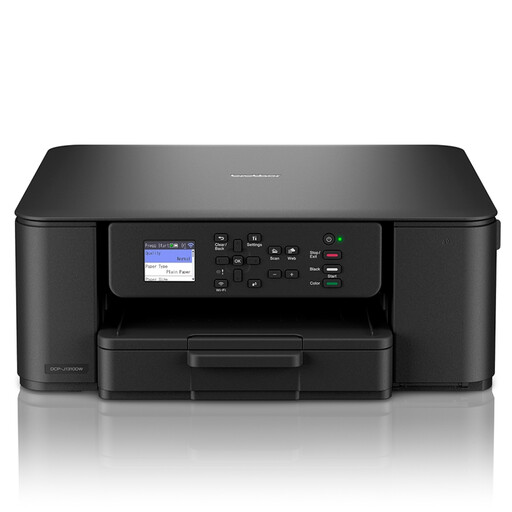 No image available
Consider this model for two-sided A4 programmes if its operating layout fits your desk and your paper meets its duplex limits.
Brother UK specifies automatic duplex printing, a 150-sheet tray and a duplex range of 64–105 g/m² for plain or recycled paper.
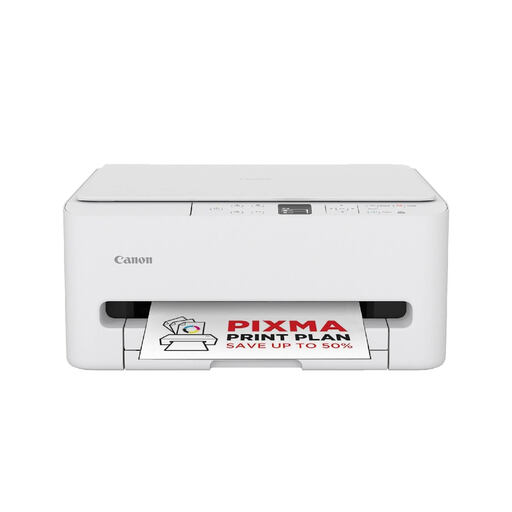 No image available
If you are considering the TS6550i for programmes on a limited desk, check its operating layout, A4 paper handling and duplex paper compatibility against your planned run.
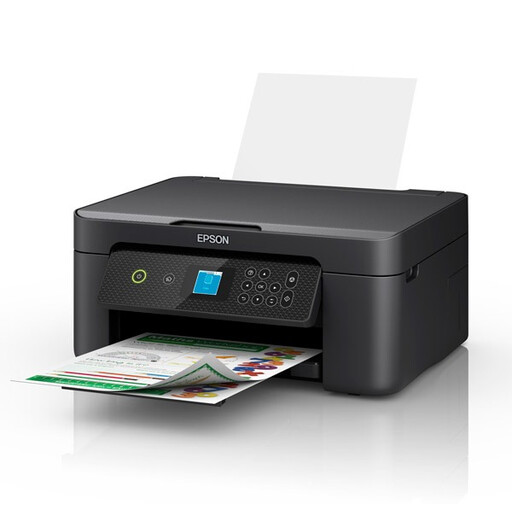 No image available
For two-sided A4 programme pages, consider this model if its paper limits and working clearance suit your intended setup.
The product name specifies automatic duplex printing, Wi-Fi, printing, scanning and copying. Confirm that your programme stock is supported in duplex mode.
Automatic duplex is worth prioritising when you repeatedly print two-sided pages on paper the printer supports in that mode. Epson United Kingdom lists double-sided A4 printing for the ET-2950, and Brother UK lists automatic duplex for the DCP-J1310DW and DCP-T780DW; Canon UK specifies manual two-sided printing for the PIXMA G3570.
Only if the exact printer supports that paper in duplex mode. Brother UK specifies plain or recycled paper from 64–105 g/m² for automatic duplex on the DCP-J1310DW. Check the chosen model’s paper guidance and proof the final stock before a full run.
No. Refillable tanks are worth considering for repeated colour runs, while occasional printing calls for a closer look at desk fit and how much ink you expect to use. Treat manufacturer-rated page yields as planning figures, not guaranteed numbers of finished programmes.
Keep proof of purchase and check the retailer’s support and return terms before ordering. For a faulty printer, consider applicable statutory remedies separately from change-of-mind returns. At end of life, check an appropriate electrical-equipment collection route rather than treating disposal as a product return.