For a self-serve wedding guestbook, choose a simple analogue camera if guests need to take photos with little instruction. A hybrid camera lets someone select images before printing, while a WIDE-format camera gives group photographs more room; those choices call for a helper or a larger camera and film format, respectively. Match the film to the exact camera and allow extra sheets for retakes.
Who is the camera for?
Couples planning a self-serve guestbook station
If guests will operate the camera without help, straightforward controls matter. Fujifilm describes automatic exposure and flash control on the instax mini 12, reducing the settings a guest needs to manage.
Couples who want to choose which photos become prints
A designated helper can use a hybrid camera to select images before printing. The instax mini Evo separates taking a photograph from using its print lever, unlike an analogue instant-camera workflow.
Couples making room for group photographs
If table groups or families will appear together, compare print dimensions before choosing an album. Fujifilm lists instax WIDE prints at 108 × 85 mm, compared with the more compact mini format.
What matters when choosing?
Decide whether easy guest operation, control over which photos are printed or space for group shots matters most. Then check the camera’s film format and plan how guests will use it at the table.
Analogue mini camera
Choose it when: Guests need a compact camera they can pick up and use with little instruction; Fujifilm describes automatic exposure and flash control on the instax mini 12.
Trade-off: Each analogue exposure uses film, and mini prints leave less room for a group photograph than WIDE prints.
Hybrid mini camera
Choose it when: Someone can oversee the station and select images to print; the instax mini Evo separates capture from printing.
Trade-off: Its extra controls make the workflow less straightforward for an unattended table, and the prints remain mini format.
Analogue WIDE camera
Choose it when: Full-table or family photographs are central to the book; the instax WIDE 400 uses the wider WIDE film format.
Trade-off: The camera and film are larger, and every exposure still uses a sheet.
Full-size Polaroid analogue camera
Choose it when: You want a full-size Polaroid print; Polaroid lists a self-timer and autofocus for the Now Generation 3.
Trade-off: It does not offer a preview-and-select printing workflow, and its i-Type or 600 film cannot be shared with an instax camera.
| Concern |
What to check |
Who this matters to |
| Guest operation |
Look for automatic exposure and flash, and decide whether guests need a short instruction card or an attendant. |
If friends and relatives of different ages will use the station themselves, I want taking a photo to feel uncomplicated. Around 42% of consumers put easy guest operation first. |
| Print selection |
Check whether images can be reviewed before printing and whether someone can operate that workflow. |
When several attempts might be taken, I would rather choose which photographs use a film sheet. Roughly 33% of consumers prioritise control over unwanted prints. |
| Room for groups |
Compare print dimensions with the album pages and buy the film format specified for the camera. |
For a guestbook centred on table groups, I want enough space in each photograph for everyone. About 25% of consumers place larger group-friendly prints first. |
Guestbook setup mistakes to avoid
-
Buying film by appearance rather than format
Fujifilm says instax mini, SQUARE and WIDE film are not interchangeable. Polaroid Now Generation 3 uses Polaroid i-Type or 600 film instead.
Record the exact camera and film format on the supplies list, and check each replacement pack before loading it.
An incompatible pack cannot be used in the chosen camera.
-
Planning for the camera but not the completed book
Every analogue exposure uses a film sheet, while guests also need somewhere to attach photographs and write messages.
Set a target number of photos, allow matching film for retakes, and prepare the album and pens alongside the camera.
The station needs continuing film supplies and guestbook materials, not just the camera body.
-
Leaving film handling unexplained
Fujifilm warns that instant film is light-sensitive. Opening the back of a loaded camera can expose the remaining film; handling a developing print roughly can also damage the image.
Put a short instruction card beside the camera telling guests to keep the loaded-film door closed and let prints develop without shaking, bending or squeezing them.
-
Choosing mini prints for a group-centred book
Fujifilm lists mini prints at 54 × 86 mm and WIDE prints at 108 × 85 mm. The compact format leaves less print area for a full table of guests.
If group photographs are the main goal, compare WIDE film and a compatible WIDE camera with the space available on each album page.
Relevant brands to consider
instax by Fujifilm
Fujifilm’s instax range offers analogue mini and WIDE cameras alongside the hybrid mini Evo, covering different guestbook workflows.
- Fujifilm lists automatic exposure and flash control for the mini 12 and WIDE 400; the mini Evo lets the user take a photo before choosing to print it.
- Mini, SQUARE and WIDE film are not interchangeable. Analogue models use film for each exposure.
Polaroid
The Polaroid Now Generation 3 is an analogue option for a guestbook built around full-size Polaroid prints.
- Polaroid lists autofocus, flash, a self-timer and a tripod mount for the Now Generation 3.
- There is no image-selection step before an analogue print, and its i-Type or 600 film is not interchangeable with instax film.
Joybuy instant camera choices
These Polaroid cameras are choices to consider for physical guestbook photographs. If selecting images before printing is essential, confirm that workflow for the particular camera before buying; the Now Generation 3 is analogue.
 No image available
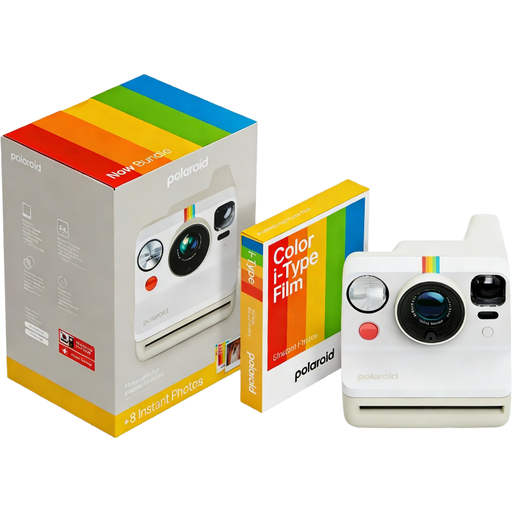
Polaroid Now Generation 3 Everything Box – Pebble White
Consider this analogue camera for a guestbook where guests will take full-size Polaroid photos without selecting images before printing.
Polaroid lists autofocus, flash and a self-timer for the Now Generation 3, which may be useful when arranging group photographs.
Check the Everything Box contents and plan enough compatible i-Type or 600 film for the intended photos and retakes.
View on Joybuy
 No image available
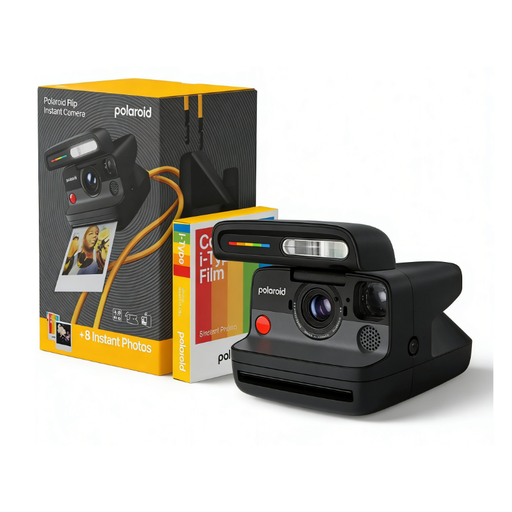
Polaroid EB Flip – Black
If this camera will serve an unattended guestbook table, check that guests can use its controls without help.
Confirm whether image selection before printing is possible if avoiding unwanted prints matters to you. Check whether film is included and which compatible packs you will need.
View on Joybuy
 No image available
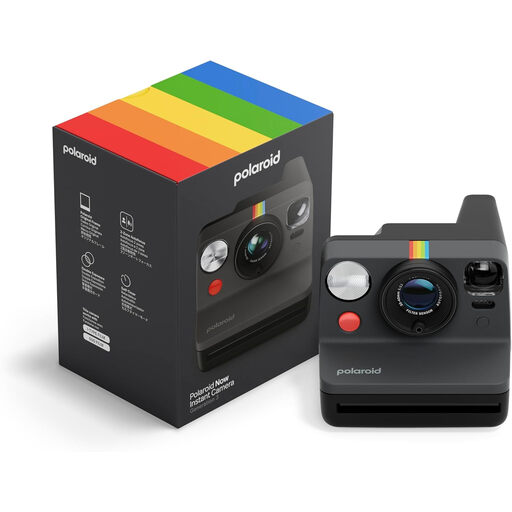
Polaroid Now Gen 3 – Black
This analogue option suits a guestbook where guests take Polaroid photos directly rather than review images before printing.
Polaroid lists autofocus, flash, a self-timer and a tripod mount for the Now Generation 3. It uses i-Type or 600 film.
Check the pack contents and arrange enough matching film for the planned photographs.
View on Joybuy
Frequently asked questions
How much film should I buy for a wedding guestbook?
Allow one sheet for each photograph you want in the book, then add film for retakes and extra group shots. Check the pack’s shot count and buy the exact format specified for your camera.
Can instax mini film be used in a WIDE or SQUARE camera?
No. Fujifilm states that instax mini, SQUARE and WIDE film formats are not interchangeable, so match each pack to the camera’s specified format.
Why should guests leave the camera back closed?
Opening the back of a loaded instant camera can expose the light-sensitive film. Fujifilm advises keeping film protected from light until a photograph is taken, so put that instruction beside a self-serve camera.
Should guests shake or bend an instax print?
No. Let the print develop without shaking, bending or squeezing it; rough handling during development can affect the image. Leave a clear place at the guestbook station for prints to rest before guests attach them.


