
24/7 Customer Support

Free returns

Same-day & Next-day Delivery

Quality Guaranteed

Unlock Your Welcome Offers: FREE Delivery | Up to 80% OFF | Free 30-day JoyPlus trial
Download the APP
Instant cappuccino coffee sachets are a convenient way to prepare a creamy coffee at home, at work or while travelling. However, attractive packaging can make it difficult to compare what is actually inside each pack. A box with a café-style image may contain fewer servings than expected, while an “unsweetened” recipe may still include naturally occurring or added sugars from ingredients such as glucose syrup and milk powder.
This guide from the Joybuy Product Recommendation Officer highlights the main buying traps and the practical details to check before choosing instant cappuccino coffee.
A larger-looking box does not always mean better value. Compare the number of sachets, the weight per sachet and the recommended preparation volume. For example, a six-sachet pack and a 12-sachet instant coffee multipack may have very different costs per prepared mug.
Some products are sold as multipacks, such as three boxes of seven sachets. These can suit regular drinkers, but only if you have enough cupboard space and can use them before the best-before date.
Unsweetened cappuccino generally means that no sugar has been added as a separate sweetener. It does not necessarily mean the drink contains no sugar. Milk powder, lactose and glucose syrup can contribute to the carbohydrate and sugar figures.
Always check the ingredients list and the nutrition table per serving. The nutrition information may be shown per 100ml as prepared, rather than per sachet, so the quantity of hot water used affects the final drink.
A standard cappuccino sachet contains coffee, while decaf cappuccino uses decaffeinated instant coffee. Decaffeinated does not automatically mean completely caffeine-free, so shoppers who are sensitive to caffeine should check the packaging and follow relevant advice.
Most instant cappuccino mixes contain milk powder, lactose or milk proteins. Some coffee mixes also contain non-dairy creamer made with milk-derived ingredients. Read the bold allergen declaration carefully, particularly if buying for guests or colleagues.
Coffee percentage can vary considerably between products. NESCAFÉ Cappuccino Instant Coffee lists 12% instant coffee, while its unsweetened version lists 15% instant coffee alongside roast and ground coffee. Kenco Cappuccino Instant Coffee Sachets also list 15% instant coffee.
This percentage is only one part of the flavour profile. Creamer, milk powder, sugar and flavourings also influence the finished drink. If you prefer a sweeter, softer drink, a standard cappuccino or flavoured coffee may suit you. If you want to control sweetness yourself, look for an unsweetened recipe.
Preparation instructions are important because the same sachet can taste weak or overly concentrated if the water volume changes. The NESCAFÉ unsweetened cappuccino recommends 180ml of hot water that is not boiling, while some imported mixes specify 70–75ml or 150ml.
Use the quantity stated on the pack and stir thoroughly. Very hot, freshly boiled water can affect the texture of milk-based powders, so allowing the kettle to stand briefly may produce a smoother result.
For a straightforward comparison, check:
A sachet is not automatically a low-cost drink. Add the price of milk or sugar if the mix requires extra ingredients, then compare it with a ready-made coffee or coffee-shop purchase.
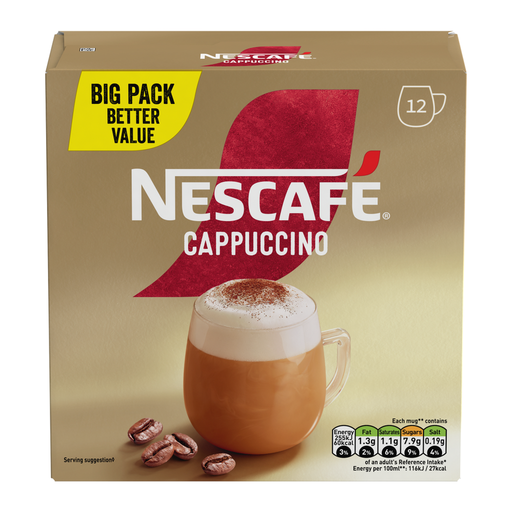
Why This Fits Their Persona: A 12-sachet box provides a practical starting point for home cupboards, shared kitchens or weekday coffee breaks.
The sachet count and 186g net quantity are clearly stated, making it easier to compare serving value with other instant cappuccino coffee packs.
12 individual servings; contains 12% instant coffee and natural flavourings; suitable for vegetarians according to the listing.
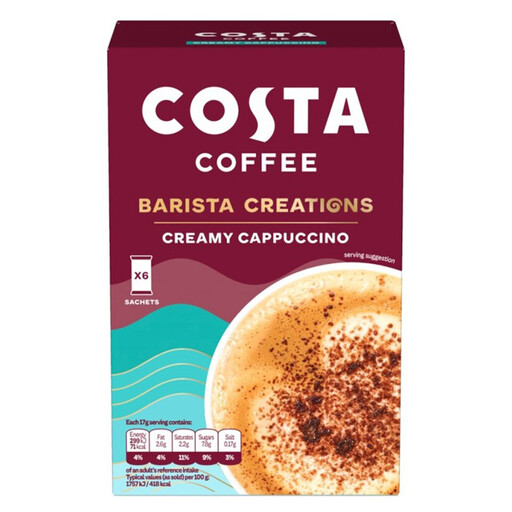
Why This Fits Their Persona: Suitable for shoppers looking for a branded, milk-forward drink for occasional café-style coffee at home.
The pack specifies six 17g servings, helping prevent assumptions based on the visual size of the box.
Contains instant coffee and roasted and ground coffee; made in the United Kingdom according to the listing.

Why This Fits Their Persona: A decaf cappuccino option for evening routines or shoppers who wish to reduce their intake of caffeinated coffee.
It is explicitly labelled decaffeinated and unsweetened, while the ingredients and nutrition information remain available for checking.
Seven sachets; 15% decaffeinated instant coffee; contains milk and provides 25 kcal per 100ml as prepared according to the listing.
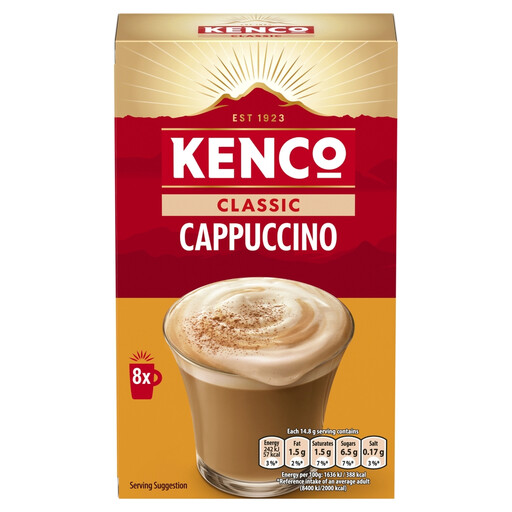
Why This Fits Their Persona: Eight single-serve portions are convenient for shared kitchens, commuting bags and regular workday use.
The serving size is listed as 14.8g, making it easier to calculate the cost and stock required for frequent use.
Eight sachets; 15% instant coffee; each serving is listed at approximately 57 kcal when prepared according to the product information.
We have compiled a complete, real-time list of products that fully satisfy these strict selection criteria and UK safety regulations.
Empty one sachet into a mug and add the volume of hot water stated on the packaging. Many products recommend water that is hot but not boiling. Stir vigorously until the powder dissolves and the froth develops, then drink immediately.
Keep unopened sachets in a cool, dry place and check the best-before date on the packaging. Once an outer box is opened, reseal the remaining sachets where possible. Humidity can affect the powder and reduce its ability to dissolve smoothly.
They usually cost less per prepared drink than buying a coffee from a café, but the exact saving depends on the pack price, serving size and whether you add milk or sugar. Calculate the cost per sachet before choosing a multipack, especially when comparing flavoured options such as hazelnut cappuccino or caramel macchiato sachets.