What should you check before ordering?
Work out the number of coffee portions needed, then choose a format that fits who will prepare the drinks.
Individual black-coffee sticks
Choose when: Guests will serve themselves and one measured coffee portion per wrapper is useful.
Bear in mind: Each serving has its own wrapper, and a 200-stick pack alone will not cover 240 coffees.
Bulk instant-coffee granules
Choose when: Someone can prepare drinks and measure the amount of coffee used per cup.
Bear in mind: A jar’s weight alone does not establish how many coffees it will make; the serving measure matters.
| Priority |
What to check |
Your needs |
| Coffee portions |
Confirm that the count refers to coffee, not an accompaniment. Zepbrook lists 200-count Nescafé coffee sticks alongside a separate 240-count oat-milk-stick product. For granules, use a stated serving measure or cup yield. |
I need enough coffee for the planned service, including any extra cups, rather than a carton that happens to say “240”. |
| Preparation |
Check whether guests will take a pre-portioned stick or someone will measure granules from a jar. Stylus lists Kenco Smooth sticks individually wrapped in a pack of 200; Nescafé UK also lists Original in jars and refill packs. |
Will guests make their own drinks, or can someone measure each serving? That determines whether fixed portions or flexible preparation are more useful. |
| Drink choice |
Distinguish plain coffee from sweetened or milk-containing mixes, and label decaf separately. Nescafé describes its 3-in-1 sachets as making a sweet, milky coffee. |
I want guests to be able to choose black coffee, add their own milk or sweetener, or pick a separately identified decaf option. |
| Ingredients |
Check the ingredients and allergen information for each sachet and any accompaniments. Keep the relevant packaging or accurate product information accessible during service. |
If I offer milky coffee mixes, guests should be able to tell them apart from plain coffee and check what they contain. |
Brands and retailers to compare
These ranges illustrate the formats worth checking; a brand or retailer listing does not establish the serving count of a particular carton.
Nescafé
Nescafé UK lists Original instant coffee in jars and refill packs. Zepbrook also lists Nescafé coffee sticks in 200-count formats.
- Jars, refills and listed stick formats give different ways to organise service.
- Nescafé’s 3-in-1 sachets make a sweet, milky drink; check the format before treating them as plain coffee.
Kenco
Kenco Smooth is listed in individual instant-coffee sticks by UK business supplier Stylus, which identifies a pack of 200.
- The listed sticks provide a fixed coffee portion for a self-service station.
- A single 200-stick pack does not provide 240 coffee sticks.
Douwe Egberts
Tesco Groceries lists Douwe Egberts Pure Gold instant coffee in a 190g retail format.
- A jar format allows coffee to be measured as drinks are prepared.
- Check the serving measure for the exact pack before calculating how many event coffees it covers.
Tesco
Tesco Groceries lists its own-label and branded instant coffees, including Nescafé, Kenco and Douwe Egberts products.
- The category lets buyers compare retail jars and refills by product and pack format.
- Check each product’s contents and serving information rather than treating a retail jar as a fixed number of cups.
Sainsbury's
Sainsbury's lists own-label Gold Roast instant coffee in 200g and 500g sizes, alongside branded instant and decaf products.
- Its listed formats include different jar sizes and a decaf choice.
- Jar weight is not itself a confirmed coffee-serving count for an event.
Joybuy bulk-coffee option
This multi-jar instant coffee pack is an option for a staffed afternoon-tea station where portions can be measured during preparation.
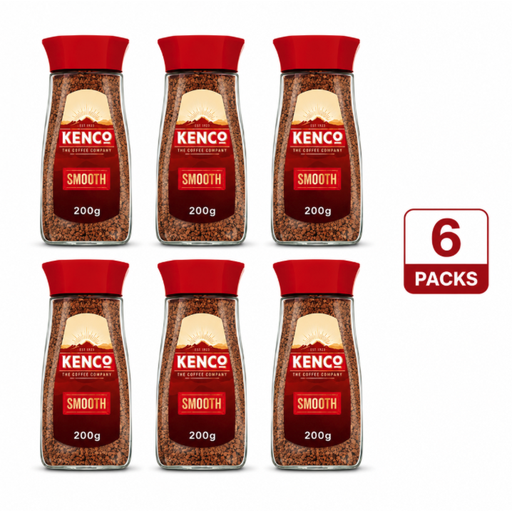 Image unavailable
Kenco Smooth Instant Coffee, 200g × 6
The multi-jar format suits a station where coffee can be measured for each drink. The pack contains six 200g jars; check the serving measure and stated cup yield before calculating whether it covers around 240 coffees. It contains caffeine, so provide a separately identified decaf product if that choice is needed.
View on Joybuy
Questions about serving instant coffee
Does a box marked “240” contain 240 coffees?
Not necessarily. Check the product name and contents: Zepbrook lists a 240-count oat-milk-stick product alongside coffee sticks with different counts. Use the stated number of coffee portions, not the carton number alone.
Should I choose coffee sticks or bulk granules?
Choose sticks for pre-portioned self-service, or bulk granules when someone can measure coffee as drinks are made. For either format, calculate coverage from the coffee-stick count or the exact product’s stated serving measure.
Is it worth offering decaf separately?
A separate, clearly labelled decaf option lets guests who avoid caffeine identify their choice. Check the product label rather than assuming a standard instant-coffee pack is decaffeinated.
What should I check for milk-containing sachets?
Check the ingredients and allergen information for the exact sachets and keep that information accessible during service. GOV.UK guidance notes that allergen-information rules depend on how food is supplied, so organisers serving food should check the requirements for their arrangement.
Can 3-in-1 sachets replace plain instant coffee?
They are a different drink choice: Nescafé describes its 3-in-1 sachets as making a sweet, milky coffee. Keep plain coffee available separately if guests should be able to add their own milk or sweetener.


