What should you check?
Start with what “80” means for your top-up, then compare the drink recipe and preparation instructions.
| Priority | What to check | Your needs |
|---|
| Quantity |
Distinguish sachet count from jar weight. For NESCAFÉ Original, the brand’s approximately 1.8g per 200ml mug gives around 105 mugs from 190g at that strength; check the preparation guidance for any other product. |
I need enough coffee for about 80 mugs, but I do not necessarily need 80 wrappers. If each drink must be individually portioned, the printed sachet count matters instead. |
| Drink recipe |
Check whether the pack contains plain coffee, milk ingredients, whitener or sugar. NESCAFÉ describes its Latte sachets as containing skimmed milk powder and sugar; Kenco describes its 3-in-1 as coffee, whitener and sugar. |
For a shared supply, I want people to know whether they can add milk and sugar themselves or are buying a prepared white drink. |
| Variety |
Check the exact variant rather than relying on the brand name. Kenco lists Rich, Smooth and Decaf as distinct instant-coffee options. |
Some drinkers may want decaf, while others prefer a different flavour profile. I would choose those variants deliberately rather than assume they are interchangeable. |
| Availability |
Confirm the pack size, stock and delivery details on the product page before relying on an online order for an immediate top-up. |
If the cupboard needs replenishing soon, I need an order I can actually place and receive in time. |
Brand and retailer references
These ranges illustrate different formats to check; a brand or retailer mentioned here is not necessarily represented in the Joybuy products below.
NESCAFÉ
NESCAFÉ Original is a plain-coffee option with brand preparation guidance of approximately 1.8g per 200ml mug; Tesco Groceries lists a 190g jar.
- That serving guidance lets you estimate the number of mugs at the stated strength.
- NESCAFÉ’s 3-in-1 and Latte sachets have different ingredients from plain Original granules.
Kenco
Kenco GB lists Rich, Smooth and Decaf instant-coffee variants alongside prepared sachet drinks.
- The named variants allow a choice between different flavour directions and decaf.
- Kenco 3-in-1 contains whitener and sugar; check the exact jar’s preparation guidance before estimating cup yield.
Sainsbury's
Sainsbury's lists a 200g Gold Roast instant coffee for shoppers considering a plain-coffee top-up.
- The stated pack weight can be compared with the quantity you need.
- Pack weight alone does not establish an exact number of mugs.
Tesco
Tesco Groceries lists NESCAFÉ Original Instant Coffee 190g, a jar format rather than individual sachets.
- The listed weight can be assessed against NESCAFÉ’s preparation guidance for Original.
- Check the current listing if you need this specific pack for a time-sensitive top-up.
Instant-coffee format comparison
The numbered examples move from plain-coffee packs to prepared sachets. They combine retailer listings and brand or product preparation details, rather than reproducing a published retailer ranking.
| Rank | Product | Main specifications | Reasons to consider | Supplier or platform |
|---|
| 1 |
NESCAFÉ Original Instant Coffee 190g |
190g plain instant coffee; NESCAFÉ suggests approximately 1.8g with 200ml water per mug. |
Tesco Groceries lists the 190g pack. At NESCAFÉ’s stated strength, it works out to about 105 mugs, rather than exactly 80 individually wrapped servings; stronger mugs use more coffee. |
Tesco Groceries |
| 2 |
Sainsbury's Gold Roast Instant Coffee 200g |
200g instant coffee. |
Sainsbury's lists this plain-coffee format for a jar-based top-up. Check its preparation guidance before estimating how many mugs it will make. |
Sainsbury's |
| 3 |
Kenco Smooth Instant Coffee 200g |
200g; the Joybuy product page gives a preparation range of one to two teaspoons. |
Kenco GB lists Smooth as a distinct instant-coffee variant. The preparation range means the number of mugs depends on how much coffee is used; it does not establish exactly 80 servings. |
Joybuy |
| 4 |
NESCAFÉ Original 3-in-1 Sachets |
Individually portioned prepared coffee; NESCAFÉ UK & IE lists 6- and 8-sachet formats. |
Consider the recipe only if a prepared white coffee is wanted. Check the exact pack count and ingredients rather than treating these smaller multipacks as an 80-sachet box. |
NESCAFÉ UK & IE |
Joybuy plain-coffee options
These 200g coffees are options for a jar-based top-up, including a decaf variant. Neither is an 80-sachet box; check the exact pack’s serving guidance if your aim is about 80 mugs.
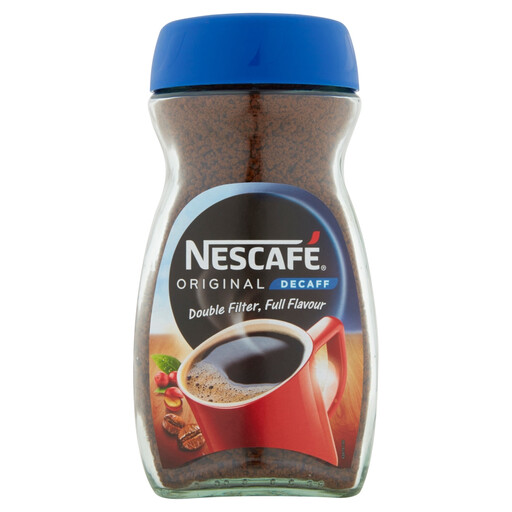 Image unavailable
NESCAFÉ Decaf (New Shape) 200g
A plain-coffee option when decaf is wanted for the top-up. This is a 200g pack, not 80 individual sachets; check its serving guidance before relying on it for about 80 mugs.
View on Joybuy
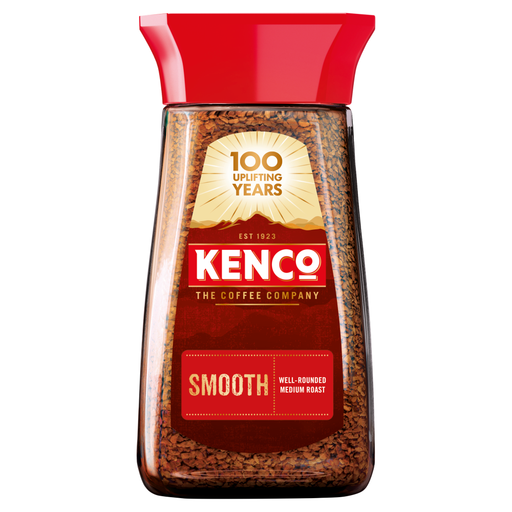 Image unavailable
Kenco Smooth Instant Coffee 200g
A plain-coffee option for drinkers who prefer the Smooth variant and adjust the strength themselves. The product’s one-to-two-teaspoon preparation range does not establish a fixed number of mugs from the 200g pack; it is not an 80-sachet box.
View on Joybuy
Common questions
Will a 190g jar cover about 80 black coffees?
A 190g jar of NESCAFÉ Original works out to about 105 mugs if each is prepared with the approximately 1.8g of coffee and 200ml of water suggested by NESCAFÉ. That is a calculation from the brand’s serving guidance, not a fixed cup count; using more coffee per mug reduces the yield.
Can 3-in-1 sachets replace plain instant coffee?
Not when the supply needs to be plain black coffee. Kenco describes its 3-in-1 as coffee, whitener and sugar, so check the exact recipe before choosing prepared sachets for people who expect to add their own ingredients.
What should I check when buying sachets for different dietary needs?
Read the ingredient and allergen information on the exact pack before buying. NESCAFÉ Latte includes skimmed milk powder, while prepared coffee sachets vary in whether they contain milk ingredients, whitener or sugar; do not assume that one recipe suits everyone.
Should I choose a refill or a jar for a top-up?
Choose a refill if you already have suitable clean, dry storage and its pack size suits the amount you need. Otherwise, a jar provides its own container; in either case, use the exact coffee’s preparation guidance to estimate the number of mugs.


