Hosts unsure of guests’ tastes
A smooth or medium-roast main jar leaves guests room to adjust their cups with milk or sugar. Keep a richer coffee as an additional choice if you know someone wants a more robust flavour.


For an afternoon tea party where guests’ coffee preferences are unknown, start with a smooth or medium-roast instant coffee rather than making a stronger blend the only choice. Add a separate decaf jar if guests want that option; choose a richer coffee when you know someone prefers it. Brand intensity ratings can help distinguish a brand’s own products, but they are not a universal measure of taste.
A smooth or medium-roast main jar leaves guests room to adjust their cups with milk or sugar. Keep a richer coffee as an additional choice if you know someone wants a more robust flavour.
A separately labelled decaf jar gives those guests a clear choice. NESCAFÉ says most caffeine is removed from its Original Decaf using water; decaf should not be described as caffeine-free.
Consider whether you will use the remaining coffee before choosing a larger jar or a refill. Follow the pack’s storage and best-before information after opening it.
Decide what to serve as the main coffee, then check whether guests would value a separate decaf or stronger option. Jar size and the current pack label matter once those choices are clear.
| Priority | What to check | Your needs |
|---|---|---|
| Flavour | Read the exact jar’s roast and flavour description. Kenco calls Smooth intensity 7 and Rich intensity 9; those are Kenco’s own ratings, not a scale for comparing every brand. | If I do not know what everyone likes, I would start with a smooth or medium-roast jar. A stronger alternative makes more sense when I know a guest prefers a robust cup. |
| Decaf | Check that the separate jar is labelled decaf. NESCAFÉ says most caffeine is removed from Original Decaf using water; check the exact pack before serving. | I want guests who prefer decaf to be able to identify their option without confusing it with the regular coffee. |
| Jar size | Compare the pack size with likely use after the party. A refill needs a suitable clean container; check that its coffee matches the variety you intend to replenish. | Will I use what is left after the gathering? If I already have a suitable jar, a matching refill may be practical for later use. |
| Serving | Follow the preparation directions on the chosen pack and provide teaspoons for adjusting each cup. Sainsbury’s Carte Noire Classique listing suggests one or two teaspoons with water just off the boil. | Guests may prefer different strengths, so I would let them adjust their own cups rather than make every drink the same way. |
| Labels | Read the physical pack’s ingredients, allergen, storage and best-before information. Check milk, creamers, syrups and food served alongside the coffee separately. | If someone has an allergy or dietary requirement, I need current information for everything I offer, not just the coffee jar. |
Kenco positions Rich, rated intensity 9 on its own scale, for people who prefer a robust cup. That does not establish it as the right sole jar for guests whose tastes you do not know.
Start with a smooth or medium-roast main jar when preferences are unknown, and add a richer option if someone is likely to want it.
Changing the amount of water or milk in a regular coffee does not turn it into decaf.
If guests want decaf, provide a clearly labelled separate jar and spoon to help avoid mix-ups.
Ingredients and allergen information can change. Additions such as milk or creamers also need their own checks when a guest has a dietary requirement.
Read the jar and any accompanying product packs you have in hand before serving.
A refill requires a suitable container and storage after opening, whereas a jar provides its own container for the gathering.
Choose a refill when you already have a clean, suitable jar and expect to use the coffee later; otherwise, consider a jar for the first purchase.
These descriptions concern the named coffees, not every product made by each brand or their availability at Joybuy.
Gold Blend is a smooth-profile regular coffee to consider for a main jar; Original Decaf is a distinct option for guests who prefer decaf.
Smooth and Rich offer a choice between two flavour descriptions within Kenco’s range.
Pure Gold is a medium-roast option for a host comparing regular jars.
Classique is a separate flavour option for guests who prefer the richer profile described in its retailer listing.
Tesco’s own-label Gold Instant Coffee is another named product to compare with branded jars.
These jars cover a smooth main-coffee choice, a separate decaf choice and a dark-roast alternative for guests known to prefer that flavour. Choose by the role each jar would have at your gathering, rather than treating the list as a taste ranking.
 No image available
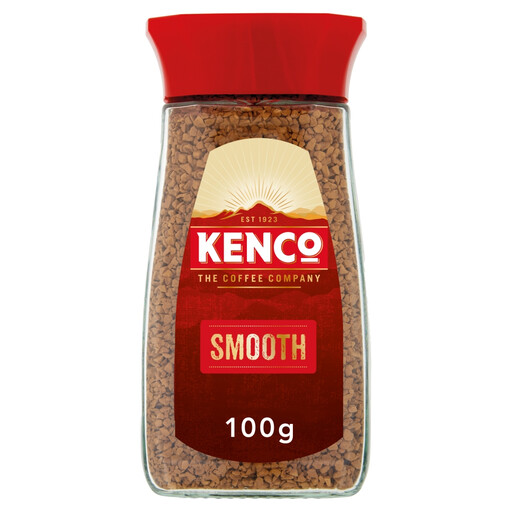
A regular instant-coffee jar to consider when guests’ flavour preferences are unknown. This 100g freeze-dried coffee is described as a smooth, balanced medium roast; Kenco rates its Smooth coffee intensity 7 on the brand’s own scale.
Read the current jar label before serving and follow its storage directions after opening.
 No image available
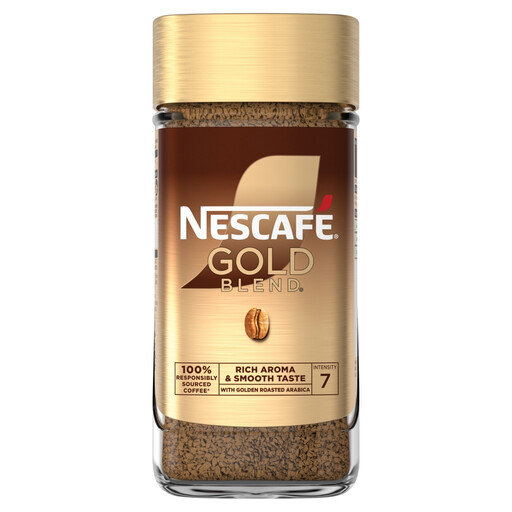
A 190g regular instant-coffee jar for a main-coffee choice. NESCAFÉ describes Gold Blend’s flavour as smooth and well rounded; check the exact pack’s coffee composition if that detail matters to you.
Follow the pack’s preparation and storage directions, and check its current ingredient and allergen information before serving.
 No image available
This 300g decaffeinated soluble-coffee jar provides a distinct option for guests who prefer decaf. NESCAFÉ says most caffeine is removed from Original Decaf using water; do not assume the coffee is caffeine-free.
Consider whether you will use the remaining coffee after the party, and check the pack’s storage and best-before information.
 No image available
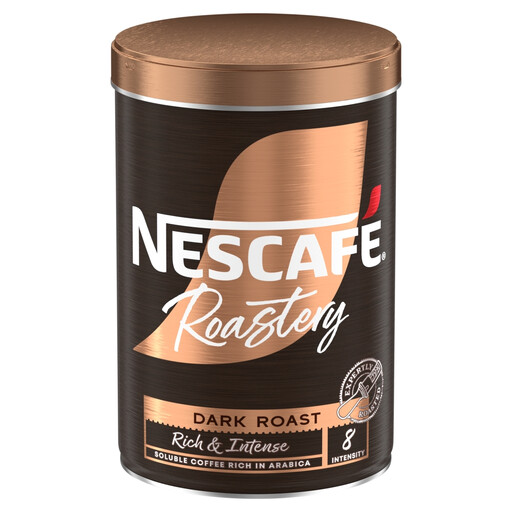
A 95g dark-roast instant coffee to consider as a separate choice when guests are known to prefer that profile, rather than as the only jar for an unfamiliar group.
Check the physical pack for its coffee composition if that matters to you, as well as its preparation and storage directions.
For guests whose preferences you do not know, make a smooth or medium-roast coffee the main jar and offer a stronger one if you know it will be wanted. Kenco describes Smooth as intensity 7 and Rich as intensity 9 on its own scale; neither rating guarantees what an individual guest will enjoy.
Provide one when a guest prefers decaf, and label it clearly beside the regular coffee. NESCAFÉ says most caffeine is removed from Original Decaf using water, so do not describe decaf as caffeine-free.
Follow the directions on the exact jar and let guests adjust their cups if they wish. Sainsbury’s Carte Noire Classique listing suggests one or two teaspoons per cup with water just off the boil; another product’s directions may differ.
Follow the pack’s storage instructions and keep it cool and dry where directed. GOV.UK explains that a best-before date concerns quality rather than having the same meaning as a use-by date; the pack’s storage instructions still matter.
Read the current physical coffee-jar label and separately check anything served with it, including milk, creamers, syrups and biscuits. Product information can change, so an older online listing should not stand in for the packs you are using.