Everyday morning-break drinkers
If you make a quick cup regularly, the main flavour choice is between a smooth or medium-roast description and a richer, more intense one.


Start with a smooth or medium-roast instant coffee if you prefer a gentler everyday cup; choose a richer, darker blend when you want a more pronounced coffee flavour. If reducing caffeine matters, look for a product explicitly labelled decaffeinated rather than relying on its roast or flavour description. These labels help narrow the choice, but they cannot guarantee how a coffee will taste to you.
If you make a quick cup regularly, the main flavour choice is between a smooth or medium-roast description and a richer, more intense one.
Kenco describes its Smooth coffee as full-flavoured without an overly strong or bitter taste. That makes its stated profile a useful starting point, though taste remains personal.
Look for an explicitly decaffeinated product when reducing caffeine is the aim. A smooth flavour or lighter roast does not establish that a coffee is decaffeinated.
Choose the flavour profile first, then check caffeine labelling and whether the pack will be practical to store after opening.
| Priority | What to check | Your needs |
|---|---|---|
| Flavour profile | Read the stated roast, intensity and flavour description. Kenco calls Rich medium-to-dark and full-bodied, while Tesco labels Douwe Egberts Pure Gold medium roast and strength 3. | I would rather start with a smooth cup than a pronounced roast. If I prefer a fuller-bodied flavour, a richer-labelled blend is worth considering instead. |
| Caffeine labelling | Check that the product explicitly says decaffeinated; do not use a smooth flavour description as a substitute. Check the current pack for information relevant to your intake. | If I am reducing caffeine, I want a clearly labelled decaf coffee and need to consider caffeine from my other drinks too. |
| Pack format | Check whether it is a jar, tin or refill, and read the storage directions. A refill needs a suitable container that can be kept closed and dry. | A jar is straightforward for my morning routine; I would choose a refill only if I have somewhere suitable to keep the coffee. |
Descriptions such as smooth, rich and intense indicate the profile a brand is aiming for, not how every drinker will experience the coffee.
If you are uncertain about a more intense blend, try a smaller pack before committing to a larger one.
A decaffeinated label identifies the product type but does not establish that a prepared cup contains zero caffeine.
Read the current label if you monitor caffeine, and consider caffeine from other drinks and foods where relevant.
The coffee still needs to be stored according to its pack directions after opening.
Check that you have a suitable clean, dry container that closes properly before choosing a refill.
You may need to keep an existing jar or obtain a suitable container.
These descriptions apply to the named coffees, not to every product made by each brand.
Gold Blend offers a stated medium-roast profile; AZERA is described by NESCAFÉ as a fuller-bodied alternative.
Smooth and Rich offer different stated flavour profiles within Kenco’s instant-coffee range.
Pure Gold is a medium-roast option for comparing stated everyday flavour profiles.
Classique is listed by Sainsbury’s as a freeze-dried instant coffee.
Gold Roast provides a standard instant-coffee option alongside an explicitly decaffeinated version.
These options cover decaffeinated, darker-roast and medium-roast coffees for a quick morning break. Compare each product’s stated profile with the kind of cup you want.
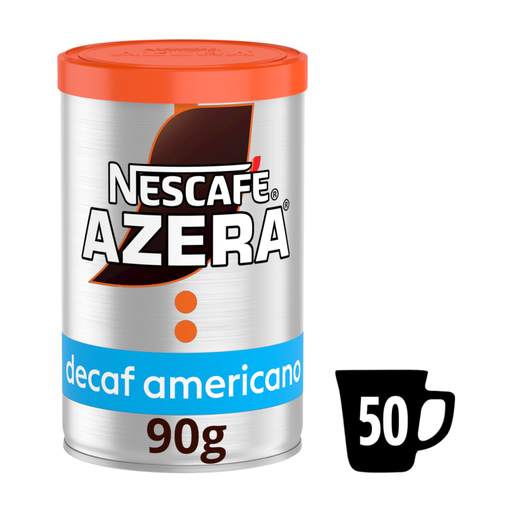 No image available
Consider this Americano-style instant coffee if you want an explicitly decaffeinated option for your morning break. Decaffeinated does not mean caffeine-free; check the current label if the amount per cup matters to you.
 No image available
The stated dark-roast, intense profile is a choice for someone seeking a more pronounced coffee flavour rather than a gentle cup. Check the current label if you need to monitor caffeine per prepared serving.
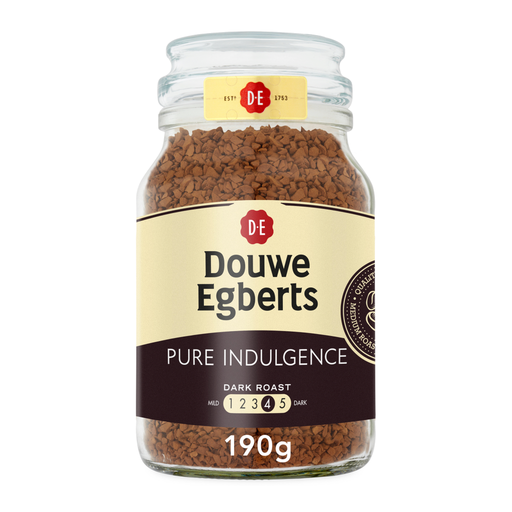 No image available
This coffee is described as dark roast and strength 4 for drinkers who prefer a more pronounced profile. Its product information gives 40 mg caffeine per 100 ml and warns against use by children and pregnant or breastfeeding women; check the preparation instructions before interpreting that figure for a cup.
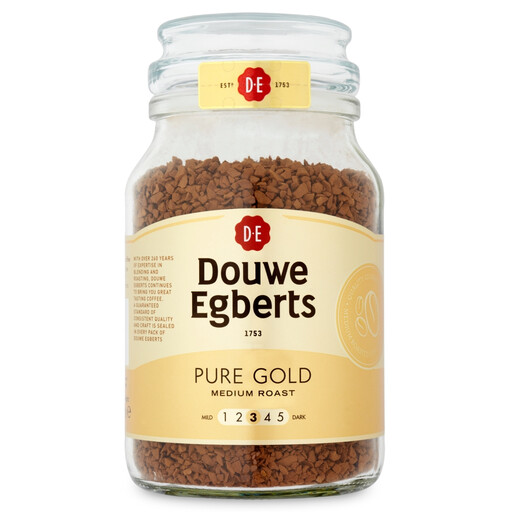 No image available
The medium-roast profile offers a starting point if you prefer a less pronounced everyday coffee; Tesco labels this same Pure Gold product strength 3. Joybuy’s listing was marked out of stock on 2 October 2026, so check current availability.
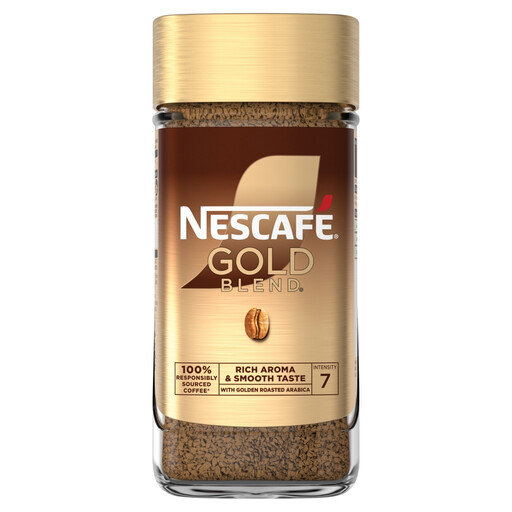 No image available
NESCAFÉ describes Gold Blend as a medium roast, making this jar one to consider if that stated profile appeals more than a darker roast. Check the current label if caffeine per prepared cup is relevant to your choice.
Start with the stated roast and flavour profile: a smooth or medium description is a sensible starting point if you dislike bitterness, while a richer or dark-roast description fits a preference for more pronounced flavour. Kenco describes Smooth as full-flavoured without being overly bitter and Rich as medium-to-dark and full-bodied; neither description guarantees your taste preference.
No: a decaffeinated label should not be read as a zero-caffeine claim. Choose a product explicitly labelled decaffeinated if reducing caffeine is your aim, and check its current information when the amount you consume matters.
A refill is practical when you have a suitable clean, dry container that closes properly and you expect to use the coffee. Check the pack’s storage instructions before transferring it.
Keep it in a cool, dry place and close its container after use, following the directions on the specific pack. Sainsbury’s Gold Roast listings advise cool, dry storage and replacing the cap after use.