Everyday coffee drinkers
If you make frequent cups at home, start with the flavour you will want to drink regularly. A standard medium blend is one option; check the jar size and preparation directions against how much you normally use.


For everyday cups, start with a standard freeze-dried blend if you want a straightforward medium-strength option. Choose a blend described as smooth if you prefer a milder flavour, or a dark-roasted blend if you prefer a bolder one; those descriptions are not a shared taste scale. If reducing caffeine is the point, choose a product labelled decaffeinated rather than judging by roast or flavour.
If you make frequent cups at home, start with the flavour you will want to drink regularly. A standard medium blend is one option; check the jar size and preparation directions against how much you normally use.
Look at smooth and medium-blend descriptions if an assertive taste puts you off. NESCAFÉ and Kenco use their own flavour and intensity descriptions, so their labels should not be read as a single cross-brand scale.
Choose a product explicitly labelled decaffeinated if caffeine reduction is the reason for changing blends. For pregnancy, the NHS advises no more than 200mg of caffeine a day from all sources.
Choose the flavour and caffeine category first, then check the exact jar’s size, ingredients and preparation directions.
| Priority | What to check | Your needs |
|---|---|---|
| Everyday jar | Check the pack weight and suggested amount per cup. Standard freeze-dried, smooth and richer blends are distinct choices, even when the jars are similarly sized. | I make coffee regularly and want a jar size and blend I am likely to use. |
| Flavour | Read the maker’s roast and flavour descriptions. Kenco calls Smooth intensity 7 and Rich intensity 9; those numbers describe options within its range, not a universal scale. | A gentler-tasting cup matters more to me than a dark-roast profile, or I actively prefer a bolder flavour. |
| Caffeine | Look for an explicit decaffeinated label rather than relying on words such as ‘mild’ or ‘smooth’. Check the current pack for its product details. | I am choosing coffee to reduce caffeine, not simply to change its taste. |
| Blend style | Check whether the ingredients include roast-and-ground coffee. Sainsbury’s lists Kenco Millicano Americano as 85% instant coffee and 15% roast-and-ground coffee; other products can have different compositions. | I want to try an instant product with a roast-and-ground component, rather than assume every blend is made the same way. |
| Preparation | Follow the directions on the chosen jar and check its suggested amount per cup before adjusting to taste. | When trying a richer blend, I would rather change the amount I use than assume its name tells me how strong my cup will taste. |
Kenco assigns different intensity numbers to Smooth and Rich, while NESCAFÉ describes variants through roast and flavour. The labels do not establish how two brands will taste relative to each other.
Use each brand’s descriptions to narrow your choice, and try a smaller jar if you are unsure about a new flavour profile.
A mild flavour description does not tell you whether a coffee is decaffeinated. Roast wording is not a substitute for a caffeine label either.
Choose a clearly labelled decaffeinated variant when reducing caffeine is your aim. If you are pregnant, take account of caffeine from other foods and drinks in line with NHS guidance.
Some products combine instant coffee with roast-and-ground coffee. Sainsbury’s ingredient listing for Kenco Millicano Americano specifies an 85% to 15% split, which distinguishes it from a standard instant-only jar.
Read the ingredients on the exact product if blend composition matters to you; a ‘barista-style’ description alone does not specify the proportions.
These product-line descriptions help distinguish blend styles; a brand name alone does not tell you which variant will suit your cup.
Sainsbury’s lists Gold Roast as a 200g freeze-dried instant coffee with a medium strength indicator, and also lists a 200g decaffeinated version.
NESCAFÉ describes Gold Blend as an Arabica and Robusta blend, with separately named Smooth and Intense variants.
Kenco distinguishes Smooth, Rich and Decaf within its instant-coffee range.
Sainsbury’s lists a 100g Classique freeze-dried instant coffee and a separate 100g decaffeinated variant.
Tesco’s premium instant-coffee category lists Finest Americano and Intenso barista-style products alongside branded options.
These products retain their positions in the supplied three-product comparison. The positions do not rank flavour or overall quality, and the Joybuy entries here are not separately established as external recommendations.
| Rank | Coffee | Main specifications | Reasons to consider | Platform |
|---|---|---|---|---|
| 1 | Sainsbury’s Gold Roast Instant Coffee 200g | Freeze-dried instant coffee; 200g; medium strength indicator. | Sainsbury’s describes this standard blend as smooth and rich. Consider it if you want a medium-labelled everyday coffee rather than a specifically dark-roasted or decaffeinated variant. | Sainsbury’s |
| 2 | Kenco Smooth Instant Coffee 200g | 200g; Kenco intensity rating 7. | Kenco describes Smooth as full-flavoured without an overly strong or bitter taste. Its intensity rating should be read within Kenco’s range. | Joybuy |
| 3 | NESCAFÉ Gold Blend Coffee 190g | 190g; NESCAFÉ describes Gold Blend as an Arabica and Robusta blend. | Consider the standard Gold Blend if that stated blend appeals to you; check the exact variant rather than assuming it is Gold Blend Smooth or Intense. | Joybuy |
These jars cover decaffeinated, standard, smooth and dark-roast choices for everyday instant coffee. Check the exact variant and pack details when deciding which one fits your routine.
 No image available
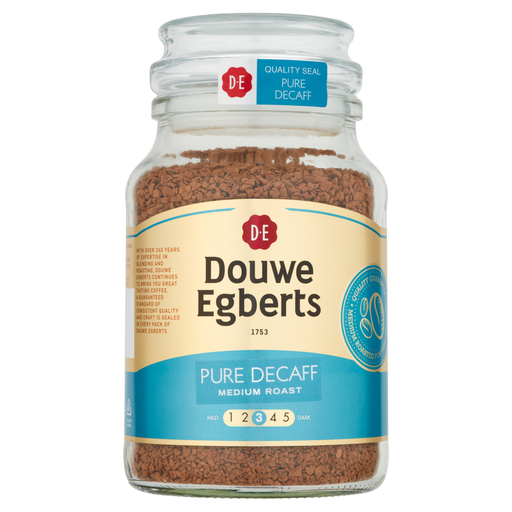
Consider this labelled decaffeinated 190g jar if reducing caffeine is your reason for changing coffee. Decaffeinated does not necessarily mean caffeine-free; check the current pack for details.
 No image available
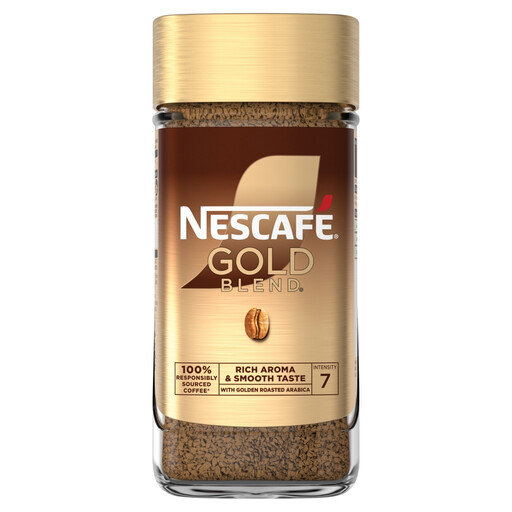
A 190g standard Gold Blend jar for shoppers considering an everyday instant coffee. If its precise composition matters to you, check the ingredients on the pack; do not confuse this product with Gold Blend Smooth or Intense.
 No image available
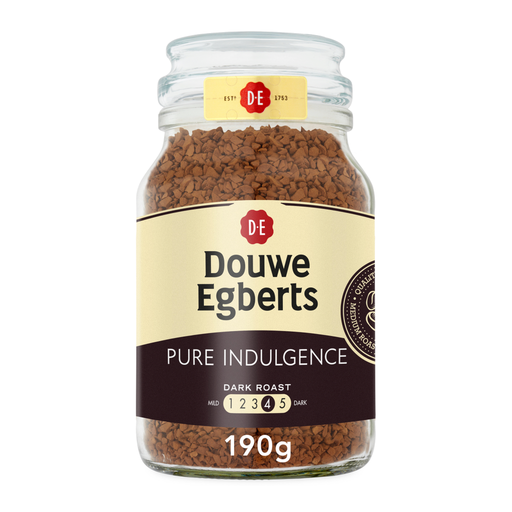
This 190g jar is an option to examine if you are considering a richer blend. Check its roast and flavour description on the current pack rather than treating the name as a standardised intensity measure.
 No image available
A 100g instant coffee explicitly named Dark Roast for shoppers seeking that roast style. Check the pack ingredients if you specifically want an instant blend containing roast-and-ground coffee.
 No image available
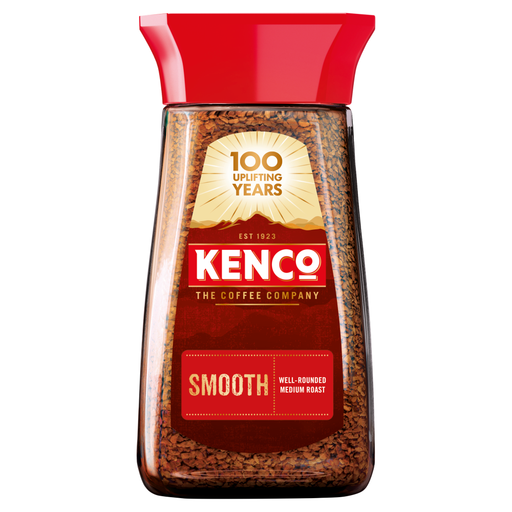
Consider this 200g jar if Kenco’s smooth flavour description suits the everyday cup you want. Kenco gives Smooth an intensity rating of 7, which is a description within its own range rather than a cross-brand measure.
No. ‘Smooth’ describes a flavour profile, not caffeine content: Kenco uses it for one of its regular blends, while its Decaf is a separately labelled product. Choose a coffee explicitly labelled decaffeinated if reducing caffeine is your aim.
Check your total caffeine intake, not just the coffee’s flavour or roast. The NHS advises no more than 200mg of caffeine a day during pregnancy and estimates 100mg in a cup of instant coffee; caffeine from other foods and drinks counts too. A clearly labelled decaffeinated variant is a distinct option, though decaffeinated does not necessarily mean zero caffeine.