Buyer stocking sealed coffee for resale
Check whether a bulk listing contains retail jars, loose granules or individual portions. A count of 240 has little use for shelf planning until the unit and pack configuration are clear.


For a budget shop selling coffee in sealed packs, consider retail jars; for drinks served on site, portioned sticks offer one measured dose per drink, while a catering tin lets staff measure loose coffee. Before ordering anything described as a box of 240, check what the number counts: a jar multipack, a stick and a prepared mug are different units, and their serving recipes need not match.
Check whether a bulk listing contains retail jars, loose granules or individual portions. A count of 240 has little use for shelf planning until the unit and pack configuration are clear.
Choose between staff measuring coffee from a tin and customers or staff using one stick per drink. The preparation method affects how portions are counted and how consistently a recipe can be followed.
Compare the coffee weight and preparation instructions for the exact products, rather than treating a jar, tin and stick as equivalent servings.
Start with whether the coffee will be sold unopened or prepared in the shop. Then check the unit count and recipe before comparing how far different packs will go.
Choose when: The shop needs sealed coffee packs to sell to customers.
Bear in mind: A multipack of jars is not a box of individually measured drinks.
Choose when: One defined coffee portion per drink makes self-service or stock counting simpler.
Bear in mind: Check the intended water volume; a stick need not make the same size drink as a mug recipe.
Choose when: Staff will prepare drinks using a measured recipe.
Bear in mind: The tin is not pre-portioned, so the number of drinks depends on how much coffee is used each time.
| Priority | What to check | Your needs |
|---|---|---|
| Pack identity | Confirm what “240” counts. Check whether the units are plain-coffee sticks, mixed-drink sachets, capsules or retail packs, and confirm the count on the exact listing. | I need plain instant coffee in a countable format, not a different drink or an assumed number of mugs. |
| Serving recipe | Check coffee weight per portion and recommended water volume. NESCAFÉ UK & IE gives approximately 1.8g with 200ml water for NESCAFÉ Original; JDE Professional specifies one 1.5g Douwe Egberts Pure Gold stick with approximately 125ml water. | To plan how many drinks I can serve, I need a recipe that matches the product and cup size I will use. |
| Resale or service | Check whether the pack contains sealed consumer jars or coffee intended for preparation from sticks or a loose tin. Confirm how the shop will present and dispense it. | Am I putting unopened packs on a shelf, or making drinks for customers? That decision comes before choosing the format. |
| Portion handling | For sticks, confirm grams per stick and sticks per case; JDE Professional lists 500 × 1.5g Douwe Egberts sticks and 200 × 1.86g Kenco Smooth sticks. For a tin, set a measured serving procedure and follow its storage instructions. | One stick per drink would simplify counting at a self-service point; if staff use a tin, I need them to follow the same measure. |
| Product information | Check the current physical label for ingredients, allergens and best-before information, particularly for mixed drinks or coffee served with additions. GOV.UK guidance for food businesses in England, Northern Ireland and Wales addresses allergen information for prepacked and non-prepacked food and drink. | Before I sell or serve a drink, I need information for the exact product and anything added to it. |
A portion count does not establish drink volume. NESCAFÉ UK & IE gives approximately 1.8g with 200ml water for NESCAFÉ Original, while JDE Professional specifies approximately 125ml water for its 1.5g Douwe Egberts Pure Gold stick.
Check the unit count and the exact product’s recipe before describing its yield in prepared drinks.
Loose tins and drink-making sticks answer a different handling need from sealed consumer jars sold unopened.
Decide whether the shop will sell the coffee as supplied or prepare drinks, then choose packaging suited to that use.
A tin is measured during preparation; a stick has a defined coffee weight. Different recipes can produce different drink volumes.
Use each product’s coffee weight and intended water volume when estimating servings, and account for how drinks will be prepared.
Ingredients and allergen information can change. Mixed coffee drinks and drinks with added milk also need to be assessed as the products actually supplied.
Check the physical pack and keep information for the exact product used. For food businesses in England, Northern Ireland and Wales, GOV.UK guidance addresses allergen information for both prepacked and non-prepacked food and drink.
These brand examples illustrate different pack and preparation formats; they do not indicate which products a particular shop has in stock.
NESCAFÉ UK & IE gives a preparation basis of approximately 1.8g NESCAFÉ Original coffee with 200ml hot water.
JDE Professional describes Pure Gold catering tins in a 750g × 6 format and Pure Gold sticks in a 500 × 1.5g format.
JDE Professional lists Kenco Smooth in 750g × 6 tins and 200 × 1.86g sticks.
Tesco lists Gold Instant Coffee as a 100g consumer jar, with directions to use one to two teaspoons per cup.
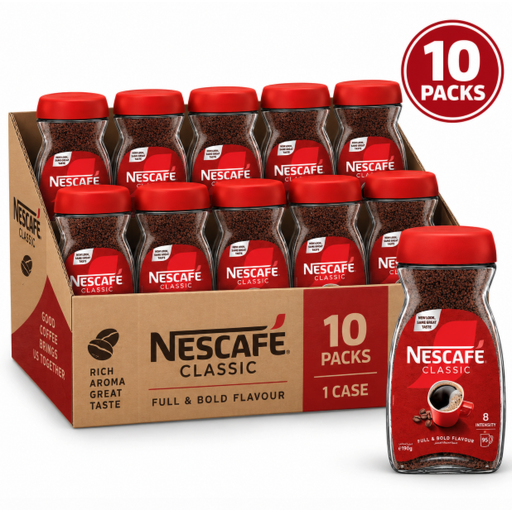
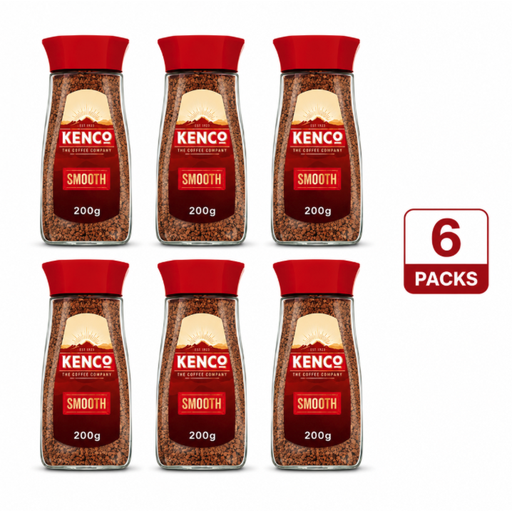
These instant-coffee jar multipacks are options for a shop selling sealed stock. Neither is a box of 240 individual portions.
 No image available
For selling coffee in sealed packs, this multipack contains ten 190g jars rather than individual portions. Check the best-before information on the packs before resale.
 No image available
For sealed retail stock, this pack contains six 200g jars, not a case of portioned sticks. Check the best-before information on the packs before resale.
The weight alone cannot tell you. Calculate servings using the measured amount and water volume recommended for the exact tin and your intended cup; NESCAFÉ UK & IE’s approximately 1.8g with 200ml water is a recipe for NESCAFÉ Original, not a universal measure for every tin.
Confirm the number and type of units first: plain instant-coffee sticks, mixed-drink sachets, capsules and jars are not interchangeable. Then check coffee weight per unit, preparation directions and the pack’s best-before information.
Use the preparation directions for the product being served and specify one measure and water volume in staff instructions. JDE Professional’s 1.5g Douwe Egberts Pure Gold stick uses approximately 125ml water, while NESCAFÉ UK & IE gives approximately 1.8g with 200ml water for NESCAFÉ Original.
Check the exact coffee product and any additions, such as milk, rather than assuming a plain-coffee label describes the finished drink. GOV.UK guidance for food businesses in England, Northern Ireland and Wales requires allergen information for prepacked and non-prepacked food and drink; operators in Scotland should check the applicable Food Standards Scotland guidance.
Follow the storage directions on the exact tin purchased. For the Douwe Egberts catering tin described by JDE Professional, keep it tightly sealed in a cool, dry place after opening.