Late-dinner coffee drinkers
If you enjoy coffee after a meal but want to avoid the usual caffeine effect, a decaf-labelled jar is a useful starting point. Check the exact product if you need to account for caffeine intake.


For a coffee after a late dinner, start with a decaf-labelled jar if you want to avoid the usual caffeine effect. If you prefer regular coffee, the strength-3 medium profiles listed by Sainsbury’s and Kenco Rich’s manufacturer-rated intensity of 9 offer different starting points for choosing a flavour; neither rating guarantees how the finished cup will taste.
If you enjoy coffee after a meal but want to avoid the usual caffeine effect, a decaf-labelled jar is a useful starting point. Check the exact product if you need to account for caffeine intake.
If different people will make coffee from the same jar, a medium-labelled regular option may be worth considering before a deliberately high-intensity one. Milk and sugar can be added to individual cups.
If a robust cup is the aim, look at a jar with an explicitly stronger profile. Kenco describes its Rich instant coffee as intensity 9; that is its stated profile, not a measure shared by every brand.
Choose the caffeine route first, then use the jar’s stated flavour profile and instructions to narrow the options for your after-dinner cup.
| Priority | What to check | Your needs |
|---|---|---|
| Caffeine | Check whether the exact jar is labelled decaf. If you need to manage caffeine intake, consider other foods and drinks too; a decaf name is not an individual serving recommendation. | I’d like coffee after a late meal without the usual caffeine effect. During pregnancy, the NHS advises no more than 200mg of caffeine a day and estimates 100mg in a cup of instant coffee. |
| Flavour profile | Read the stated strength and roast description. Sainsbury’s lists Gold Roast as medium, strength 3, while Kenco rates Rich at intensity 9; the brands’ scales are not a standardised taste test. | A gentler-tasting cup sounds more appealing tonight; on another occasion, I might deliberately choose a more robust profile. |
| Jar size | Check the weight on the exact jar and think about how often it will be used. The Joybuy options below include 190g, 200g and 300g jars. | If coffee is only an occasional after-dinner drink, I want to choose a jar size with that pattern of use in mind. |
| Preparation and label | Follow the instructions on the jar you buy. Sainsbury’s Gold Roast specifies one teaspoon per cup with hot, not boiling water; its retailer listing also advises reading the current pack label because product details can change. | I want clear directions for making a cup, and I need to check the physical label if ingredients or allergens matter to me. |
Kenco positions Rich as an intensity-9, robust coffee, whereas Sainsbury’s Gold Roast and Douwe Egberts Pure Gold carry medium or strength-3 descriptions. Those labels point to different intended profiles.
Read the exact variant’s strength and roast description before choosing; reserve a deliberately strong profile for a cup where that is what you want.
A decaf label identifies a product route, but it does not answer every question about an individual’s total caffeine intake. During pregnancy, NHS guidance sets a 200mg daily limit and estimates a cup of instant coffee at 100mg.
If caffeine intake matters to you, check the exact product and account for caffeine from other foods and drinks. Seek clinical advice for individual circumstances rather than relying on the jar name alone.
Sainsbury’s advises that product details and ingredients can change. A saved listing may therefore differ from the jar you receive.
Read the physical label before use, particularly when checking ingredients or allergens, and confirm current availability before planning around a particular jar.
NESCAFÉ describes Gold Blend Decaf as a medium-roasted Arabica-and-Robusta instant coffee.
Kenco positions its Rich instant coffee as a robust option with an intensity rating of 9.
Sainsbury’s lists Pure Gold 190g as a medium-roasted, freeze-dried instant coffee labelled strength 3.
The Sainsbury’s listing describes Classique as a freeze-dried instant coffee with guidance to use one or two teaspoons per cup.
Tesco’s instant-coffee listing includes branded jars such as Kenco Rich 190g.
Sainsbury’s lists its Gold Roast 200g as a freeze-dried instant coffee labelled medium, strength 3.
These jars offer decaf-labelled options and a Kenco Smooth option for choosing an after-dinner coffee. Check each variant’s pack details against your caffeine and flavour preferences.
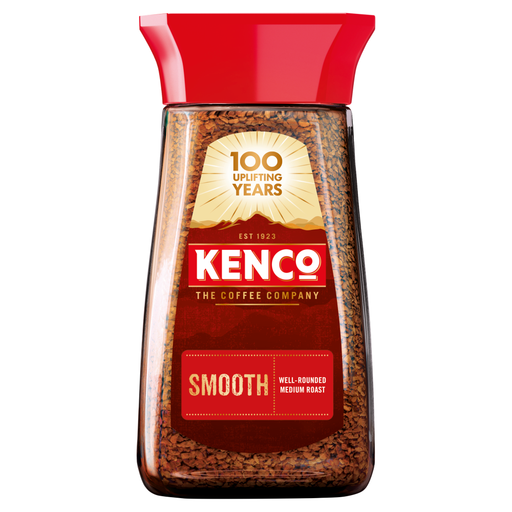 Image unavailable
Consider this for an after-dinner cup if the Smooth variant appeals to you. Its product description specifies a medium-dark roast and preparation using one or two teaspoons with hot water; check the pack’s caffeine status if that affects your choice.
 Image unavailable
This decaf-labelled jar is an option when you want coffee after a late meal without the usual caffeine effect. It contains 300g; check the exact pack if you need to account for caffeine per serving.
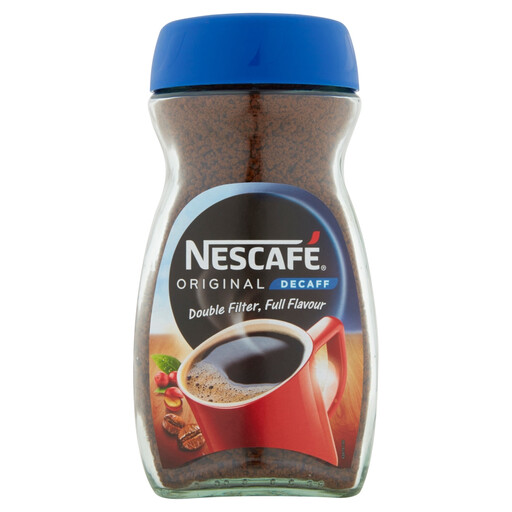 Image unavailable
This 200g decaf-labelled jar offers another route for an after-dinner coffee when you want to avoid the usual caffeine effect. Read its pack for preparation directions and any caffeine information relevant to your circumstances.
Image unavailable
Choose this 190g decaf-labelled variant to consider a Gold Blend coffee after dinner without the usual caffeine effect. NESCAFÉ describes Gold Blend Decaf as medium roasted; check the pack for serving information if you are managing caffeine intake.
Choose a decaf-labelled jar if avoiding the usual caffeine effect matters for a late drink. If you prefer regular coffee, compare the exact jars’ stated profiles: Sainsbury’s lists Gold Roast as medium, strength 3, while Kenco positions Rich as intensity 9 for a more robust cup.
Follow the instructions on the jar you buy. Sainsbury’s Gold Roast specifies one teaspoon per cup with hot, not boiling water; its Carte Noire Classique listing gives a range of one or two teaspoons with water just off the boil.
Follow the storage directions on its label. Sainsbury’s instructions for Gold Roast say to keep it in a cool, dry place and replace the cap after use; its Carte Noire Classique listing also specifies cool, dry storage.
Read the physical label before using the coffee if ingredients or allergens matter to you. Sainsbury’s advises that product details and ingredients can change, so an online listing is useful for shortlisting but not a substitute for the current pack.
The NHS advises no more than 200mg of caffeine a day during pregnancy and estimates 100mg in a cup of instant coffee. Caffeine from other foods and drinks counts towards that daily amount; seek clinical advice for individual circumstances.