Choose individual coffee portions when counting stock and offering straightforward self-service matter most; consider a tin or refill when regular use and cool, dry storage make a larger opened pack practical. Before ordering a box described as “240”, check what the number counts, the coffee weight per portion, the ingredients and the best-before date rather than assuming it means 240 cups of plain coffee.
Who is stocking the pantry?
Office and shared-kitchen stockists
If several people use one coffee station, individual portions make stock easier to count. A tin offers a different routine: users measure their own coffee and share responsibility for keeping the container closed and dry.
Hospitality and self-service pantry managers
For guests choosing their own drink, distinguish plain instant coffee from sachets containing milk or sweeteners. Keep the product information accessible, and label any decaf option clearly.
Households buying in bulk
If several people drink instant coffee regularly, compare the pack size with likely use and storage space. Use the exact product’s serving directions and best-before date rather than assuming a large container will provide a particular number of cups.
What should you check before ordering?
Start with what the pack contains, then decide whether counted portions or a shared container fit how the pantry is used.
| Priority | What to check | Your needs |
|---|
| Pack quantity |
Check whether “240” means sticks, sachets, servings or a weight. Confirm the coffee weight in each portion and whether it is plain coffee or a drink mix. |
I need to know how many plain coffees the order can make, not just the number printed on the case. |
| Serving routine |
Compare individually portioned sticks with a tin or refill that users measure themselves. Check the preparation directions for the exact product. |
For an unattended coffee station, counted portions would make replenishment simpler. With regular users, a shared jar may fit our routine. |
| Storage and turnover |
Read the best-before date and storage directions. Check whether an opened container can be kept closed, cool and dry; NESCAFÉ gives cool, dry storage advice for Original and Gold Blend. |
I would rather choose a pack size we can use and store properly than order a large tin on weight alone. |
| Coffee style |
Check the named blend or roast and trial a smaller quantity before standardising a shared supply. Do not assume different product lines taste alike. |
Several people will use this pantry, so I want to check that the chosen coffee suits them before committing to a larger quantity. |
| Decaf and ingredients |
Identify regular and decaffeinated products separately. Check ingredients and allergen information on the exact pack, particularly for prepared-drink sachets. |
People should be able to tell which container holds decaf and whether a sachet contains anything besides coffee. |
Common bulk-buying mistakes
-
Assuming “240” always means 240 coffee portions
A number in a listing may describe units, total weight or a multipack. Amazon UK’s Instant Coffee Best Sellers list includes NESCAFÉ Original 200 × 1.8g sticks alongside tins sold by weight; those are different ways of specifying a pack.
Read the exact product name and pack details for the unit count, weight per unit, ingredients and preparation instructions before planning 240 cups.
-
Comparing unlike coffee formats
A plain-coffee stick and a sachet containing other ingredients do not necessarily make the same drink or use the same preparation method. Pack weight alone will not resolve that difference.
Compare plain coffee with plain coffee using the stated portion weight and preparation directions. Check any other supplies the pantry will need separately.
-
Ordering a large tin before checking turnover
A shared tin needs a clean, dry way to dispense coffee and somewhere suitable to keep it after opening. An irregularly used pantry may have difficulty getting through a large pack.
Try the coffee first, estimate how often the pantry will use it and check the best-before date. Keep the product label with the coffee if it is moved into another container.
Coffee brands and retail ranges
These ranges provide points of comparison for format and coffee style; a brand’s inclusion here does not mean a particular catering case is available.
NESCAFÉ
Original and Gold Blend provide named regular-coffee lines, while Amazon UK’s Instant Coffee Best Sellers list includes Original 200 × 1.8g sticks and a Gold Blend 750g tin.
- NESCAFÉ gives a typical preparation of approximately 1.8g coffee with 200ml hot water for Original and Gold Blend.
- Check the serving directions for any other NESCAFÉ variant rather than applying those measurements across the range.
Kenco
Kenco lists Rich and Decaf among its instant-coffee products, giving stockists regular and decaffeinated lines to consider.
- Kenco describes Rich as full-bodied and lists a Decaf option.
- Confirm the exact pack’s weight, ingredients and preparation directions before a bulk order.
Douwe Egberts
Tesco Groceries lists 190g Pure Gold and Pure Decaffeinated instant-coffee products.
- The separately named decaffeinated product provides a clear line to check when stocking a second option.
- Check the exact product and pack size; a retail jar does not establish the contents of a catering case.
Sainsbury's
Sainsbury's lists own-label Gold Roast and Rich Roast 200g instant coffee, Gold Roast Decaffeinated 200g and Gold Roast 500g.
- The listed weights and decaf variant offer distinct formats to check against expected pantry use.
- Compare the exact product’s ingredients and serving directions rather than treating own-label and branded blends as equivalent.
Tesco
Tesco Groceries lists instant-coffee products from several brands, including refill pouches and decaffeinated variants.
- Its listed products provide pack formats and weights to compare when planning replenishment.
- A category listing is not confirmation that an exact 240-portion catering box meets your requirements.
Joybuy options for pantry stocking
These Joybuy products cover a regular-coffee jar, individual plain-coffee portions and a decaffeinated jar. Check each pack against the quantity and serving routine your pantry needs.
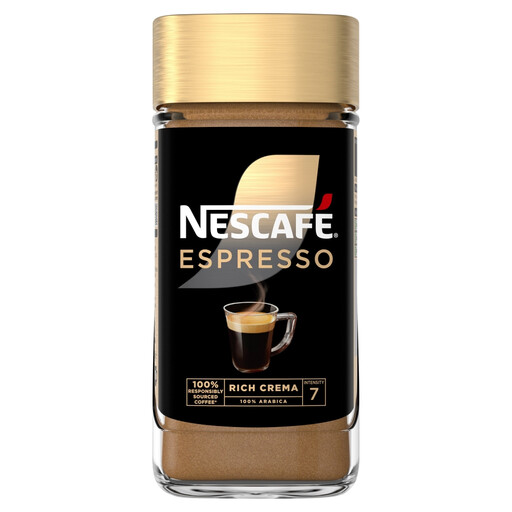 Image unavailable
NESCAFÉ Gold Espresso 190g
This 190g jar is a regular soluble-coffee option for a pantry using a shared container. Its product description identifies 100% Arabica coffee, directs users to add one teaspoon per cup and advises cool, dry storage. Check the pack’s best-before date and serving directions before estimating how long it will last.
View on Joybuy
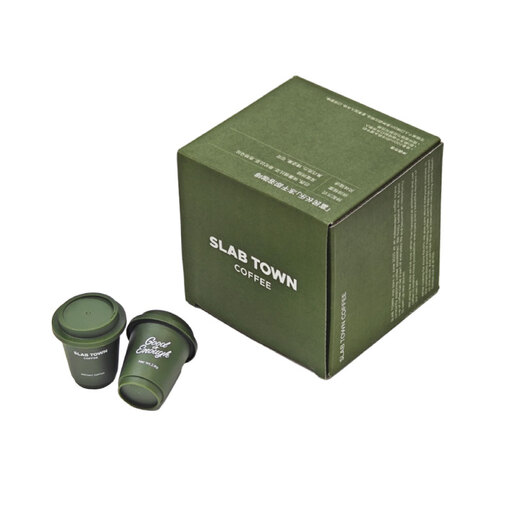 Image unavailable
SLAB TOWN American Freeze-Dried Instant Coffee, 2.8g × 12 Pods
The 12 individually portioned sticks make this a small-pack option for counted self-service, not a 240-portion case. The product description states 100% coffee powder, 2.8g per stick and preparation with 200ml water. Check the best-before date before stocking several packs.
View on Joybuy
 Image unavailable
NESCAFÉ Original Decaff Coffee 300g
This 300g jar provides a separately identifiable decaffeinated soluble-coffee option alongside regular coffee. Its product description advises cool, dry storage. Use the exact pack’s serving directions to estimate cup yield, and check its best-before date against expected use.
View on Joybuy
Questions about pantry coffee
Does a “box of 240” mean 240 cups of plain coffee?
Not necessarily: check what the number counts on the exact product. Amazon UK’s Instant Coffee Best Sellers list includes NESCAFÉ Original 200 × 1.8g sticks, while other large packs are specified by weight. Confirm the unit count, coffee weight, ingredients and preparation directions before treating a case as 240 plain-coffee servings.
How much coffee would 240 portions contain?
At 1.8g per portion, 240 portions would contain 432g of coffee. NESCAFÉ gives approximately 1.8g as a typical serving for Original and Gold Blend, but that calculation does not establish the contents of another product: use its stated portion weight.
How should an opened tin be stored in a shared pantry?
Follow the exact pack’s instructions. NESCAFÉ recommends cool, dry storage for Original and Gold Blend tins; in a shared pantry, keep the container closed, use a clean, dry spoon or scoop and retain the label and best-before date.
Should a shared pantry stock decaf as well?
Stock a decaffeinated option if the people using the pantry want that choice. Keep it clearly labelled and separate from regular coffee; Kenco and Douwe Egberts both have named decaf instant-coffee products to check for a suitable pack format.


